When I was in graduate school (for 12 years altogether–what was I thinking?), I had a rigid uncompromising attitude toward my own deadlines. I had to meet them, even if it meant allowing the rest of my life to collapse.
Not surprisingly, putting myself in this do-or-die frame of mind often resulted in exactly that: my physical and emotional health would suffer. I would have fulfilled my responsibilities and I was often extremely successful in those narrowly defined areas, but I would feel cheated because everything else would be wrecked. I’d have to begin rebuilding my life after every major work project. It was exhausting.
Now, I’ve learned to make time. I have more deadlines than ever, but I take an attitude of mastery instead of servitude by saying, “Sure, I’ll get to it when I get to it.” I’ve found that this nearly always makes me more efficient. By giving myself permission to remain whole–a whole person–I am no longer a slave to some external timetable.
On those rare occasions when my work is late or when unforeseen complications lead to a less-than-desired outcome, I’ve learned to say, “So be it; I’m human; I’ll fix it now and do better next time.” Sometimes, this means comping work, spending extra time to make things right, or taking some other loss. But we might just call that the price of sustained excellence. It’s easy to operate at the top of one’s ability every now and then. It takes moderation and self-control to stay in that state of optimal performance long term. It takes a sense of balance and the maturity to recognize the value of personal wellness.
This was a hard lesson to learn, since I am “up in my head” most of the time, planning and scheming. I also have an over-inflated sense of responsibility linked to the need for me to see myself as a high-functioning player in every situation. I grew a lot when I admitted to myself that I had these Type-A traits.
Now I breathe, relax, and make my demons work for me instead of being tortured by them. I think, when we accept the need for balance, we’re accepting life instead of the deadening supposition that our worth is defined only by what we produce in certain narrow categories.
O Divine Poesy
Goddess-Daughter of Zeus
Sustain for me
This song of the various-
Minded man
Who after he had plundered
The innermost citadel of
Hallowed Troy
Was made to stay grievously
About the coasts of men
The sport of their customs
Good or bad
While his heart
Through all the sea-faring
Ached in an agony to redeem
Himself
And bring his company safe
Home
Vain hope— for them
For his fellows he strove in vain
Their own witlessness cast
Them away
The fools
To destroy for meat
The oxen of the most exalted
Sun
Wherefore the Sun-God blotted
Out
The day of their return
Make the tale live for us
In all it’s many bearings
O Muse
– Homer in Book I of The Odyssey, Translated from Greek by T.E. Lawrence.
Recently, someone wrote to me wanting to know how I could support myself doing what I do. It was a legitimate and sincere question that nevertheless had undertones of skepticism. The writing life? Really? Just admit you’re flipping burgers in the back of some cantina, why don’t you. And my answer was that I really am doing this the way I say I am. It’s not impossible—hard sometimes, but never impossible. The bottom line is that I’m doing exactly what I want to do in life.
So why the incredulity? Why the outrage? I think it stems from the ingrained assumption that leading a responsible, hard-working life is at odds with fun and satisfaction. When I worked in law, my supervising attorney used to say, “Sleep is for the weak” and “If you’re smiling, you’re not working hard enough.” I hated that and I suspect that such traditional attitudes about work and life begin with western religious assumptions about what we’re here to do and where we’re headed—assumptions many of us would rather do without. It’s also hard not to see a telling interface between this aspect of conformist culture and consumerism.
Then again, I firmly believe that once we start making small decisions about what we want, once we start saying no to the bullying mechanisms of conformist culture (see Office Space for a great hilarious treatment of this), the way we see the world begins to change. Things we thought were dull and boring begin to reveal hidden dimensions. Fears evaporate. It’s like learning to swim: at first, we sank like stones but then we learned to see the water differently and we were able to do something amazing: float weightlessly. Sure, I love college teaching, but I love it primarily as something fascinating in itself, not as a support system or security blanket. I don’t have any fear of the non-academic life. I’m still a writer no matter where I am.
Moreover, I find it interesting that we are encouraged to assume that there is a fundamental disconnection between the mundane and the extraordinary in our everyday lives. Why is this? And why do we support belief systems dedicated to showing us how monotonous and empty our lives can be?
As someone who has spent a good amount of time in academia as well as making a living doing somewhat unconventional self-directed things—freelance writing, teaching fiction writing online, editing, even surviving for a while in college as a professional tarot card reader—I’ve come to recognize the inherent strangeness and fluidity of so-called normal life.
As the linguist, Patrick Dunn, has written, we might legitimately see the world “not as a constant interaction of immutable laws—although often and in may ways it is—but as an ever-changing interaction of arbitrary and constantly shifting symbols.” Realizing that we have a considerable degree of semantic control over our lived experience should make us pause and ask why we are living the life we’re living. Shouldn’t it?
Thinking about this has opened a lot of doors for me, doors of perception, doors of experience. When I ask what is the meaning of life? I only hear the echo of my own voice. And I used to think that this meant life was essentially meaningless. But I don’t think that anymore. Now I suspect that looking outside myself for an answer is tantamount to expecting a fixed meaning from some immutable hierarchy of values. All cosmological assumptions serve power in some way and very few of them are in place to empower or enlighten the individual.
Now I tend to agree with Viktor Frankl in Man’s Search for Meaning: “Ultimately, man should not ask what the meaning of his life is, but rather he must recognize that it is he who is asked.” The echo that comes back is the answer: the meaning of life is in the act of interpreting it. And so I think again about everyday life, about the experience of being alive in a dance of symbols and interlocking value systems. It’s incredibly strange to see life this way—to drop the ancient fictions associated with fixed categorical thinking and instead see experience as a matter of Will to Meaning, of interpretation.
After I sent a response along these lines to the person who asked me whether I was really, truly, honestly living the writing life, she followed up with: “But doesn’t it bother you that you’re not famous yet?”
I’m not?
All the dogs in my neighborhood know me as that guy with the cookies in his pocket. When the balance of my life is behind me, what will I care about: that my name wasn’t a household word or that I was able to say, life means THIS!
“I can tell you one thing,” said Louie, taking a drag on his cigarette and leaning back in his chair, “he steps over the line again and we’ll have words.”
“You won’t do anything of the sort. Don’t be ridiculous,” said Burt.
“I’ll kill the motherfucker. Got an ice-pick right in my trunk.”
“Kill a professor and you’ll go straight to the chair,” I said. “They’ll pump you so full of voltage you’ll be shitting the Bozeman power grid.”
Louie smiled at that, catlike, squinting at me through his smoke cloud. He was wiry, not an ounce of fat on him, with a working-outside-everyday tan, veins and muscles in clear relief.
“There’s no escaping it,” Burt said. “Our program’s sick. We have no future. If people are killing themselves—I mean we’re all killing ourselves if you really think about it. But this whole thing with Theresa Miles. I can’t get over the thought that Jason’s somehow behind it.”
“We shouldn’t blame Jason for all the evil in the world,” I said, checking my pulse under the table. “He’s an asshole. But he didn’t tell her to cut her wrists. She did that on her own.”
“He’s an asshole on the meter. You’ll see if I take his shit much longer.” Louie frowned and stubbed out his cigarette. Louie had dreads that he tucked into his collar. In the spring, he taught composition in a T-shirt and one eventually saw that his torso was completely covered with Chinese dragons, stars, portraits of his family, words in Greek cursive, clouds, Fraktur lines from Rilke. Louie didn’t look like a graduate student. And I believed he had probably done some deeply perverse things in his short life. But killing somebody? Louie wrote poetry.
Shelly, the Wiccan priestess, would have been able to read my ham sandwich like a palm. She’d open up the bread, squint, and tell me all about how my ordering it stemmed from a long line of causes, magnetic thoughts, manifestations, astral translocations. “You don’t care about yourself,” she’d say. “Look at this ham. You have a death wish. There’s a shadow in your aura.” Then she’d adjust her polkadotted doo-rag and smile at me across the manicure table.
2. Midnight in Paris
Bad ham and ice-picks: you don’t look into a sandwich you’ve bought in a bar when having a life-changing nervous breakdown. And you don’t then ask creative writers to explain the realization to you—even if you are also a creative writer and already possess their unique lexicon of neurotic self-obsessions, vanities, and cynicisms—especially writers with MFAs, especially graduate students trying to get MFAs, especially Burt and Louie.
The shadow in my aura must have been embarassingly obvious. I had already made 2 mistakes in this sad life. Transfigured by a radical shift in consciousness brought on by low-quality pork and an acceptance of the transcendent metaphysical principle binding all things together, I violated the Sandwich Rule and the Don’t Ask Creative Writers Anything Important Rule almost simultaneously. I said: “I think I’m to blame for every single bad thing in my life. What do you think about that? It’s called the Law of Attraction.” Burt probably already believed this about himself due to what he often referred to as his “destructive Jewish upbringing.” But making it overt and tangible, dragging it into the light of immediate consciousness, had crossed into his and Louie’s sense of the forbidden in a very bad way.
Burt flashed me a sideways look and then spoke into his beer. “You’ve been hanging out with that new age girl at the nail place, right?”
“Shelly has nothing to do with this,” I lied. “This is straight metaphysics.”
“What if the Wiccans have the answer?” said Louie. “What if gods and goddesses live in trees and the garden gnome on my front lawn has feelings?”
“I’m a non-practicing Catholic,” I said. “You’re pretty intolerant for someone with dreadlocks.”
“Yep. And I’m a vegetarian. And I will now take a leak.”
Louie got up and made for the restroom. When he was out of earshot, Burt put his hand on my arm and said, “Mike, I really do think you need to get some help before things get worse.”
“I need to go home and write,” I lied.
Angry dread. Burt looked at me as if I’d said I planned to find him later and cut his throat. When did writing fiction become so terrifying? Burt couldn’t write anymore and neither could I. Two years of MFA vitriol had stopped most of us in the program from doing anything but recycling old work. And drugs, both legal and otherwise, were how most of us got through. Only Louie seemed to be going strong, publishing poems and stories on a regular basis.
“Don’t push it,” Burt said. “Remember the hotline.”
I said I’d keep it in mind as if the idea were ridiculous, even though, to be honest, I’d had certain thoughts of my own lately, certain pleasing fantasies of self-destruction, bombs going off, being instantly vaporized in an electrical field, o.d.ing on something gentle and mothersweet, gas leaks, getting struck by an errant cement mixer—one minute my old wretched self, the next free and clear forever.
Everyone in my graduate program was having these thoughts; though most would only admit it while in the depths of a drunk in the wee hours on someone else’s sofa or to the person with whom they were was sleeping, who’d then spread the knowledge of it around as much as possible after the inevitable breakup. Such was graduate school. Most of it originated in the almost universal belief that there were no academic jobs forthcoming after graduation; in the prospect of being broke forever; and in a fat position as a UPS driver if you were lucky. Maybe I’d only just begun to have these thoughts now, at the end of my program, because I’d had other jobs before graduate school and wasn’t afraid of UPS heaven. I wasn’t delicate. I could rake coals in hell if I had to. What scared me was the feeling that raking coals in hell was something I wanted on some level in order to prove I was different from my fragile, neurotic colleagues. Maybe.
Louie came back and we walked out front. I said good-bye and we went in separate directions. Half a block away, I looked back at Burt. He was hugging himself in the street light, staring at the snow. I’d been so immersed in my thoughts that all I’d wanted was not letting Burt intrude. He’d been saying something to us earlier about an editing job, but I hadn’t cared to listen. A few blocks later, I threw the sandwich into a snow bank. In May, it would emerge, a thawed and monstrous ham-thing in the sun. And Burt would likely emerge the same way a few days hence, expecting me to know all about what he’d been saying, expecting me to be ready for something, and wounded when I had no idea what he was talking about.
Then again, I thought about all the metaphysical discussions I’d had with Priestess Shelly those nights I’d visited her at Christine’s, maintaining rigid and neigh-flawless eye discipline when she’d lean toward me over her coffee and say something extra deep about the goddess. I wondered if I would forget to think of Burt and therefore temporarily negate his existence. Or the sandwich—blinking straight out of creation when the only mind holding its manifestation ceased to be mindful. Lord knows, I wouldn’t forget Shelly. I beat the cold out of my hands and sighed.
Midnight in Missoula with too much snow, sudden and unkind on the head of the nocturnal graduate student outside his natural habitat. Somber and half-blind from flurries, he makes his way slowly toward the safety of his hole, where he can curl up beside his ancient space heater until morning. He is an odd, fitful creature. And perhaps, we can sympathize with the rare quality of his suffering, bumped up the academic chain of being like some proto-sloth in need of mutation—not quite ready for the tree branch, but not quite capable of slumming it any longer with the other sloths back in California who’d gone straight from high school to Marines to sales. Now they all owned Escalades. And our sad friend slishing his way home has had trouble with the bus—his ability to teach a wicked freshman comp class and his grasp of ageless metaphysical wisdom notwithstanding.
While I walked, I considered my power to unthink Burt, the tragedy of the short-necked giraffe, and all the good things Hemingway said about being broke and hungry in Paris. As long as one didn’t indulge in too much natural selection with an extension cord out the window of one’s attic room, one might actually come to think of Missoula as the Paris of the northwest. Life was beautiful. These were the best of times.
3. Hair & Nails: the Clergy Holds Forth
“I need to make a confession,” I said to her.
“The Goddess don’t care about confessing.”
“Yeah, but I’m a former Catholic.”
“What about all that ‘I want to be a Wiccan stuff?’ The Goddess don’t care about Catholics.”
“I think of myself as a post-Catholic pre-Wiccan.”
“No such thing.”
“Yes such thing. You said it yourself: the Goddess doesn’t care. So the field’s wide open.”
“I never heard of a post-Catholic Wiccan.”
“Well, I’d like some tolerance, please.”
4. An Occurrence at Higgins Street Bridge
In the second year of our MFA, everyone started to write their own eulogies. We did it reflexively. Because I didn’t own a car, I did it while walking across town. Despair kept me warm.
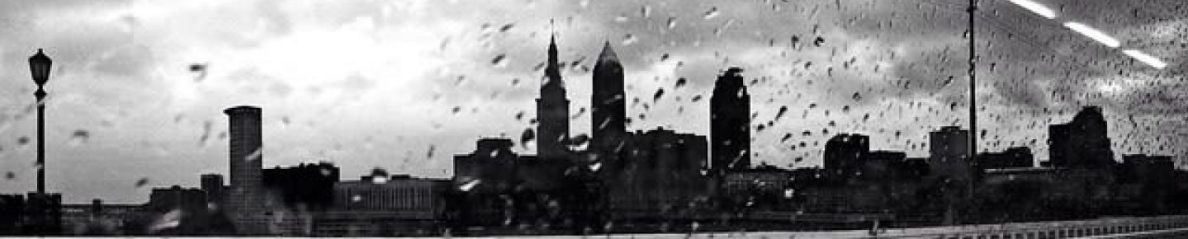
Snowflakes as thick as feathers, falling the way feathers fall, thick bright globes of them around headlights. They came down in silent brocades over the yellow window panes of houses, black branches shadow-to-shadow across the light. The hiss of passing cars faded up Higgins Street and over the iron bridge that was slick black during the day, the sides of its enormous bolts brushed with orange rust. At night, Higgins Street Bridge was little more than an isthmus of ice over darkness, translucent stalactites fanged from its hanger cables. Below it, the Clark had turned a solid murky green and held deformed bicycles and grocery carts, driftwood, bags of trash. During the day, you could see the spokes and edges sticking up from the ice or slightly below the surface, all frozen in stasis until the spring.
I stopped halfway across. My heart began beating fast and wouldn’t stop. I tried breathing deeply. Melatonin, whiskey, Valerian root for ease-downs in the middle of the day—none of it was working the way it used to. My hands shook almost all the time now. I couldn’t hold them flat in the air without my whole body vibrating. And I’d begun to stutter at times, missing the right word, struggling to find it in the middle of a conversation. There were moments of extreme paranoia. I wasn’t sleeping. Instead of writing, I read obsessively about nervous breakdowns, schizophrenia, depression, chronic insomnia. I fit all the criteria. It was possible that I was either bipolar with multiple personalities and recurring psychotic breaks or I was just stressed out. Spending time with Burt and Louie didn’t help.
Burt and Louie had been thinking bad. So had I. And the Universal Law of Attraction had brought it to me without exception, relief, exit, or temporary refuge. I realized I was responsible for the deficiencies of my sandwiches. And I took such responsibility with a deep and terrible gravity that made me feel horrible about myself. I was responsible for the snow that had seeped into my shoes and wet my socks, for Burt and Louie, for stinking Amvets, for the semester left of my stinking MFA, for my perpetual lusts that went perpetually unsatisfied, for my mediocre thesis, for my general inability to write and for the particular exceptions when I did. The Universal Law of Attraction. I was even responsible for that. Or, at least, for my present understanding of it, which amounted to the same thing as far as I was concerned.
Not doing yourself in was key. The city and the greater Bitterroot Valley area now had a suicide hotline staffed around the clock. Many of them were MFAs trying to make enough money to supplement their miniature teaching stipends, and it was a job that allowed one to read books while on duty. Perfect. A few months after Theresa Miles drank too much one night and cut her wrists in her bathtub, Burt passed out business cards with Don’t Do Something You’ll Regret on one side, and the hotline number on the other. His way of dealing.
While she was in the hospital, open sarcasm became unfashionable for a time. But as soon as everyone heard she hadn’t died, the snide jokes began. The whole thing seemed to please her fellow poetry students the most. She’d come from an ivy background, was highly talented, already published, and attractive—a recipe for instant resentment if ever there was one. Burt might have had a shrine to Theresa Miles in his basement. I didn’t really want to know. But, of course, I reminded myself, if I did someday go in there and see her picture on a saffron-shrouded altar strewn with garlands and incense, I would have been the one who’d manifested that into my own experience. Along with the basement. Along with Theresa—and Burt.
5. The Theological Discourse Continueth, Selah
“The Catholics are the ones who burned witches at the stake.”
“Nope. Those were the Calvinists. Name one witch-burning Catholic. The Pope wouldn’t burn a witch.”
“How do you know? Have you seen him? Have you actually looked at the Pope? He scares the living shit out of me.”
“He’s got a lot on his plate.”
“People said that about George W. Bush, if you remember. People said, ‘Bush is kind of stupid,’ and then somebody would be, like, ‘Yeah, but he’s got a lot on his plate.’ Still fucked up the country though, didn’t he.”
“Bad comparison. The Pope is goddamn smart. He speaks about 10 languages.”
“If all I had to do was bless gold crosses and ride around in the Vatican all day, I’d know ten languages, too.”
“Shelly, I need to make a confession.”
“I have my doubts about you. You eat too much red meat. And you’re a fucking Catholic.”
“Maybe so, but you’re a priestess, and I’m in need of the clergy.”
“Bitch please.”
6. Brokeback Burton
I stood on the bridge so long, that Burt left Amvets to find me.
“Shit,” he said. “I can’t breathe. I think I need some air.”
I hadn’t seen him walk up to me through the snow. “Jesus fucking Christ,” I said. I must have seemed feverish at that point. I might have spoken too forcefully. “I’m the constant. Everything else is the variable, Burt. If I’ve got a problem, it’s me. But don’t go fucking sneaking up on me.”
Burt had brought me another poison sandwich from the bar. He handed it to me wrapped in a greasy piece of cellophane. Then he took out his inhaler, but there was nothing left in it. “I’ve got a problem,” he said. “I can’t breathe.” He did the calming exercise he’d learned in therapy, his palms pressed against his chest.
I took a bite of the sandwich, immediately regretting it but reminding myself that there was no use for regret when everything in life, positive, negative, animal, vegetable, mineral, had, according to universal law, been drawn to me by my wanting it nor not wanting it on some level. This was the teaching of my foil and muse: 23-year-old Wiccan priestess Shelly Montgomery, anthropology major and part-time beautician at Christine’s Hair and Nails. And this could be the story of a certain kind of wanting. Me of her. Her of an unnamed female deity. And of the big, whirling empty we’d all unearthed at the center of MFA wasteland. Such was my curious state, one in which I would become mewed up in these wants—living a nocturnal existence for 2 years in Missoula, Montana, Big Sky Country, where the sky would come to seem entirely too big, wholly my creation, hostile, and unwilling to let me go.
“I’m allergic to this place,” said Burt.
To the place, I wanted to say, or to the thought that perhaps the universe was not, after all, conspiring to bury us under a pile of misery; that perhaps Burt was the sole origin of his own angst, his own impending unemployability after grad. school, his own inability to hold a conversation with a member of the opposite sex even though he was almost 34 and neither an amputee nor diseased. I wanted to shake him like the child you suddenly hate for being sickly, hating yourself at the same time for being so small. I wanted to tell him that if he was allergic, he was to blame. But I just stared at his gasping and swallowing while I took bites of chemical sandwich. The snow came down around us as walked back to Amvets.
Warmth and a Pabst can fix anything. After a few minutes of silence and worried looks from the mute bartender across the room, Burt’s calming breaths began to help. He could suddenly breathe without wheezing, mucus draining, anaphylaxis creeping back into the oracular murk of his extremely thin, pale body. He hawked into a napkin and gave me a weak smile.
“Maybe I should leave Montana,” I said. “I’m not learning anything. I’m not doing anything of value whatsoever. And it is my fault. I’m responsible.”
Burt shook his head, coughed. “We’ve got one semester to go. Don’t be in such a hurry to get back into retail.”
But I had no real intention of working some shit job after my MFA, which was precisely what Burt couldn’t understand. After 30 minutes of listening to Patsy Cline on the sound system, we walked back out so Burt could breathe air that didn’t smell like cigarettes and old beer. It was a cold night, snow in the streets, Christmas break in a week.
I’d brought the sandwich with me, which was absurd—the sandwich itself, of course, but standing there, gesturing with it more so. And I didn’t notice because I felt I had realigned my perceptions, had come stumbling painfully, maybe even mistakenly, into what might have been a perfect understanding of this impossible life. I was wrong. But, at the time, I began to feel like I might be a genius.
Burt hugged himself, shin-deep in snow. “We should go somewhere else, get drunk.”
By “somewhere else,” he meant we should go to Missoula’s other gay bar, Lilac. When Amvets wasn’t a gay bar, it was empty or, very occasionally, filled with tuque-wearing, geriatric vets still so pissed off at society for permitting WWII and Vietnam that they’d trot out the Gadsden flag, the rainbow flag, the old Soviet flag, the FARC flag of Subcomandante Marcos and red posters of Che and Mao in response to any public event whatsoever. In their anger, they were one of the few tolerant groups in town, despising everyone equally.
As far as I knew, none of them were gay. And as far as I knew, neither Burt nor I was gay. But gay was okay at Amvets and Lilac, where cowboys, bat-wielding fundamentalists, angry Flathead Indians down from the rez, Klansmen, and hormonal fraternity brothers generally feared to tread—the only bars where Burt wouldn’t immediately have anxiety-fueled bouts of anaphylaxis urticaria with hypotension and bronchospasms.
“I think I want to go home,” I said, envisioning electron magnets and asteroid fields, weird gravitational anomalies pulling all the space junk of creation to me with every manifesting thought. The snow pressed beneath my shoes contained worlds within worlds, blindly drawn to me by my wanting, on some level, for them to exist. I had to guard my mind.
Ethically, I felt responsible for controlling all possible manifestations of thought in order to prevent, say, an Astraeus 757 from falling out of the sky and atomizing downtown, epidemics of flesh-eating bacilli, fiery mushroom clouds, all the awful things regularly in my head. These thoughts terrified me because they seemed so much more likely now that I understood how the Universal Law of Attraction made me universally accountable.
I looked at Burt, who was clearly disappointed that we wouldn’t be sitting in the corner of Lilac for 2 more hours, bitching about our graduate program and drinking whiskey. I wanted to apologize for manifesting him in my reality as such a morose, narcissistic fuck. But then who was worse? I was the one seriously considering that I could make planes fall from the sky with my thoughts.
7. The Reports of My Death have been Appropriately Exaggerated
Why in the world would I manifest all that when all I really wanted to manifest was employment, sun, and a Wiccan priestess to share it with? I had a headache (for which I knew I was responsible) that would probably last the whole long, cold walk back to my room above the garage.
For people like Burt and me, there might not have been a lonelier place in the world than Missoula in winter—his family mostly dead except for a distant uncle and a maternal grandmother he never saw, and mine mostly away in California with no money to go see them and an awkward call every couple weeks. If everyone must pass through a period of estrangement from the light, life, and love of childhood, my graduate degree had become the far promontory of that experience for me—an estrangement into ice and the persistent sense of being involved with a group of people focused solely on fear of the future and distrust of the present.
A few days before I left Burt in front of Amvets, the director of my thesis, who I will call Jason, told me that the best thing about my stories were that he’d been able to get through them quickly.
“I know you want this life, Davis,” he’d said, my story manuscripts in a pile on the floor by his desk, “but you’re not gonna get it.”
Wanting. Not wanting. Jason’s knowing smile.
He’d been harder on Burt, whose chain smoking, drinking, and oxytocin use increased exponentially after Jason threw his thesis down the hallway. Apparently, Burt had argued with him about the validity of magical realism, feeling brave because he’d just published a story in which a man became a cloud. Now Burt was becoming a cloud, dissipating, layer-by-layer, into progressively more vaporous forms.
I, too, began a descent of sorts, a series of self-transformations dedicated to the possibility that moving back to California and getting a service job—which, according to Jason, made sense, given my level of writing talent—was not my only option.
I became adversarial in everything I did. I joined a boxing gym for a few months and convinced everyone there that I had severe emotional problems when I’d stay late 3 times a week to hit the heavy bag like I was trying to kill it. No one wanted to train with me after I accidentally broke my partner’s ribs and put him in St. Patrick’s for a week. When I finally blew my left rotator cuff, I couldn’t lift my arm for a while and I didn’t bother going back. I was looking for answers, to what I wasn’t sure—to the meaning of life, to the key to my predicament.
My self-eulogizing grew progressively melodramatic and resentful. I stood outside in lightning storms and took fifteen-hour walks through heavy snowfalls in which I could barely see, the sound of my breath in my ears. I tried Buddhism for a few days. I tried going back to the Catholicism I’d abandoned as a kid and wound up writing angry letters to Sister Carmel, my second grade teacher. I got a lot of mileage from Aurelius’ Meditations, Boethius, Nietzsche, and Castiglione’s Book of the Courtier, but there weren’t any true answers—only fragments of answers, entertaining ideas, temporary escapes.
By the time Burt, in our late night Amvets bitch sessions, got around to talking about “the sheer meaningless shit of life,” I’d usually had enough liquor to start agreeing with him. It was as if by convincing me, he could convince himself. And, by convincing himself, he could finally abandon all hope, which was freeing.
But you don’t get free for long by abandoning all hope. Something brings you back. And you don’t get free from Wiccan fu or the Universal Law of Attraction, despite how much or how little of it you might have felt for a certain anthropology student who knew magic and manicures. She’d said she wanted to paint my nails purple. Ah, purple nails. What might have happened had I gone along with that?
Taking a short break this afternoon to post on my blog. I know the scene I have to write today. I know what has to happen in it. I can even see it playing out in my mind. So what’s the problem? Maybe caffeine will help. 37°F and misty on the mountain today. I won’t be up here for much longer. Possibilities for the next move include England, Estonia, Indonesia. In the States: Boston, NYC, D.C. We’ll see what comes back over the water . . .
The novel is just about done. That means book manuscripts 2 and 3 will be going in the mail to small presses and contests sometime this year. Then I ramp up work on the book dealing with gender performance and transhumanism.
Book 4, which will be my second novel, is already 80 pages into its first draft. And so 2013 begins . . .