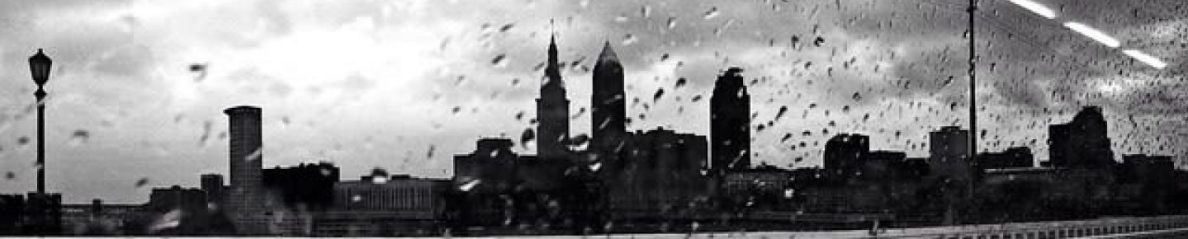
The Problem of Evil in Hauberk,Missouri

Miss Tomoike can’t pronounce the German for money. The problem is, neither can I.

I am in love with Miss Tomoike.

I say, Ich habe kein Geld. I have no money. And the class responds, Wir haben kein Geld. We have no money. In my world, the world of German 2A, no one ever has any money. But I am still in love with Miss Tomoike.

Problems.

She is sixteen years old. I am thirty-one. It is a clichéd, old story—probably as clichéd and old as having no money. Miss Tomoike’s d’s sound like t’s. If I’m not careful, mine do too: “Wir haben kein Gelt.”

Nein.

Nein, nein, nein.

I dance around the room for no reason at all and the class snickers. Geld: gay-aey-elle-day. The class repeats. They are patient, indulgent. They see my lighthearted antics and raise me my lack of correct pronunciation despite the fact that every day, at 9:10 AM in room 22, I am barely in the game.

My feelings for Miss Tomoike endure. They torment me from her wonderfully messy homework, the lopsided A’s, the undotted i‘s. I’ve bought a pack of the pens she uses: Pilot Precise V5 Rolling Ball, blue (extra fine). Sometimes I copy her signature over and over. I am a sad, sad man.

Jeremy Hoff raises his hand. Both of his parents are from Augsburg, directly from Augsburg. He could teach my class, and he makes sure I know this every day. Jeremy Hoff is the worst thing in my life.

He reminds me: “We did this yesterday.”

“Yes,” I say, “yes,” and retreat to the table at the front of the room where the teacher’s answer book is open to the lesson I almost understand.

Jeremy laces his fingers behind his head and leans back in his desk. He’s wearing western boots. He crosses his legs straight out at the ankles and the boots make a thok-thok on the hardwood. “What did you do before you were a teacher?” he asks.

I tell them to open their books.

He says something in a complex Bavarian slang I don’t understand, and the class snickers again. I ignore him. Miss Tomoike has beautiful eyes. Her short black hair is meticulously clean. She smiles up at me and I move on to verbs. Verbs are good. One can depend on verbs. I say, “sprechen,” and try not to stare as she conjugates.

I took it as the innate goodness and simplicity of small town folk that Claire Dunlop, the principal of Alexander Weiskopf H. S., offered to rent me a room until I could find a place of my own. Now we have a different principal and Claire Dunlop is gone. Two years have passed, but I am a hundred years older and I think back to my arrival as if it happened in a different era. I was in the last group of teachers to live in her house on Main Street, equidistant from the gas station and the school.

Hired by Claire right out of college, I moved from California so I could teach English and wouldn’t have to be a jeweler like every other member of my family. I would have gone just about anywhere. And Hauberk, Missouri, seemed okay even though tornados ripped across the state every year and the Hauberkians didn’t appear to care as long as their own, personal houses still had roofs when they got home from work. Sometimes entire barns were razed, animals carried for miles, tumbleweeds, bushes, and dirt pulverized into clumps by the road or rising out of the blasted cornfields in lopsided columns—messages in the great symbolic language of creation: DON’T STAY HERE. I didn’t listen.

Claire sent the algebra teacher, Henry Barber, to pick me up at the Greyhound one county over. He was a thin-lipped man, completely bald, with high cheekbones and a heaviness around him as if he traveled in his own pocket of dense air. He drove an old mint Packard in mint condition, which made me want to like him. But neither of us spoke much on the drive back to Hauberk.

Henry. What is there to say about him? He had the stick-to-itiveness of Midwestern farm culture all over him, the implicit understanding that anything worth being done was worth the time necessary to do it. Consequently, he didn’t drive over forty m.p.h. and I spent most of the trip doing what I’d been doing on the bus. I watched the geometry of the fields, haystacks, distant crows fluttering up in bursts, how the sky bent into the earth at the edge of sight and seemed to get darker there, as if an end really did exist beyond which all Missouri would disappear. Winter was coming. Later that day, I’d see blue run into gray, clouds like dead chunks, clotted and falling. I’d get used to seeing the sky as a dour, unfriendly predictor: tinged green for tornados, red for heavy wind, blue for dense humidity, gray for everything else. And, like the Midwestern sky, Henry Barber’s face was bland and serious, both long and compressed at the same time with a set expression and flat hazel eyes that seemed to be looking at the horizon even when they were looking at you.

“Yep, here we are, I guess,” he said. His voice startled me after the long silence.

There were only eight streets in Hauberk, and I hadn’t noticed that we’d come in. Though we were supposedly in the heart of the “downtown” area, it seemed like we’d entered a slightly more versatile truck stop. We got out and Henry put some quarters in an ancient parking meter.

It was the biggest house in this part of the world. If Claire Dunlop hadn’t been waiting at the top of her front steps, I would have thought we’d stopped at the county courthouse. As it turned out, the courthouse was one block away on the other side of the street. And it was smaller. Henry leaned against the car and sighed. Claire was looking down from the porch, raising her arms like Christ over Rio, embracing us, the town, the sacred perfection of everything that led up to her door.

Her T-shirt is tight and pink, says Love Kitten over a gray cartoon cat with hearts for eyes. She hands me her Midterm Progress Report and smiles. Ice glittering on the frosted window makes a pinwheel of light on her neck. I look at it and smile back, feeling just like that gray love kitten curled up in the sun. The students press out of my classroom—all but Jeremy Hoff glaring from the door.

There are only a few reports left for me to sign. In the totalitarian world of high school, a report of “Not Satisfactory” results in the victim being sent to the school psychologist and an emergency conference with parents and teachers. A “Poor” means regular therapy, tutoring every day, and a grand jury investigation. Probably electro-shock. There are no “Poor” students at Alexander Weiskopf High School.

“How are you?” asks Miss Tomoike, still smiling, beaming out ten-thousand gigavolts of Love Kitten all over me.

I grin like a boy and mark the “Very Good” box.

“Okay,” she says. “Thank you. Have a good day.” A few more bonus volts before the smile disappears and she’s out the door with Jeremy, who’s been having a desperate power shortage—blackouts, failures, exploding circuits. He hates me, yes, but that’s nothing compared to how much I hate him. I step into the hall, hands clasped behind my back, and watch them go to her locker.

Miss Tomoike’s American name is Lydia. And, of all the Lydias I’ve known, she is the most un-Lydia, which makes me love her even more. Her real name is Aniko, but everyone must call her Lydia, the name of three of my ex-girlfriends. I am cursed by that name.

First there was Lydia MacLeod: tall, redhead, hated father, abortion at fifteen, moved to Canada then hated Canada, made me bleach my hair, left me for a bouncer.

Then there was Lydia Horton: med student, chess and bowling, eating disorder, hated father, moved to Sri Lanka to build huts for the blind.

And Lydia Ründegaard: married to textile magnate, bisexual, abstract photographer, chain smoker, hated father, broke my television.

Now I no longer own a television and Miss Tomoike doesn’t bowl. She is an exchange student. Her parents live in Tokyo—bankers, businessmen, important people of commerce. I imagine sitting down with them. She’ll bring me home to meet them. Finally, yes, things will work out. An unconventional match? Of course, but aren’t all the great ones unconventional? I’ll sit down over awabi and twig tea with eight-thousand-year-old grandfather, exchanging deep existential truths in the form of short poems that seem like politeness. I’m preparing for it. I’ve learned three expressions from my Japanese On One Word-a-Day: Gaido-san desu-ka? Are you a guide? Saiko sokudo hyaku kiro. Maximum speed one-hundred kilometers. Iro, iro domo arigato. Thank you for everything.

When Henry and I drove up, she emerged in state. There was James Reid, music teacher, to her left, and coach Spinadella on her right. She’d wrapped herself in gauzy yellow cotton, something between Cleopatra and Glenda the Good Witch of the North. And she seemed to radiate, if not beauty, then a certain conviction of her own seductiveness, trying to flow down her whitewashed steps but having to go very deliberately so as not to trip on the hem of her dress. This was a different Claire Dunlop than the person I’d met at the interview, sitting in the Oleander Room at the Day’s Inn outside Saint Louis, where she was all polyester angles and sobriety, black coffee and the students and educational theory and what we expect. Henry, I noticed, had already become steam, blowing away so quietly I hadn’t had time to thank him for the ride. So I left my bags in the Packard and met Claire’s hand half-way up the steps. Everyone tried to smile.

“Would you?” she said. It was a question, but the flick of her hand toward my bags said Go and Spinadella went. That was the beginning. A more intelligent person would have seen past, present, and future all phenotyped at once in that gesture. A more intelligent person would have jumped back in the Packard, punched it, shot the covered wood bridge over the dry creek outside of town and been down the I-44 before any of them had a chance to say what. But I wasn’t that smart and Packards don’t go very fast and I was constrained by all the usual human courtesies.

It might have been the awe I felt at Spinadella’s thirteen-inch biceps that made me go along. His blond hair was so clean it gleamed: the first Italian Viking. We watched him open the Packard, scoop up my suitcase and backpack in one gesture, and lumber up into the house without a word.

“We’re so very, very happy you’re here,” said Claire, putting her arm around my shoulders and leading me up the steps, while James Reid smiled behind us like someone in her livery waiting for an order or maybe just waiting to catch her if she tripped and fell backwards.

I was amazed at the house. Safavid rugs, crystal chandeliers, authentic Victorian chic right down to cloth tubes over the chair legs. It was in the National Register of Historic Places. An ante-bellum plantation two-story, replete with Corinthian columns, domed pergola in the back yard, and two-hundred years of whitewash—one of the few buildings left from Missouri’s time as a slave state. The whole town took a certain pride in it. Carolers began there every Christmas. The Lutheran youth group whitewashed it once a year. People got married on its wide front lawn.

“We have no electricity here.” She smiled with an air of confidence and secrecy that told me she could see I was down for whatever. “We preserve our traditions here just as they have always been preserved, meaning a respect for the past.”

I nodded. Of course.

Claire was no stranger to history. She taught the European variety to juniors every semester. And, though she’d never been outside Missouri, her subject and her position as principal made her the local sage. In the deep, violating humidity of the Missouri summer, the mayor could often be seen conferring with her in the shade of the pergola, sipping fortified punch and hiding from the brutal realities of the political life.

She took me up the grand staircase into my room at the top. It was small and the ceiling was low, but it was very clean and white. Spinadella had left my bags on the bed. There was a wash-basin and a bureau with a small round mirror, a free-standing oak closet, throw-rug alongside the bed, writing table with a candelabra, and an oversized crucifix on the wall above it. Jesus’ wounds were bright and dripping. Dinner was at five. The housekeeper’s name was Pattie.

After class, I go to the cafeteria for coffee and a pudding. Jorge Rodriguez-Jackson is there sucking on a toothpick, plotting, squinting into the suspect distance. He looks me over and nods. I nod back and focus on the pudding. Pudding might be one of the last good things in life. Pudding is innocent, beyond reproach. Pudding would never get you accused of making someone disappear. Nor would eating it make you want to disappear anyone. If I were Jorge Rodriguez-Jackson staring at me eating pudding, I’d know right away that I was not a disappearer. But he is not so perceptive. He blames me for Claire Dunlop’s untimely vanishing act two years ago.

Jorge and his wife are from Kansas City. He teaches health and English lit., has always taught health and English lit., will always teach health and English lit. I was supposed to have been hired to replace him. If anyone should be suspect for her disappearance, it should be him. Still, he blames me. He is a Marxist.

He has a Marxist righteousness, a Marxist nose for sniffing out iniquity. He has channeled Karl Marx for so long that he has come to look like him: the jowly frown, the intensity in the eyes. At the first faculty party, I wandered into his study—a veritable Marxist bacchanalia—three complete editions of Kapital in different leathers, Economic and Philosophical Manuscripts leaning provocatively against a marble book-end, Grundrisse, A Critique of Political Economy, the whole sticky tangle in both German and English. A framed picture of Marx over the writing table. There was a Marxist tinge to everything in the house, a certain alien consciousness at work, even in his wife, who’d arch her eyebrows as if all the things she’d heard about me were coming true in front of her.

He twirls the toothpick in the corner of his mouth and looks away a split-second before I look at him. Feeling him about to turn his head, I glance up at the water stain shaped like a coffee ring on the ceiling. I know he’s scanning my face. The three girls at the table behind me hiss angrily about hair. The janitor over in the corner stares into his chicken soup as if it were saying something remarkable. Jorge, no doubt, is recording everything, memorizing it for some future testimony.

When I asked other faculty about his politics, they looked like I’d said something dirty. Decent folk don’t bring up things like that. So okay. So Jorge Rodriguez-Jackson and his squinting and his contempt. He’ll never stop hunting me for crimes against humanity. And if I breathe the smallest sigh for Miss Tomoike, if the smallest, helpless human emotion slips out, he’ll be on me—chains and culpability, scandal, perversion. I can see myself behind bars. I can see myself lynched in a field. Missouri: where the great Confederate rebels went criminal, knocking over banks, Jesse James, heads blown off, segregation, Indian slaughter. It’s in the people’s blood. You can see it bubbling under their skin when the proletarian in the truck next to you looks at you like you just felt up his mother. Missouri’s angry. Missouri wants revenge for whatever you’re about to do, and Jorge Rodriguez-Jackson’s watching. I can’t let myself even think of Miss Tomoike when he’s around. He can sense a certain furtiveness in me. He’d like to put me under a harsh smoking light, ask me angry questions, write my name on the floor in chalk. He knows dirty when he sees it.

I get up to leave and he makes an inquisitive face, “Finished so soon?”

“Uh, yes, pudding, you know.”

“Oh?”

“It’s easy to eat.”

“Is that right. Easy to eat.”

I move toward the cafeteria’s double-doors, slowly, casually.

Days and dinners came and went, and everyone was polite. Barber, Spinadella, Reid, and I shared the bathroom at the end of the hall with absolute maturity. We passed the salt down the table when someone wanted it and stayed off the third floor, which was Claire’s.

If she was in a good mood, she’d be vampy, fluttering and quick and trying to flirt with sudden meaningful looks designed to smolder. If she was in a bad mood, the looks grew heavy, the dark around her eyes got that way without makeup, and a pall hung over dinner. Barber would do his steam routine. And coach Spinadella wasn’t very articulate in the first place—whether from that last stubborn Viking chromosome or from the horse-juice he’d probably done as a bodybuilder. He was Claire’s barometer. If she was in a funk, then so was Spinadella. He’d beam ultra-hostile glances at everyone, like he was about to chop the table in half, then eat another spoon of peas.

Only Reid kept a cheerful face no matter what. Claire would have a mausoleum death-spell hanging over the table, and Reid would be shoveling food into his mouth as if he’d just been paroled, saying, “Hey, anybody watching the Chiefs tonight?”

Nobody was even if they were.

At first, I took it as passive resistance, aggressive cheerfulness. Then it seemed that Reid was inherently happy—one of those rare individuals at peace with himself and his life. But, ultimately, I understood that he was just plain insensitive. He didn’t focus on anything beyond himself and so was completely content. James Reid remains for me, at least in this sense, one of history’s unacknowledged geniuses.

School started and I began to teach freshmen and sophomore English under the supervision of Jorge Rodriguez-Jackson, who sat at the back of my room every day to make sure I was using his lesson plans. Assignments full of nutritious Marxism that I, with my degraded bourgeois ideology . . .

Question: How does Kent’s vehemence towards Oswald in Act II, Scene ii, help portray Oswald as a capitalist prototype? (Skipped in favor of What kind of a guy do you think Lear is?)

Question: How does personification of The Red Death symbolize the embodiment of false consciousness and the effects of aristocratic exclusivity? (Skipped in favor of Describe the big moment in the story.)

Question: How does the willingness of the indigenous Africans to be exploited by Kurtz reflect the function(s) of an internalized ideological state apparatus? (Skipped in favor of Did you like Heart of Darkness?)

The revolution was put down in all of my classes. Satanic capitalist ideology prevailed despite baleful looks from the political officer at the back of the room. I imagined Jorge Rodriguez-Jackson’s Health 2 students marching through the quad in olive uniforms, his AP English politburo lecturing their parents after grace about the opiate of the masses.

Still, at first, things seemed okay, seemed doable until the heavens opened up on my head. I was two weeks into my first semester at Alexander Weiskopf when it hit. It came on like one of the local twisters I’d heard about, the kind where you’re supposed to jump in the bathtub and hold a mattress over your head while cows from the next county are hurdling through the air. A death in the faculty. No one to teach German. Horror. And I was the only one who could fix it. Could I substitute maybe? Could I teach a few lessons until they found someone else? It wouldn’t be hard. I’d had a few years as an undergraduate. Sure, of course, I wanted to get along. Old Mr. Jürgen—who lived with his mother thirty miles outside town and only spoke Hochdeutsch, who’d been learning English his whole life and never quite got it down so that it pained him to speak it—had choked on phlegm and left me alone with his Kulturspiegel, his Arbeitsplan, and his fifty students, each secretly suspecting what I knew to be true: I was planlos, without plan. I was cluelos.

Later, I’d come to believe Claire had hired me just for this, that she’d foreseen it. There was no bathtub to shield me from the twister. There was no mattress. The winds had picked me up with the livestock and dropped me in Germany. And everything took on sinister proportions. The vicious underbelly of Claire’s flirtiness: was I expected to flirt back? If I did, would she let me return to just teaching English? I had one-hundred and fifteen dollars in the bank, enough for a one-way ticket to nowhere. My family back in Los Angeles had disowned me: two generations of angry jewelers with no faith in education. Grandpa Gordon had been an anarchist. Dad left when I was twelve. Draft-dodgers. Vehement, non-conforming Welshmen with an uncle still doing time in Mount Joy for polygamy. They’d laugh me into the street. I had nothing to go back to.

“What do you mean by ‘big moment’?” asked one of my brighter sophomores.

The problem with Pandora wasn’t her curiosity as most people think. It was that Zeus gave her the box in the first place. Come on, people, let’s have a little sensitivity for the Pandoras of the world. I’m thinking this—meditating on it, sympathizing with all the misunderstood little destroyers of creation—on the corner of Main and Shelly, staring into the Main Street Diner, while beside me James Reid squeaks bad saxophone at the falling snow. Reid was originally a drummer not a sax player. And, even though he teaches everything from horns to strings, drums are the only things he can play correctly.

My feet are damp. Reid has enough air in his lungs to kill everything within a six-block radius. And I’ll count myself lucky if the next time he squeaks up that b-flat it’ll disconnect my heart, blast me to a pile of dust, scatter my molecules into gray gutter snow. Make it quick and make it final. But that would be too easy. Tonight, my very own Pandora is on a dream date with Jeremy Hoff, and I’m destined to watch.

Yeah. Didn’t Norman Rockwell paint something like this? Johnny and Jenny sharing a malt in a brightly lit diner while fluffy snowflakes glide down outside and God is in his heaven and all is right with the world? Norman never painted me. I’m freezing and I still can’t figure out how Reid can play in these conditions.

He stops for a blessed moment to say, “Hey there, are you asleep?” And then his Chic Corea version of God Rest Ye Merry Gentlemen starts up again like large pieces of metal crumpling into each other. Jazz, dig?

It’s my job to scoop snow out of the taupe fedora on the sidewalk in front of us. James does this two nights a month for pocket money, but this is the first time I’ve helped him. Usually, it’s his sister scooping snow out of the fedora, but she has pneumonia. He’s in his forties but looks about seventy-eight—stooped, wrinkled, completely gray. It’s a Friday night. Our students walk by, bored in Hauberk’s tiny downtown, on their way no doubt to drunken naked pleasures neither James Reid nor I will ever know. They drop a few pity-dollars in the hat when they pass, faces blank, embarrassed for us.

Dreamy: let’s have a cultural exchange. Jeremy Hoff can be second-generation German-American corn-fed Romeo from the heart of the heart of the country. And Miss Tomoike can be happy optimistic Asian beauty, who cares about the environment and wants everyone to live well. Together, they’ll be a force so powerful it will blow the glass of the diner into the street, rip the space-time continuum, end reality as we know it—true enlightenment, no more pain and suffering, human evolution advanced to the next stage because of this most sacred and perfect union, Amen.

Only that’s not happening, is it?

Jeremy Hoff’s putting his high school moves on her as only an adolescent lizard like he can. Pure reptile: the sort of seduction that makes young girls think it’s true love forever. It’ll never be true love. Lizards don’t fall in love. It’s a constitutional fact. And it’s never been Pandora’s fault. All Zeus: the prototype, the lying, cheating, seducing sky-lizard.

Maybe Jeremy got “hurt” a little in the past. He looks down, smiles. He’s shy but he might let his “true feelings” show through his “confidence” because Miss Tomoike and he “really click” and they’ve got, like, “something special.” I realize I’ve walked forward and am standing in the middle of Main, staring at them in their window seat. Ah, acid jealousy, burn, work your evil.

Reid stops playing. “What are you doing? My hat’s full of snow.”

Of course, there’s a job to be done. When I clean the hat out, there’s a dollar-fifty in it. I slip the money into his trench coat and walk up the street towards my car.

“Hey,” he yells. “Wait. Where you goin’?”

Good question.

My bad situation couldn’t have been more perfect for Claire, who drifted through the rooms at night like a wraith. She could be as eccentric as she wanted in the House for Orphaned Teachers. Claire never slept and neither did I, hours of stay-ahead German in my brain like a nightly violation. I’d be heating a pan of water in the kitchen for my midnight don’t-worry-everything’s-going-to-be-okay tea and see her drift soundlessly through the next room, stopping briefly to touch something on an end-table or run her fingers along the curtains.

I’d ask myself whether she meant for me to see her. Was it all part of some preternatural courting ritual for high school faculty? Was Reid involved? Spinadella? Barber? Was I paranoid or had the deciding factor in hiring me been that I’d have nowhere to run? Today, German. Tomorrow, physics, calculus, organic chemistry. I could see my future forming in all its nasty glory. She could make me do anything. And what would I be able to do about it? Just nod and start reading the textbooks. After the rent deduction, there was no way for me to afford utilities and pay Claire for my portion of the dinner budget. I already owed her. If I ran, I knew she’d send Spinadella to collect.

He was the perfect leg-breaker. Spinadella and his linemen regularly growled at the top of their lungs in the tiny weight room attached to the gym. They’d scream out blood-death calls in some language invented by the Frankensteins, Albertus Magnuses, Doctor Moreaus of the world—mastermind handlers who knew how to control the beasts. But now the creatures were loose and in high school, free to shave their heads and pump as much iron as they wanted, free to flex their way through any class—untouchable, terrifying, and hog-dumb. They stood at least a foot taller than the other students and had the same slow contempt for other life forms that one has for ants trying desperately to avoid the shoe.

Their shrieks and grunts played out in echoes over the quad, knocking between the buildings as if the linebackers had mated, multiplied, and had finally broken their cage locks. Free at last. Fresh meat. Like their coach, they always seemed to be wavering on the edge of a steroid berserk. Teachers passed them partly out of pressure to keep the football team intact, partly out of self-preservation. Françoise, the bulimic French instructor from Lyons, would run to the bathroom and vomit after first period—not for her usual bulimic reasons but because she was shaking from fear. Unnamed persons had once held her upside down and pinched her nose shut while she counted backwards from cent.

I should have felt lucky not to have gotten any of them in German. But I would have gladly vomited every day in exchange for not having to live with Spinadella, who’d openly stare at me like he wanted to kill me. On the surface, he respected my personal space, a clear-cut DMZ that he wouldn’t violate. But there were stray shots: the hard looks, the collision in the hall that left a baseball-sized bruise above my bottom rib. I didn’t know what he had against me. I went over everything, searching for a slight, a stupid joke, an off-color word skewed to an insult when I wasn’t looking. But, of course, I had no idea. I avoided him in the cafeteria, made no eye contact at dinner, kept to myself, afraid for my life.

Borges’ parable: Dante, exiled in Ravenna, dreams of a tiger dreaming in a cage below the Coliseum and then realizes that he is dreaming about himself. He is the tiger; Ravenna is the cage. He and the tiger share a blessed unity in the dream-state. I wonder why I haven’t had a similar dream. All the greats had a guiding star—Constantine’s floating cross, Hemingway’s bull fights, Blake’s demons giggling in his shop. I have nothing but Miss Tomoike.

Looking through black branches at her studying on her bed, I realize that this parable stinks: alone in the darkness under a dead maple tree, the pathetic exile nurses a broken heart without the luxury of tigers. And in the end—every parable needs a twist—is he redeemed? Is he relieved? Or does he wake up in Ravenna?

She’s not looking out the window. And, if she did, what would she expect to see? Twenty squares of beveled darkness. People don’t bother curtaining their windows because Hauberk has never had a peeper. Not until now. I walk up and press my palms against the warm glass. My breath makes crystals on the pane before interior heat turns them to droplets that freeze half-way down.

A strand of her hair is caught in the corner of her mouth. She’s wearing black overalls and a T-shirt. I can’t tell what she’s reading. It’s not German. Good for her. Miss Tomoike’s English is so good that she can take German in America; she’s brilliant. The glass is warm, comforting in the cold like touching a living thing.

How could someone so beautiful and intelligent fall in love with a kid like Jeremy Hoff? It’s the question I’d really like to ask. If I were her father, I’d ask it. If I were her friend. Anyone but me. Nothing to do but spread my palms on the glass and ask myself: how could she?

I walk away slowly, pulling a branch off the maple tree with a hard crack. I don’t care if she looks out. Let her see me swinging gashes in the snow, splintering the branch against a wooden post. My hands are cold and I don’t feel the splinters, cutting diagonally across a hard-packed snowfield, hitting any lump or post until I’m holding a wooden fragment. I’ll bet Miss Tomoike didn’t even get up. If she did, she didn’t think of me. She saw part of a handprint, the residue of breath, and thought of Jeremy Hoff or maybe thought of nothing, not so brilliant after all.

The sight of a distant car, however, gives me pause. It’s Jorge Rodriguez-Jackson’s brown Škoda. How many other people in Hauberk drive a brown Škoda? I walk straight towards it, but it takes off before I can make out who the driver is through the new snowfall. I tell myself I am not an offender. I repeat.

Claire had been leaning in the doorway to my room, staring at me. I was studying. The German had blunted my senses and I’d forgotten the door ajar.

“Yes?” I cleared my throat and made an unintimidated face.

Her eyes flicked to the cross-shaped bright spot on the wall above my desk where the crucifix was supposed to be. Every night, I took it down and hid it because Jesus’ gaze would follow me in the flickering candlelight. Every day, the housekeeper would find it and put it back. In the interview, Claire had asked if I was a Lutheran. I told her I’d been a devout Lutheran my whole life, making a mental note to learn what that was. And now she’d caught me, but Claire only smiled. She was in her nightgown.

“Just looking at you.” Her voice was even-toned, but I could see a distant, glazed look in her eyes. Had she just taken her medication or did she need some? The door closed. The nightgown came off. Claire’s body was shaped like a large white thumb. She walked to the bed and looked at me.

“Get over here,” she said.

I closed my notebook and quietly laid my pen down on the desk. I felt detached; the sight of Claire’s body had shocked me into some basic motor-survival mode. I thought I might go downstairs and take a walk. The fact that I was in my pajamas and slippers did not occur to me. When I opened the door, Spinadella glared at me from the end of the hall, all bulging six-three, two-hundred and fifty pounds of him.

I thought of my job and of how the one-hundred and fifteen dollars I had wouldn’t cover a new set of teeth. Claire was waiting behind me, hands on hips, mouth in a tight knowing smile. She grabbed my crotch and backed me onto the bed.

“Tell me you love me,” she said.

The word for the day is Gewissensbisse. The phrase for the day is Gewissensbisse haben: remorse, to have remorse, to feel remorseful.

Here’s Miss Tomoike with her big brown eyes.

Her midterm looks like an execution. I emptied the red pen. Invented new criticisms on the spot. Large heaps of teacherly lash. And for what? Vengeance. If I could have nailed Jeremy Hoff, I would have, but his work is untouchably good. Deep, in the inner darkness of my being, I have sometimes prayed for him to fail an assignment. Yes, a cardinal sin—paradise lost, lake of fire, burning, gnashing of teeth, no teacher heaven when I die.

She’s the last student left in the room. She’s trying not to break down. I half-sit on the table up front, just like an adult, waiting, as if to say, That’s life, honey. And the sad thing is I’m right. There are a lot of pathetic, vindictive, lonely people out there, Miss Tomoike (can I call you Lydia?), and you just got yourself one.

“I tried . . . hard.” Pristine, angelic teardrop down cheek.

“I know,” I say. “I understand.”

Now she’s weeping. She’s letting it all out. Sobs. Even a few wails, moans. Miss Tomoike looks down at her paper as if she still can’t believe it. Actually, it’s not that bad. I don’t tell her that after seeing her on a date with Jeremy Hoff my standards for her work went up five-hundred percent. And the part of me that wants to burn down the children’s hospital, spray the petting zoo with toxic waste, see all privileged sniffling little flowers broken under boots—that part is completely satisfied. That’s right: suffer, suffer, suffer.

“Am I going to fail? Is there anything I can do?” The skin under her eyes is extra red where she’s viciously attacked her tears with the sleeve of her sweater. Miss Tomoike hates her tears. She sits very straight in her desk.

“Of course, there’s always something you can do. Failure is pretty far off, I think, if you want to put out some extra effort.”

“Yes.” Smiling, nodding, wiping her eyes.

“Why don’t you meet me here after school tomorrow and we’ll go through your paper, maybe talk about re-writing it.” That’s reasonable, isn’t it? She thinks so. I picture what she’ll be wearing tomorrow after school and smile benevolently.

Miss Tomoike is now incredibly happy: good people do exist, forgiveness is a beautiful thing. Teacher wants you to learn. He’ll correct your faults. She thanks me profusely, but I wave it off. “Don’t mention it,” I say and watch Love Kitten No. 1 walk out of my room.

I tried to laugh it off, but I didn’t have any more energy. I’d been too accommodating. I’d hesitated, there, in the kitchen, watching her drift through the rooms. Was it the hesitation? How does a man put this into words? We have no language for it.

After a while, Claire no longer needed the threat of Spinadella to force me into it. She had her own key and entered at night. We never talked. Her nightgown came off and my body did what it did while my mind was on a beach in California, contemplating the waves or how wind takes root in the palms and seems to live there for a time. In the morning, I’d stare at the dark ceiling over my bed and think: why did I have to wake up? I’d think: there must be a logic to this. I’ve always believed there’s a logic to everything.

Tired. Days muted to their lowest setting. I’d walk through the halls and look at the students as if they were fish in an aquarium. When had all adolescents begun to look exactly the same—drifting down the halls in groups, quietly glassed-off from existence, unaware of anything beyond themselves? Had they always been like this? And my life too: a different kind of fish but equally distant or maybe just an empty tank thrown open to the sun—yellow-green depth, sediment lit from above, where you might stop to wait for a fish and, when it didn’t appear, feel ridiculous for staring into empty water.

Claire owned me. What objection could I make that anyone would take seriously? What hold did she have on Spinadella, on Reid and Barber? No one talked about it. There was no resistance, no underground railroad, no solidarity. I looked for a sign, a bent word, a wink, any kind of acknowledgement, code tapped on the pipes at night. But nothing. Dinner remained dinner, light pitter-patter, long protracted silences. Claire would be having an up day or a down day. Reid would be gently oblivious, Barber impersonating a distant cloud formation, and Spinadella beaming out hostility like hell’s only lighthouse. With my inner volume turned down, I had nothing to say. I was the Quiet One. It was all I could do to keep the candelabra lit on my study-desk at night after hiding the crucifix someplace new.

I never heard steps on the thick rugs, but her weight made the floorboards creak. In the middle of the night, I’d listen to Claire pace and stop, pace and stop for hours, and sometimes, a much heavier person—Spinadella—faint dancehall music from the thirties filtering down through the wood. The thought of them dancing above me seemed terrifying and obtuse the way the reenactment of a battle leaves corpses in the landscape that aren’t dead. Undead. One word and the corpses stand up grinning, a pantomime of life.

Love maketh men do strange things, Horatio.

The day is all anticipation. Am I too pale? Is the gut showing? Is my hair out of whack? It feels like prom. I never went to prom, spending the night instead on the roof of the Imperial Toy Company in downtown L.A., reading Camus, hoping that the girl I’d casually mentioned it to would find me mysterious enough to follow. She never showed up. I went home when it started to rain.

But Miss Tomoike, she’ll be here. Seduction of the innocent. The predator doesn’t worry about the baby giraffe. If he did, how would he eat? There’s no blame in nature, no blame when you’re starving for some giraffe. Come not betwixt the dragon and his wrath, says Lear. That’s right. Come not. And if you do come, well, that’s fate isn’t it.

I go to the men’s room between classes and stare at my face in the mirror. I don’t look like the dragon and his wrath. More like the baby giraffe. Not even that good. Sallow. Sunken eyes. Wrinkles around the mouth. More like the aging Komodo dragon. At thirty-one, I’m already a half-gray, wrinkled, German-teaching Komodo. It’s ridiculous to think I could seduce her. But here I am.

Miss Tomoike’s class is its old ugly self. Twenty-five separate shades of contempt looking back at me. Jeremy Hoff’s work, no doubt. The phrase list we’re on deals with a trip to the dentist. I say X and the students answer Y. It’s not supposed to be hard.

Ist es ein Abszeß? Is it an abscess? I manage to pronounce the sentence pretty well, I think, but a wave of sniggering goes around the room.

Ja, they answer, es ist ein Absezß.

Jeremy Hoff is participating today, still riding the glory of having thrown the winning pass against Rigg County last night. He and Miss Tomoike exchange glances when they think I’m not looking.

Können Sie mir eine Spritze geben? Can you give me anesthetic?

Nein, they say, nein, wir haben keine Spritze. We have no anesthetic.

Ich kann nicht schlafen. I can’t sleep.

Ja, they answer. No more sniggering.

Ich kann nicht essen. I can’t eat.

Ja. Some of the students nod or look away.

Ich habe Schmerzen. I’m in pain.

No one says anything. Maybe it’s my tone.

“Come on.” I grip the edges of the table, lean towards them. Wiederholen Sie. Repeat.

The clock’s broken hands spasm and click. Wir haben Schmerzen, Jeremy says.

We look at each other.

Outside, the sophomore girls are shrieking by their lockers. A boy is laughing the long, high, mean-spirited laugh of the adolescent. AAAAAAAAAAAAAAAAAAAAAAAAAAAA-HAAAAAAAAAAAAAAAH. The kind of laugh that comes with pointing, that’s serrated, that leaves one bleeding, with an Abszeß, in need of immediate attention. Someone at the back of the room coughs. I look down at the last phrase on the list.

Wieviel bin ich Ihnen schuldig? I ask. How much do I owe?

Claire’s sudden disappearance, when it came, had far less tragedy for those of us who lived with her every day than for greater Hauberk, suddenly buzzing with the hint of scandal. I wasn’t going to miss her.

They found her clothes laid out on a chair. Everything up on the third floor was as it had always been, Victorian tea furniture unbroken, crystal figurines of ballet dancers perfectly arranged in their wall case, her gigantic lace doilies unrumpled, no psychopathic messages in lipstick on her gilded bathroom mirror, no bloody prints in the porcelain tub. Nothing. Just poof and gone. Claire’s British history class had been the last to see her. According to them, there had been nothing exceptional in her behavior that day. God save the Queen.

Dinner on that first Clairless night had been extra awkward. Very little was said. We were stunned. It was the first dinner Claire had ever missed. And, for many dinners after, we would still be unsure what to say to each other. We’d become like medieval prisoners blinking suddenly into daylight, our new liberty glaring and unwieldy.

The sheriff came sniffing around as sheriffs are supposed to, but he didn’t sniff too vigorously. The farmland outside Hauberk was searched. The house’s basement was dug up and found to be no dirtier than dirt. There were no newly cultivated mounds in the backyard. No telling piles of ash and fillings in the snowfield behind the graveyard. In short, she’d left the earth without a trace. And I felt like dancing a moonlight samba. I felt like having cases of burgundy delivered to all inbred schizophrenic killers hiding in barn lofts for a hundred miles. At night, I heard the patter of little feet—my own. I was even dancing in my sleep.

Of course, there was Jorge Rodriguez-Jackson: all suspicion, that toothpick in the corner of his mouth. But the life of Hauberk, Missouri, continued. People got tired of speculating, inventing theories. The paper stopped running her picture. A tornado had taken out a village to the east. Drought was expected that summer. A graduate student at the University of Missouri had committed suicide. These things were news, not Claire’s disappearance, which became uninteresting and thus faded out of the collective consciousness as if it had never happened.

Hulking Spinadella, at least for me, was the prime suspect. But he went crazy on one of his halfbacks during a scrimmage and crippled the boy with his fists. He’s still in jail. Reid moved in with his sister and I found my cottage outside town. Only Barber remained. Claire had willed the house to the mayor, who became the new landlord, and the space suited Henry just fine. I dropped by to visit him a few months later, but he didn’t ask me in. We stood on the porch and stared into the darkened Jiffy Lube across the street. He kept his hands in his pockets, and I could see that the solitude had not made him any more pleasant.

“Well,” he said, “I guess she’s gone.”

“Guess so.”

“I guess you’ll miss her.”

I looked at him, but he was staring into Jiffy Lube like he might learn something important if only he didn’t blink. We listened to the night. Crickets were chirping somewhere far away, somewhere I wanted to be.

“Henry?”

“Yeah?”

“Fuck off, okay?”

If there’s a time I can meet with you off-campus, maybe, with just a little more help, instruction, tutoring, supervision thinks the old Komodo. But her midterm sits on the table between us like a chessboard, and what was so simple in my fantasies seems Byzantinely complex now. Checkmate in three? I don’t think so. Miss Tomoike’s arms are crossed. She’s looking down, her aura dark. What did I expect? She’s assimilating. Ten minutes ago, like a loose American girl, she was kissing Jeremy Hoff by his locker and then they walked, hand-in-hand, toward my room—slowly, as if one of them were about to be executed. “I’ll be right outside,” he said too loudly. Her protector.

We sit in silence for a few moments, both of us staring at her exam. I imagine Jeremy in the hall listening, his ear to my door. In a samurai film, I would hear his heartbeat, firing arrow suddenly through paper partition into chest of interloping spy. Just so. Impudent Romeo dispatched with alacrity by old arrow-shooting Komodo.

She uncrosses her arms and I notice her fingers are stained with ink. She’s been writing: love notes to Jeremy, letters of discontent to Tokyo. Japanese in ballpoint, such a waste. One requires a brush, a straight back, high virgin-white vellum that takes the ink like a momentous event. The paper loses a certain innocence but gains the character of the writing, bringing the female-yin-black letters together with the male-yang-white sheet—the unification of all duality. That’s the sort of writing instruction I’ve had in mind for Miss Tomoike (segue to Confucius: “It furthers one to undertake an affair with an older man. No blame.”). More likely: Mother, Father, the teachers here are horrible. There is this one monster in particular. He looks like a lizard.

“I’m sorry, but could you tell me how this is wrong?” Tentative, polite, sincerely worried, but with an undercurrent. Resentment? No. Coaching. I can hear Jeremy telling her to question me, telling her I don’t know what I’m talking about. The truth is that her answers are fine. The questions were short-answer, interpretive. I look at my red Xs, where I pressed so hard the pen left furrows in the page, and feel ridiculous.

“Well,” I say, “the questions were pretty open-ended.”

She nods, her expression blank.

“And there’s a certain degree of subjectivity . . .”

“I don’t understand.” More forcefully now. Jeremy Hoff in ballpoint all over her. All she’s missing is his regulation sneer. The truth is that her answers are probably better than what I might have written. The truth is that I’m an apprentice molester and Confucius was Chinese.

Bright hot reality: Miss Tomoike is a child. Love Kitten doesn’t even factor in. I’m horrified at the sudden clear vision of myself as Claire. I hear Jeremy clear his throat loudly outside my door.

“The truth is, Miss Tomoike, I’ve called you here to tell you that I’ve re-evaluated your work. I’m changing your grade.”

A thousand thank-yous. She doesn’t ask why. And she’s out the door before I can find the inner pulleys that make my face smile. The Christmas cologne I never wear sickens me. I go to the window and stare out over a runny snowfield at my home—the worthless, never-ending latitude of Missouri.

All this happens. The snow has melted and the news says there’s a tornado coming. But I don’t know. There’s always a tornado coming. Shadows are indistinct. The day begins dark and never truly gets light, while the ghost of old Mr. Jürgen wanders the state, trying to explain itself in correct English. I laugh, but who can say why a tornado takes one house and leaves another. Just get in the bathtub. Maybe Claire Dunlop is living a quiet life on the Santa Monica strand with a husband and a tight pink T-shirt that reads Love Kitten. Maybe Jorge Rodriguez-Jackson has a file on me waiting for the FBI. Maybe right now Miss Aniko Lydia Tomoike is breaking all available speed laws, jumping snow banks in a Husq Varna Motorized 2023 Ice Sled, headed here with apologies, justifications, words of love and eternity. It wouldn’t surprise me. Odds are garbage. Opinions are meaningless. Everything happens. It’s all here.

October Plums

When I rolled into Missoula, Jim Donlon was waiting for me in dark glasses and a black cardigan with a white T-shirt underneath. He looked drunk.

“Davis,” he said, as if my return was the last in a long line of depressing accidents, “what the hell is this?” His way of saying welcome back. I took the cigarette he offered, and we walked out of the bus station through the snow. He was parked five blocks north. We stopped in at the Old Sod along the way.

I was exhausted from my three-day bus ride from San Diego. And neither of us felt like talking right off—which was fine by me considering that these were the first drinks I’d had in almost a year. Jim was closed-mouthed when he drank, the sort who made it seem alright for you to quietly let alcohol simmer in your veins. We must have looked ridiculous that afternoon, sitting in the empty bar without talking: me with suitcase and laptop satchel and Jim still wearing his sunglasses. We used to come to the Old Sod a lot. And here we were as if I’d never left. In the months I’d been gone, nothing had changed. Nothing good would ever happen in this lousy bar. The fat bartender would be eternally reading the paper.

“I thought you quit drinking.” Jim blew long shoots of smoke out his nostrils.

“How’re things?” I asked. “What’s new?”

Jim sighed. “Look at this.” He took out the smallest pistol I’d ever seen and put it on the table between us. The barrel was two inches long, lighter than my drink.

“Careful,” he said. “It’s got a bullet in there.”

“What do you need this for?”

Jim finished his drink, lit another cigarette. “You’re back in Montana, Davis. Didn’t you notice?”

“These things kill people.”

“So do these things.” Jim held up his cigarette. “And this thing.” He stood and grabbed his balls.

There weren’t many people in there. Two mustachioed old men in the corner staring into their beers. The jukebox had Broken on it. There was one woman in the place—redhead, mid-forties, plastered. Jim hid the gun in his waistband under his cardigan and walked over to her table. They talked. He held up his hands and asked, “Why not?” loud enough that I could hear it. Then he came back and sat down.

We looked at each other.

“Jim?”

“You don’t know a thing,” he said.

We drank until we both ran out of cash, switching to pitchers of Pabst at the end, when we got to our last. Then we staggered out into the snow. It had begun to glow with the gray-white luminescence that only the streets of Missoula have in the late afternoon, like cold ashes.

He destroyed one of his own plastic garbage cans, when we got to his apartment, sending two weeks of trash into the air, over his car, and out into the cul-de-sac. Two wheels of his Acura were up on the curb. I laughed and slipped on the ice. Everything was funny.

“What about all this trash?” I asked as Jim walked to his front door.

“Forget about it, “ he said and I found this funny, too. I’d ripped a hole in the right knee of the only pair of trousers I owned.

_____

In October of 1999, I was determined to rethink my life.

A letter came from Yugawara, chair of the English Department, asking if I would be available to work as a private tutor for a high school kid. The pay, he wrote, would justify my return to Montana. I believed him.

I packed a small suitcase and called a cab.

I’d been taking a year off in order to write; though, the real reason I’d left Missoula had been to dry out. A graduate student at the University of Montana and twenty-three years old, I already had arrests in two different states for driving under the influence. I was not proud of this. Perhaps because I am an only child or because my parents both came from broken homes, I have always been indulged. But, whatever the case, my mother and father did everything they could to help me with my drinking problem when I should have been disowned.

In order to help myself financially and morally and I think to, as my mother put it, take some time to develop a spine so you won’t always let everyone walk all over you, I moved back to San Diego on leave of absence, promising teachers and friends that, when I returned, I’d have my novel finished and be ready to take my degree. I fully intended to do this, but I didn’t work on the novel at all in San Diego. I produced one frivolous, eight-page story that I threw out.

So when Yugawara’s letter came, I jotted a short note that said I was going and left it on my bed. I took the cab downtown, to the Greyhound Bus Station, bought a fifty-dollar ticket one-way to Missoula, and sat down to wait. My parents wouldn’t ask questions. Still, I felt like I was abusing their hospitality by leaving so abruptly in the middle of the day with a stack of library books on my bureau that needed to be returned and no explanation whatsoever.

I told myself that, even though I was worthless, I was doing what had to be done. I needed to go, and I was never any good at good-byes, usually getting soppy and melodramatic enough that I made a fool of myself and embarrassed whoever I was with. My family hated public spectacle, so at least in that sense, I told myself, I was doing them a favor by disappearing. I would write to them from Missoula. Though, deep in my weak, self-centered heart, I knew I was a rotten son.

It was October. At least that much was certain, an unavoidable fact. Winter in San Diego meant that days stayed in the upper seventies instead of the lower nineties, and palm trees swished slightly more in the wind. But that didn’t mean winter couldn’t be just as hard there as anywhere else. I always felt that it wasn’t the climate that killed so many homeless over the holidays but the hardness of everyday people around the world, taking out their petty frustrations on the less fortunate. I knew that was a sentimental way of looking at things, but sitting in the Greyhound terminal can bring out the sentiment in anyone. It seemed like all the homeless people in the city were sleeping in there that day. And it made me sad to look at them curled up around me in the black molded chairs, stinking, talking out loud in their dreams. When I got up to board the bus, I left a ten-dollar bill on my seat.

_____

Money never meant much to me. I had a tendency to give it away if people asked for it—which someone usually did. Or I’d fall into one of my sentimental fugues, insisting that they take it for their own good. And I never saw the point of fashion. It took too much of my energy, too much money, too much space in my life.

But Jim was different: two years older, tall and thin, like me, but with better clothes and style. He seemed to move through other people’s lives, through entanglements that would side-track any normal person, with a certain effortlessness. Years ago, he’d inherited a lot of money, had an apartment in Montana, one in a Vegas suburb—where he’d go sometimes on weekends. In Missoula, Jim was a graduate student in my writing program. He took the bare minimum of units and taught classes like everyone else. And he made having money and everything that came with it seem a given, seem easy, even the day after a drunk.

As soon as we got into his apartment, we polished off the better part of a bottle of Absolut; though, I don’t remember doing it. I passed out in a small wicker chair in his living room, my suitcase and satchel placed neatly by my feet. In the morning, I woke up, still in the chair, with my legs straight out, crossed at the ankles. My body was stiff. I felt like I’d been dead for a thousand years.

I opened my eyes to a full-length cherrywood bar, an entertainment center, a few miniature indoor palms, an Italian leather couch, and a blonde on the end closest to me with a lit cigarette and one breast hanging out of Jim’s bathrobe. Jim was sitting on the other end, in black pajamas, also smoking a cigarette and there was hockey on TV.

I felt the vast, horrible waves of nausea that come from mixing types of liquor. So I didn’t say anything. I sat there quietly and looked at them. Jim was staring at the widescreen. The blonde was staring at me.

“It’s a breast,” she said. “Want to see the other one?”

“Show him the other one,” said Jim without glancing away from the game.

“Fuck off,” sighed the girl. She yawned, looked me over, took a slow drag. “You look like a sick rat.”

“Darcy, this is my friend, Davis, from San Diego.” The only way to tell Jim was hung over was that he’d let his cigarette burn down to a crooked finger of ash.

There was a silver dish of cigarettes on the coffee table. Darcy picked one out and lit it on her old ember. The ash tray sat on the middle cushion between them on the couch.

“He’s breaking up with me, you know. He broke up with me yesterday. I’m moving out.” She raised her eyebrows at me and took a drag.

Jim changed the channel. “I’m sorry I was so erratic last night, Davis. I could have gotten us both killed. It’s stupid to drink and drive.”

“He doesn’t care about anyone or anything. He’s not your friend.”

“I think I might vomit,” I said.

“Darcy, be a doll and go get him the wastebasket from the kitchen, would you?”

“I fucking hate you.” She tied the bathrobe more tightly around herself and went into the kitchen.

Jim looked at me for the first time that morning and smiled: “What can you do?”

I shook my head. I didn’t know what you could do. First I was a drunk. Then I was sober. Now I was a drunk again. The guilt hadn’t even started, but it was stalking me. I could feel it. It was being sportsmanlike, waiting for me to vomit a few times before it sprang on me in all its demonic fury.

I did vomit several times—but not in the wastebasket. I weaved along the hallway and into the downstairs bathroom. The act was painful when I got to it: a thin gray fluid hanging like a cloud in the center of the bowl and then the dry heaves. For all the drinking I’d done in my short life, the day after never got any better, only worse. Half an hour later, I made my way back down the hallway, feeling like I was swimming through an underground cave to the light.

I stopped before entering the living room. Darcy had shed her bathrobe and was straddling Jim, who hadn’t moved from his sitting position at the end of the couch. Her cheeks were full of tears. She whispered things and ran her fingers through his hair while she rode him. He still had the top of his black pajamas on and his right arm stuck straight out to the side over the armrest. One of them had put the ashtray on the floor beside the couch so Jim could ash in it while they did their thing. I walked back to the bathroom, sat on the closed toilet, and put my face in my hands.

This was two and a half months before the millennium.

Jim went to school to teach a class. With nothing to do that day but wait until my appointment with Yugawara, I sat around in the coal-gray suit Jim had lent me, smoking and imagining how the world might end on New Years Eve. I didn’t see any reason to go to the university early and have to explain my life to my former colleagues. So I stayed on the leather couch and stared back at Darcy, who was wearing a pair of Jim’s shorts and one of his T-shirts. All of her possessions were now packed in her car, but she wouldn’t go. She sat in the wicker chair looking at me blankly. Maybe she was looking through me. There was an open Ziploc full of large pink horse-pills on the table between us.

“Christ,” she said. “I’m getting so thin. It’s like my bones are growing out of my skin.” Darcy had a fake tan, but it looked good on her. Her body wasn’t too thin; it was just right. Her eyes were a pretty blue-gray, even though there was too much white around them at the moment and she was sweating.

“You look fine.”

“Look at my hands. I’m a skeleton. You can see the bones coming through.”

“What are you worried about? You’re beautiful. You got everything going for you.” I handed her a cigarette, but she couldn’t keep the lighter’s flame on. I lit it for her and sat back down.

“What am I worried about?” Darcy puffed quickly, not inhaling, sending fat milky clouds into the air between us. “Wow. Yeah. Wonderful. That’s wonderful.”

We sat in silence, listening to her breathing. I thought about taking one or two of those pills, just so we could be on the same planet, but I had no idea what would happen. I wanted to stay straight for Yugawara and the high school kid’s parents who’d be there to interview me. So I went behind the bar and made myself a whiskey sour. Just one. Just for steadiness. Darcy watched me with a sick, detached expression—like those pills had made everything horrible, everything disgusting.

“Look,” I said, “you’re making me nervous. Why don’t you have a drink.”

She half-nodded, so I brought her mine and made another. But she let it sit on the coffee table in front of her, condensation puddling on one side of the glass. I sat back on the couch and loosened Jim’s black silk tie.

“I’m gonna kill myself,” she said to the drink. “You might want to leave.”

“How many of those pills did you eat?”

“Who the fuck are you?”

I brought her over to the couch and put my arm around her. She was shaking.

“Shit,” she said, hugging me and resting her head on my chest. I held her tight and sipped my drink.

After enough whiskey, you forget you ever had problems. You forget what a failure you are and how you’ve let everybody down. I sat there holding Darcy, waiting for Jim to get back from teaching his class, and the only thing I could do was drink. The first whiskey sour was my first mistake and, having made one mistake, it was all too easy to make another and another.

I laid Darcy down and got a blanket off Jim’s bed to cover her with. Then I began to pace. I paced around the living room for so long that soon pacing was all I could concentrate on. After a while, I didn’t concentrate on anything. I looked at my track in the carpet, walked around the room, looked out the windows, and sipped whiskey.

“You look like hell,” said Jim when he came in the front door. “Even in an expensive suit, you look like a drunk.”

He was right. I’d wrinkled his suit at some point and combed my hair over with some water, but it hadn’t done any good.

“Your girl. I think she od’d.”

He went over and looked down at her. “She’ll live. She say she was going to kill herself?”

I nodded and the room tilted. I steadied myself against the bar.

“Happens all the time.” Jim put his arms around her chest and dragged her off the couch. We put her in the backseat of his Acura, then got two unopened bottles of Irish whiskey from behind the bar and took off down the street.

I was drunk but I was wide awake—enough to know there was no way I could do an interview and not seem like an idiot.

“Yugawara. I can’t see him. I’m not up to it.”

“You’re a mess,” said Jim. “Open this, would you?” He handed me one of the bottles. Speeding up the I-50 felt like we were on a rollercoaster. Misty, snow-covered mountains were all around, but the highway could have been going up, over the top of the world. Jim kept one of the bottles between his legs and only slowed down when he wanted a drink.

“I heard about this kid up at the Black Creek Lodge. People stick things in his body for money.”

“That’s where we’re going?”

“Shit,” he said, “what are you, a genius?”

“What about her?” Darcy was in the middle of the back seat, head back, mouth open.

“Forget her. She’s stoned.”

The road was covered in ice. It made a ssssssshhhh sound like air escaping from a giant puncture.

By the time we got there, Jim had gotten drunk enough and I had gotten sober enough that we were both tired and quiet. Before we left Darcy in the car, I took off my coal-gray suit jacket and covered her with it. I couldn’t see why we’d brought her. But I was sure that if we didn’t cover her, she’d freeze.

“Davis, you’re a saint,” Jim said.

At the Black Creek Lodge, there was an annual bull testicle eating festival of international repute, which made it a meeting place for freaks of all kinds year round. But, on that day, the parking lot only had a few cars in it, and we both slipped twice. I was shivering violently from the cold and almost dropped the unopened bottle of whiskey. Jim held the opened one to his chest.

We walked through several large empty rooms, one that had been the inside of a barn. Then we came to a lounge that had a full bar in it and large bay windows looking out on a pasture. The pasture was covered in snow. A cow stood in the middle of it, staring at the windows. An old woman was waitressing and serving drinks behind the bar. The low wooden tables looked just like her—brown, cracked, not long before they’d collapse. In the corner sat the kid who got things stuck in him for money—bird-thin with a light blue sheet around him like a Roman senator. His hair was shaved down an inch from his head and his face showed no emotion. He sat completely straight in his chair.

A few locals were sitting in a semi-circle in front of him, laughing and drinking. A man in a bowl-cut and two flannel shirts, missing his left index finger. A blonde with a nasty puncture scar on the side of her neck. And another woman with no teeth at all; though, she couldn’t have been more than 35. A few others. Everyone but the kid looked at us when we walked up and sat.

“Look at this. Whiskey for everybody,” said a fat, bearded man in a thermal undershirt and jeans. Jim smiled and toasted them with his bottle. The men sitting there looked like loggers and so did their women. I wondered if they’d come for this or if they just happened to be drinking here.

The old woman from behind the bar walked up. “I’d ask you two what you want but it looks like you got that covered.”

I opened the full whiskey bottle and took a sip. Jim asked the woman for cups and, when she brought a stack of plastic tumblers, he poured out whiskey for everybody, brightening spirits all around. Jim even poured out one for the kid, but the fat bearded man held up a hand and said, “No, thanks. He don’t drink.” The kid didn’t do anything but blink. He was completely still.

After everyone had some whiskey, the bearded man stood. “This is Colter and he only does this once a day.”

Too much whiskey: I felt stupid, my thoughts dissolving in to Montana nothing, as if I were no different from that cow in the snow-gray pasture.

“Is he gonna scream?” asked one of the women.

The bearded man slapped Colter hard across the face and said, “See? He don’t feel nothing.” He took the sheet down and pooled it around Colter’s waist, leaving the boy’s upper body exposed. The skin was pale and curiously unscarred. Did it matter that he was sixteen or fifteen or fourteen? He had nothing in his eyes, dead stare, vacant. Then the bearded man brought out a black dish containing hatpins, a long thin paring knife, an assortment of thumbtacks and small pins.

In San Diego, my parents’ yard would be covered with plum blossoms. I thought of them and wished I was there. California was a bright complex of light and heat that was beyond us here, in this place, after we’d given the bearded man ten dollars each—where we took turns silently pushing hatpins into the boy’s arms and chest—where even the snow looked like ashes.

When we finished, thin strings of blood ran down Colter’s torso where silver thumbtacks had been stuck between his ribs in graceful arcs. The pearled plastic drops at the ends of the hatpins looked vaguely like peacock jewelry, an ancient beautification method, difficult and prized.

“Shit,” said one of the women, “I want a picture.”

“Five dollars,” said the bearded man, getting a Polaroid from behind the bar.

Like the lady bartender, this woman had nut-brown leathery skin, and it was hard to tell how old she was. She leaned over Colter and did a 1950s-style cheesecake pose as if she were on a float—Miss October. When she grinned, she was missing two of her teeth.

Jim had been drinking steadily from the bottle and staring at the boy, who was still expressionless with arms and chest full of pins.

The bearded man stood. “Okay, that’s good. We’re all done now.”

“Wait a second,” said Jim. “What about that knife?”

“Oh,” said the bearded man, “the knife. If you want to do that, it’s fifty dollars.” He smiled and looked at Jim as if he were seeing him for the first time.

Jim inserted the paring knife sideways, right under Colter’s left nipple. The kid hardly bled at all. Everyone cheered—whether for Jim or for Colter was unclear—maybe just for the spectacle of the thing: the kid, a human pincushion, so much metal sticking out of him, and some drunk bastard adding that long thin knife, as if it needed to be done to make the effort complete. But I remember Colter’s exhalation, the sound of it—long and gradual as if from a great distance.

Darcy woke up, when we were half-way home, screaming as if someone had just jumpstarted her heart.

“Where the fuck am I?” she said.

“Don’t worry,” said Jim, squinting intensely through the snow coming down in thick, moth-gray sheets. He gripped the wheel with both hands. The engine made a steady whine and the wipers could barely keep up. We were doing seventy, seventy-five, outrunning the distance as the car fishtailed and hissed. He raised his eyebrows and flashed me a look as if he expected me to object. But I looked out through the snow, thinking of Colter’s expression as the knife went under his nipple, when he slowly began to smile.

Later, we’d drink until we both wept. Jim would cut himself on a broken whiskey bottle, bleeding all over the top of his cherrywood bar. He’d shoot his pistol off twice into the floor and scare us both. The next day, he’d lend me another suit. I’d make apologies to Yugawara and get the job tutoring a slow, yet very wealthy, fourteen-year-old girl with a weight problem. And all that winter, I’d dream of plum blossoms that settle in the heat like parade confetti, making my parents’ back yard look covered in snow. I’d step through the ice to the laundry at the corner, where I’d buy my parents postcards of blue mountains in summer and scrawl I love you on the back.

“What’s going on? Where we going?” hissed Darcy, holding onto the back of my seat for dear life.

“Don’t you worry,” said Jim. “We’ve got you. Nothing’s gonna happen.”

Bangkok Power and Light

There comes a time in everyone’s life when a tactical regression is in order. Not the screaming hand-waving hysterics of those soon-to-be dinner for someone with sharper fangs, but a gentleman’s dignified reverse into the security of the kind and the known. Still, you can do nothing without electricity, especially if you live with me in the Imperial Sukhumvit Panopticon, where even breathing requires steady wattage.

I stepped out of the colonial bubble today at the On Nut sky train BTS station thinking about this and about the power disconnection notice I received three days ago. In truth, I thought I paid the bill. But apparently—between working 12 hour days, grinding out comments for 100+ research papers, and worrying about a panoply of things that stretch my angst around the globe such that I’m a true international stress case—I forgot.

So: screaming disconnection dismemberment and summary vivisection unless I pay 3,000 Thai Baht plus a 40 Baht service fee. And I’m like: Fine! What is that, $90 USD? Christ. I’ll pay the motherfucker. Just don’t turn off my juice, okay? Or something like that in a more polite, guest-in-this-country tone. But the Metropolitan Electricity Authority is not amused.

The Metropolitan Electricity Authority does not appreciate my lax attitude toward paying my farang electricity bills. In fact, the Metropolitan Electricity Authority thinks I’ve been running my a/c a bit much, even for a westerner. And so I must pay a fat chunk of Baht. Now. Through one orifice or another. Or they turn it all off and the party stops. See how I like the 90% humidity at 45º C then, eh? So, of course, I capitulate. I capitulate all the way down to On Nut with a gangster roll of 1,000 Baht notes in my pocket and -10 lbs. of water weight from involuntary dripping.

I look for the MEA office for 3 hours in the badly made Bata loafers that are slowly making my feet disintegrate. I receive 4 conflicting sets of directions. I spend 30 minutes feeling vomitous from polluted humidity in the food court of Tesco Lotus, where I am laughed at by 3 highly amused schoolgirls. My handkerchief is soaked.

By the time I find what might be the offices, the secretaries are streaming out of the building and the lights are off. I want to cry because this is how it is to be illiterate. (Aside: you know, I have a PhD. A real one. One that required a dissertation and a lot of high-level academic work. Someone I generally like asked me today if I’m actually qualified to teach research. What should I have said? No? This is where being a creative writer leads you, kids. Caveat scriptor.)

But, yes, illiterate.

I went home. The power was still on. My attempt to pay it as usual at 7/11 seemed successful yesterday. So maybe the MEA is willing to take my payment and look the other way for a change. I do love this country. I just don’t love being a stupid farang. Stay in school. Otherwise, your feet are going to hurt a lot more. Trust me on this.

Ghost Town

Dogs cannot be made to look like human beings. You’re sitting on the rooftop deck at Dick’s Chop House in Fresno, California, and this is one thing you know. There is nothing modern science can do to make a dog resemble a person. The waitress comes and goes. Dennis lights a cigarette, leans back in his chair, and watches moths flit around pale yellow deck lights.

“Look,” you say. “It’s here: ‘Federal Scientific Panel Tests Limits of Cosmetic Surgery on Dogs.’”

Dennis coughs against the back of his hand. “Want to hear the one about how a dog both does and does not wag its tail at the same time?”

These trips to Fresno are making you nervous. Brown smears of pollution hang over searing afternoons. Police are everywhere. Fistfights on sidewalks. Porcelain statues of saints and shrines to dead relatives on porches. Car shows in parking lots. SUVs with rims and tint jobs bouncing high at the stoplights. From Dick’s roof, you can see Blackstone Avenue three stories below, stinking, pulsing, clotted with angry traffic at nine on a Friday night. Flashing lights in the distance. Always. Based-up mariachis from passing lowriders make your empty beer bottle vibrate on the patio table.

“I can’t shake the feeling we’re about to get shot,” you say.

Dennis looks at you for a moment and then holds up his cigarette, watches smoke uncoil from the tip. “Relax. Dogs can tell when they’re being filmed. Know that?”

You scan the rest of the front page. Murder. Lies. Bombing. Abductions.

“You can’t just film dogs when nobody’s around to see if they’ll wag their tails,” he says. “They always know you’re watching.”

You try to remember if you asked the waitress to bring another beer. You tell Dennis you can’t understand why someone funded a government project to see if dogs could look like people. You cross and re-cross your boots at the ankles, light one of his cigarettes, and think about the future. It’s been fifteen minutes since Warren went downstairs to meet the buyer. In about fifteen more, you will finally have enough money to live comfortably for at least a year or be arrested.

The waitress brings two more beers. Black hair, thin, pretty, she looks barely twenty-one. Dennis tips her a dollar, and she rolls her eyes. He smiles and watches her go.

“Schrödinger. It’s the tree in the forest thing,” he says. “First, you take a dog and put it in a room. Inside the room you have a bunch of nuclear waste. If the waste gives off too much radiation, a machine detects it and smashes a can of nerve gas. But if you look straight at the door of the room, there’s no way to tell if the machine has smashed the can or not.”

You imagine a plastic surgeon’s scalpel cutting into the muzzle of a screaming Golden Retriever and shake the thought away, drink your beer. A police copter hovers over distant city lights. Its search light probes like a glowing feeler.

“Which means you can’t tell if the dog is alive or dead,” Dennis adds.

“And that’s why you can’t tell if it’s wagging its tail?”

“No.” Dennis pauses, takes another drag, and looks at you a bit longer this time. “This is a hypothetical example. The tail comes in a minute.”

Five trips from San Diego to Fresno in as many months. And each time, you carried enough illegal items to stop your happy thoughts for a good, long time if you got caught. An hour ago, you parked stolen truck number five in the lot behind Dick’s. It’s loaded with one-hundred-and-seventy-eight cases of premium vodka that should have been in Reno, according to the bill of lading. Stealing interstate means federal time. A possibly dead driver means life. You smoke Dennis’s cigarette and try not to think about it. Instead, you read yesterday’s paper filled with all the heinous shit people already got caught for.

“So the fucking dog is now in a quantum state. It’s both alive and dead until you open the door. Maybe it’s wagging its tail. Maybe it’s just a stiff, little bundle of joy.”

“But wait. You can never find out because if you open the door you might get nerve-gassed. You can’t risk opening the door.”

“Fuck that,” says Dennis. “You’ve got a space suit. That’s not the point.”

Then it doesn’t matter because Warren walks up to the table with a grin. “All done.” He takes a long drink of your beer. “Andre says we’re good. We go out back right now and get paid.”

“Fucking-A,” you say, standing up. Dennis stands, too.

The waitress walks out onto the deck, sees Dennis, Warren, and you grinning at each other, and takes a step back. “What?” she says.

“Dogs,” says Dennis. “We like dogs.”

She looks at the three of you and nods slowly.

You wink.

Andre is an extremely large, extremely stupid man dressed like a farmer in a plaid shirt and overalls. He’s got a shaved head with a dark red birthmark shaped like Florida on the back. Every time you have to deal with Andre, you wonder what he would do if he lived in Florida and people kept asking him why the state was tattooed on his head. He’d likely kill a few of the slower people and then spend the rest of his life in prison. Prison. Something to not think about when standing in a parking lot beside a sixteen-wheeler full of highjacked vodka. Andre’s holding a can of Miller and doesn’t seem at all bothered by passing sirens on Blackstone Avenue.

He does look like he enjoys eating chops at Dick’s Chop House. That’s another thing you feel confident about besides the bit about dogs not looking like people. The question is: if you put the contents of Andre’s belly in a quantum state—i.e. with or without a chop—would that mean he’d be digesting and not-digesting at the same time? Would it mean he’d be simultaneously hungry and not-hungry? Andre’s eyes are very small. He gives you a glazed, faintly hostile look.

“So it’s all there,” says Warren.

“So it is.” Andre’s eyes shift to his beer.

You look at Andre, at Warren, at Dennis standing back a few feet, puffing his cigarette down to the filter, and wonder what’s going on. Usually, it’s Andre with a bag of bills and then good-bye, done. Not the current Andre with the beady expression of some fat, hostile marsupial in overalls. Marsupials. Koalas and shit. They eat bamboo, not chops.

“Thing is,” says Andre, “Jimbo don’t come down no more. He don’t like being recognized. You gotta drive it over to Madera. That’s where the money is.”

“What the fuck,” says Warren. He’s tall. Medium build. Sandy blond hair parted on the side. Warren wants to get mad, get up in Andre’s face. But Warren doesn’t get anything more than smart. “This is bullshit,” he says to the asphalt. He puts his hands in the pockets of his Pepsi windbreaker and looks down like a schoolboy.

Maybe Dennis could do something. He’s wiry but strong. You’ve seen him get in fights, get crazy, punch holes in walls. Once, he beat the hood of his ex-wife’s Firebird until his fists were all torn up. In the morning, the car looked like Dennis had won. But what’s there to do if you want to get paid?

Andre blinks. “Madera,” he says and drains his beer.

Madera will be a challenge. Only twenty minutes north, but getting there will be difficult. It’s Memorial Day weekend, and the police are out en masse, the Force in force, making people walk the line and count back in sevens from a hundred. There’s a sobriety checkpoint every five blocks. Driving north into Fresno earlier, you saw highway ninety-nine lit by flashing lights, the first unlucky drunks of the night standing pale and uneasy in patrol car floods. So the three of you decide to call it for the night and go out to the warehouse tomorrow noon. Dennis tells Andre. Andre will call Jimbo, and all will be right with the world.

For you—for obvious reasons—traceable cell phones are a no-no. You stare at the truck and dial your girlfriend, Christina, from a filthy phone booth in the dirt lot behind the Apache Motel. You parked the truck a few feet away, right next to the room you’ll share with Warren and Dennis. It looks like any other semi parked for the night, but the shadows in the cab remind you of a ghost town.

Your girlfriend’s roommates call her Tina. You call her Chris. You both call your little boy Jessup because that was your grandfather’s name and neither of you wanted a son named Jessie. Jessies go to jail; Jessups go to college, according to Chris, and you have no cause to disagree. But you wonder if someday he’ll wear a jean jacket and a mullet, if he’ll ride a motorcycle he calls a “dirt bike” and phone you from jail in the middle of the night like you did to your father. When that happens, you’ll feel as sad as your father once looked standing on the other side of shatter-proof glass at County, his failure complete.

Images of Dennis throwing a crowbar away from the highway. It was easy for him to whack the driver in the back of the head while Warren pointed a .45 in the guy’s face. Dennis and Warren didn’t like doing it that way. Neither did you. But highjacking trucks is what it is. Unless you want to spend the rest of your pathetic life in prison, it’s you or the driver, who should have known what he was risking when he took the job. You listen to the connection beep and tell yourself you’re a survivor. You try not to remember the groans or the sound the driver’s body made when you and Warren heaved him into a ditch in the darkness.

The connection goes beep-beep and the answering machine comes on, Chris and Jessup together, sounding happy, laughing, saying after the beep! You don’t mention anything about what you’re doing. You hesitate and say, “Hi, Chris. Hi Jess. It’s me. I miss you!”

Whenever she asks where you’ve been, you tell her a story. You say that you’re a dealer in dry goods, that you work for a trucking company, that sometimes you sell ladies’ hats out of boxes because it’s easier that way. You tell her you only sell high-end jewelry and only when you can get a good deal on it. You tell her you once owned a Zamboni that used to belong to the L.A. Kings, and that the price of shoes in Cleveland is much lower. Which, you add, is how you came into fifty-seven crates of Louis Vuitton Vienna Minimalisa High Boots in ostrich leather. You tell her there’s nothing better than family and not to ask where the money comes from because every dollar means I love you. You tell her to wait, to be patient, because you’re going to get her a house in a neighborhood not as violent. You tell her to be realistic because you are. You tell her you’re a hustler because, in this goddamn world, everybody is. And, most of the time, you feel you’re telling the truth.

“I’ll be back soon,” you say and wonder who’s standing beside the phone listening, maybe one of Chris’ cruel roommates, a blood-red nail hovering over ERASE.

“Tell Jessup I got him a present.”

Ghost town: the darkened windows of the truck are like the dead spaces of abandoned buildings at night, somewhere you wouldn’t want to go. After dark, they’re just void, negative space. The truck cab is empty. And, you think: twenty-five years to life for interstate highjacking and maybe an accessory to murder. You think: maybe what you tell Chris isn’t the truth; it’s just your truth. But that doesn’t make the Zamboni any less real or the fact that it came into your possession something false. You tell yourself no other thief in the world has successfully stolen and resold a Zamboni. That, too, is part of your story, your truth. Maybe, if you’re lucky, the bad karma of your thieving life will take a long time to kick in, unlike with your father. Maybe then you’ll know what is or is not absolutely true. Until then, you’ll keep calling from dirty phone booths outside ghost towns in the dark.

“I love you both,” you say. And the phone booth is silent. On its two-story pole beside the highway, the Apache Motel sign is a pale, yellow circle with hot-pink Vacancy across the center. But behind the L-shaped motel, the empty dirt lot continues into darkness. The motel is two exits up the ninety-nine from Fresno, a place Dennis says nobody cares about, where he’s stayed a couple times before. When you turn your back to the highway, the empty motel, and the truck, you look across the flat dirt and feel you’ve reached the end of something. After this, somewhere out there in the night, there may only be emptiness and the good chance of falling into it—or maybe twenty-five years to life, waiting patiently to pounce. You’re thirty-four years old. You’ve spent four of those years in Corcoran State Prison for stealing a tractor from a construction site in Chula Vista. And, right now, you’re headed for Madera.

The door to Room Six swings open silently. It’s unlocked. Dennis and Warren don’t give a shit. They’re sitting cross-legged on the bed, two grown men in their boxers, sweating, shuddering, smoking meth. Normally, they look like computer programmers from Akron. Windbreakers and Hawaiian shirts. Wire-rimmed glasses. Socks in Birkenstocks. Dennis is only thirty-eight, but his shoulder-length hair is dark gray streaked with white. He keeps it pushed behind his ears. Warren likes to wear sun visors. He knows card tricks.

The bowl of the lightbulb pipe is black where Warren’s lighter flame licks it. Warren grins at a square burn on his thumb from the lighter. The facial tick at the corner of his mouth is back and makes his grin look insane. Warren’s cockeyed. Cockeyed-stoned. He exhales a puff of used smoke and hands the pipe to Dennis. Neither of them speaks. You don’t hear a sound but the lighter, the pipe hiss, and the tick of the air conditioner in the wall. Chemical meth-smell hangs in the air. Dennis exhales and stands on the bed. He turns on the TV and starts jumping, flipping channels with the remote. This makes Warren fall over backwards. He gasps and curses but doesn’t get up. Instead, he stretches out on the floor between the bed and the wall. You hear the hiss of the pipe.

The bathroom is cool and dark. Thankfully, it has a tub. You take your jacket and shirt off. You’re careful to remove your wallet, keys, and the thin survival knife you found in the truck’s glove box. This won’t be the first time you’ve used your clothing as a mattress in a strange bathtub. You curl up on your side and pull the shower curtain closed. Outside, Dennis yells at the television. Warren yells at Dennis. They will do this for five, six hours, then crash.

It’s a long way to freedom with a girlfriend and son behind you and Madera in the front. You might be an accessory to murder. Accessory. The word tumbles around in your head. You hear it the way one hears a foreign term and can’t forget it. The word for prison in German is Gefängnis. You took German in high school from Mr. Antonucci. Du mußt nicht ins Gefängnis gehen, he’d say and laugh. Don’t go to prison. Gefängnis, you think, accessory.

“Szechwan chicken is not fucking fried!” screams Dennis.

“Fuck that. The fucking chef knows what he’s doing!” screams Warren. “He’s the chef, man.”

It’s been almost six hours with sleep as a distant fantasy and the two assholes in the next room, arguing about (1) the Musical Chef; (2) the differences between Fiats and Škodas; and (3) whether Nixon was better than our current chief executive—Fucking-A he wasn’t. Nixon was an idiot—Fuck you, Dennis, Bush is a FAGGOT—with the occasional Learn your shit! and Why don’t you just shut the fuck up? thrown in. Yes, you frown, pulling your knees up closer to your chin, yes, why don’t you?

Then, finally, when silence comes, it’s total, sudden, and ominous. You dress, put your things back in your pockets, and creep out of the bathroom, cheering yourself with images of Dennis and Warren contorted in a final death-embrace, hands around each other’s throats, neck veins still bulged-out. Instead, it’s the usual scene. Dennis is spread-eagled on the bed, head hanging upside-down off the edge, snuffling with his mouth open. Warren’s on his side, sleeping on the round table under the window. He didn’t bother to brush away the wrappers from the vending machine food and looks like he’s been sleeping at the bottom of a trashcan. You walk out of the room, shut the door, and stare at the low-slung peel of moon just above the horizon. Maybe you should call Chris again. You’re out of change. You’d have to call collect.

The woman in the motel office is also stoned. How many times have you seen this in the late night offices of motels, trailer parks, campgrounds? The bored, slightly pathetic life form behind the desk, hooked into bad TV and whatever happens to be on the smoking menu that evening. There’s usually nobody around, and it’s a real bummer when somebody steps in with some problem. She’s thought ahead, has a cigarette burning in the ashtray to cover up the hash smell. But hash is hash, as a wise man once said. In your humble opinion, hash is a good thing. Let there be hash.

She looks over at you, wishing the one thing in the world you won’t do is speak. You mosey over to the urn of free coffee and get a cup. The coffee tastes like hot, bitter plastic, but it warms you from the inside, which is always the best way to get warm. When you were a kid, warm felt like that. Your dad would make instant coffee on the kitchen counter in the morning—thin and steaming, without sugar. Was it his way of saying, I’m sorry your worthless mother o.d.’d in your bed and you had to come home from school and find her there? Was it his way of saying, I apologize for the stints in various orphanages while I did six months in prison here, a year there? Maybe he wasn’t trying to say anything but Drink up. You’ve thought about these things for years. You can take all the time you need, think about it for the rest of your life if you want. It might take that long to figure your childhood out. The important thing is, standing in the office of the Apache Motel, looking at the sad array of yellowed tourist brochures from fifteen years ago, you feel warm. You’ve got coffee. You’ve got a son named Jessup. You’re not in jail. You’re not dead.

“I suppose there’s something you want.”

“Nothing,” you say. “Coffee.” You hold up the Styrofoam cup and smile on your way out. She turns back to her show without a word. Her cigarette has burned down to the filter, leaving a two-inch worm of ash. Doesn’t look like she smoked any of it. She’s in her thirties, getting curves where she shouldn’t, platinum-dyed hair tied back in a band.

Outside, you look at her through the windowpanes in the door. She’s sitting there, not blinking, staring at the television as if she’s part of it. A machine could do her job. Someday, you think, a machine will. You notice a blue pushbutton with a black circular base beside the door. Around it, Press Button if Offise Closed is written in Magic Marker. You walk down the side of the motel, following the wires running from the button. The wires are covered in the same tan paint as the rest of the motel.

Ah. You feel good for the first time since you started this trip. If Dennis were here, you might even consider discussing whether you’re about to enter a quantum state. Or, rather, whether the blonde’s cottage is, because that’s where the bell wires end, and you’ve still got that survival knife in your pocket. While she sits over in the motel office, the rest of the cosmos waits in one of Dennis’ probabilistic equations—with and without her hearing you snap the latch on the cottage’s screen door and pry the survival knife into the lock; with and without her getting up to check (probably not—if you want to talk about likely hits from a very probable hash pipe); with and consequently without some interesting items, which she should have made a lot more secure.

You smile, picturing how irritated Dennis would be with you narrating all the possible outcomes of the situation as you easily, absently, twist the knife in the ancient lock and shoulder the door open. Probabilistically speaking, you’d say to Dennis, dogs simultaneously wagging and not wagging their tails misses the point. You pause in the darkness of the living room and think about Dennis’ hypothetical. Who cares what’s behind Door Number One? That’s the real question. Nerve gas? A yipping daschund? If you want to know, twist a knife in the lock. If you don’t, let poisoned, radioactive daschunds lie.

It’s a small cottage, but the living room seems large in the dark. A digital clock face glows red from a bookshelf. You hear a slow drip-plop from the kitchen, and decide to feel your way to the bedroom first. What’s wrong with a little thievery, really, everything being equal and equally thieved? Money. Time. The Beatles thieving Little Richard. The US thieving Mexico thieving the Indians, body and soul. Everybody thieving oil and oil thieving right back. Children thieve the future from their parents as parents thieve the past. Dracula pulls up in front of the blood bank, and the President invades Iraq. It’s the way you live, the way we live, the way we’re all going to die—thieving one more taste of life in this desert of trouble and mistakes until death gets its own hustle on. The only downside is getting caught reminding people of the truth, not just your truth but everybody’s: the world is a criminal. If your son were here, you’d sit him down and tell him just that. The whole world, Jessup. The very earth.

The bedroom smells like cigarettes and strong perfume, and it cheers you right away. Your new best friend has cases on her pillows. Good. You strip both pillows in the dark. Now you have two sacks. Tossing a house, really stripping it, might take an hour or two. But if you don’t want the gold out of someone’s teeth (and normally you don’t—too burdensome, too hard to get rid of every last, little thing), it ought to take ten minutes, less. Appliances. Jewelry. Grandpa’s roll of bills under the mattress. People have no imagination. They’re sheep. They buy the fake Ajax can to hold their pension and go to sleep feeling like its safer than the bank.

Sheep. Like this girl—diamond earrings, five-hundred, and a dime bag rolled into an old sock in her panty drawer—the place you usually look after the mattress. Someone should tell her she’s right. The bank isn’t safe. No place is. Someone should tell her, if she put down the hash pipe, just for tonight, and did her rounds, you wouldn’t be able to rob her blind, and there’s no FDIC on an Ajax can.

“Baa,” you say to the living room, bagging the DVD player and some nice stereo components—far too nice for a motel manager, which proves your point yet again. Who really owns anything? You’re a goddamn social revolutionary, quantum dog state or not. You pull the clock’s power cord out of the wall, wrap it around the clock, and put the clock in your sack. The entire escapade has taken about twelve minutes in the dark.

On your way out, you turn on the bathroom sink and the shower. This is great—a little, original twist. Most people will run straight into the bathroom and stare dumbly at the floor, going, “Baa.” Did the pipes explode? Did the toilet overflow? (Oh shit!) Meanwhile, you’re several miles down the road, feeling good for having played your role in the great, daily sacrament of human crime.

Back in the office, she’s still sitting behind the desk, slack-jawed, watching television. You look at her again through the glass in the door, then enter, leaving your sacks leaning against the wall outside.

“What’s on?” Another cup of coffee seems good. It swooshes into the cup.

Real Life. It’s a reality show.” She doesn’t look at you. Her words sound stilted, deliberately linked, as if she thought about each one before adding it to the sentence. You wonder if she might be thinking about just how much attention it’s going to take for you to leave smoothly, without a fuss, without screwing up her high.

“Reality, eh?” You’ve heard of this kind of show, but you’ve never seen one of them. You haven’t watched TV in about ten years. “Does that mean other shows aren’t real?”

“Of course they’re not real. Where’ve you been?”

“I work nights.”

She turns and gives you a long, slow stare, one part disbelief, two parts weariness.

“If we can talk about them, aren’t they real?”

“What the fuck do you mean?” Hostile. She swivels all the way around to face you. You are a problem. Now she has to deal with you.

You take a sip of coffee and smile, stepping back. “Shows are real shows, right?”

“Are you looking for something? ‘Cause I don’t have anything for you. Understand what I’m saying?”

“Just talking.” You shrug. Smile. Move toward the door.

She stands up, brow knitted, concentrating. “Look,” she says to the desk, “shows are shows. Some shows are real. Some are all made up. Is that what you’re asking?”

“So what’s real life, then?”

“They just take a camera into some place, like a store, and let it sit.”

You put your hand on the doorknob. “That’s crazy. What do you see?”

She is convinced you’re an idiot. She gestures with the backs of her hands, fingers up, as if to show how evident it all is. She looks like a surgeon about to operate. “Everything. They went to this butcher shop. People came in and said fucked-up things to the butchers. Then they cut some meat.”

“Like nasty things?”

“This one chick goes, ‘I want a piece of rump,’ and the butcher, all covered in blood and shit, goes, ‘Me, too.’ How fucked-up is that?” She’s still standing as if she’s about to pull a can of mace out from behind the desk, but the corner of her mouth curls in glassy amusement. Thinking about it makes her laugh and cough.

“Ever want them to come here?”

“And film what? Me watching the show? That would mess with your head.”

“It sure would.” You toast her with the Styrofoam cup and walk out, picking up your sacks on the way to the room.

Baa.

The truth happens. Sometimes, absolute truth happens. And, when it does, you’ve decided you don’t want to be anywhere close. Fifty megatons of truth with a half-life of regret for eternity. When the truth comes down, it drops like a bomb or a burning flare. Facts that follow you. Fallout in perpetuity, in the midnight hour, staring at a dark ceiling or out the window of a stolen truck, thinking of all the people you’ve robbed, defrauded, screwed. Of how you went to college for two years and could have wound up better.

Sitting in the passenger’s seat of the jacked semi as Dennis drives it up the ninety-nine, you look out at tractor dealerships, broken motels, heavy machinery yards in the orange-white envelope of a burning, San Joaquin Valley afternoon. You think of the original driver, pale in his own headlights, as if sculpted in wax. You imagine his upturned face burning white at the bottom of the ditch where you threw him, the ditch itself like a ghost town. Marking the spot: this is where they left me to die, the truth finally come down. Burning where it fell. Clinging to the earth for as long as it could. Not your truth. Not anyone’s. But the truth. Absolute truth this time—hideous, brutal, and rare.

Regret for eternity. How much for taking that poor chick’s DVD player and pot and clocks? More, you’re sure, for having drawn her just the smallest bit out of her bolt hole of hash and Real Life. Eternity plus five.

“So I’ve been thinking,” says Dennis, “about the possibilities. You know. With the dog.”

“You’re still on this?”

“On what? What the hell, man? Don’t you care about the meaning of life?”

“That sounds like a show.”

“Work with me. We’ve got a dead-or-not-dead dog trying to wag his tail. We need to solve this shit.” Dennis downshifts and grins. The silver cap on his right incisor is turning black. His eyes are still bloodshot from the meth.

Warren’s stolen, brown Datsun two cars behind is holding steady in the side mirror. It looks like it’s been smoking meth, too. And Warren inside it: hair straight up, face partly swollen as if he’s been punched a few times which, in a way, he has. Warren got up this morning like Night of the Living Dead. Dennis laughed, said, “Rise! Rise!” To which, Warren responded with his usual, “Fuck. You.”

Plus five. Plus five with fire and perdition. With your whole ancestral line for generations back, through dispossessed French Huguenots and amoral Scotsmen—the balance of whom were probably hung as thieves or burned as liars. And drawn. And quartered. And blamed. And mortared. And taken off all books of contributing members before being dismembered. But not before they could breed the next generation into this confusion. The confused, jagged screech of a newborn slapped hard on the ass so it takes its first breath—what better way to symbolize life than this? That hurt. I don’t feel good. And this place very clearly sucks.

You’re thinking about all this, letting it tumble through your brain, while Jimbo checks the truck. A slight man, Jimbo, slight and low-talking. He mumbles. He murmurs. He stands by the truck and says things to Andre, who nods like he’s taking dictation. Maybe Andre is. There’s no telling what a relationship could be between a beady-eyed, marsupial-faced thug and a little man from Nigeria with colored braids and a dark green polo. All that matters is Jimbo has the cash. That’s all you need to know. And Jimbo’s got a kid named Omar who’s fidgeting with the latch on the truck, over-excited, asking you too many questions: “Hey, man, you do this a lot? It looks like the money’s good.”

Andre goes to get the payment while Jimbo and Warren talk off to the side, Jimbo’s voice like the hum of distant equipment, Warren gesturing with his hands.

“It’s fine,” you say and look at the kid.

Omar nods, uses his palm to wipe the sweat off the top of his head. Dennis yawns and lights a cigarette. The warehouse is empty except for the truck. And it’s big—as big as a hangar. Might have been a factory once or a machine shop for heavy equipment. You watch Andre get smaller as he walks across the cement floor, way back to the other side of the warehouse, where the dark office door stands open. Then he lumbers back, carrying the bag. The wrinkled, paper grocery bag. The bag of bags.

The bag with the money.

Everybody gets paid, and everybody gets happy. Andre buys both sacks from you for a crisp hundred-dollar bill off his roll before he gets in the truck with Jimbo. You watch them go, Kennworth ghost town vanishing to the underworld. The warehouse is dead-silent. It’s all over, done, and no problems. You tell yourself you should feel good.

You get into the passenger seat of Warren’s Datsun. Warren slides behind the wheel and tries to get the engine to turn over, Dennis and Omar in back. Omar’s nervous, trying to act like he’s cool. But he’s wired, staring at the three of you when he thinks you’re not looking.

“I gotta ditch this shit in Bakersfield. I’ll drop anybody on the way.” Warren sighs, stretches. Nobody says a word or counts any money. You look at Dennis’ eyes in the rearview mirror as the car pulls out and leaves a cloud of white smoke behind it that reminds you of meth. Dennis is getting freaked out by Omar. You’re mildly surprised Dennis waits until you get on the 99 before he starts messing with the kid.

“Why you lookin’ at me?” he says to Omar in a half-whisper. “Don’t you fucking look at me.”

“Sorry.” Omar looks like he might piss himself.

“Why you here, anyway?” Dennis pulls the .45 and presses Omar’s face against the window with it. “Why the fuck are you here? Why didn’t you leave with Andre?”

The kid doesn’t say anything. He clamps his jaw shut. You turn around in your seat and watch. Omar’s got a sweat stain around the neck of his T-shirt and straight down the front like a ruff.

“That’s a good question,” says Warren, driving with his left elbow on the door and his face propped in his hand. He sounds like he’s about to fall asleep, still hung-over from all the happy meth.

“Pull over,” says Dennis. “I think I’m gonna shoot this asshole right here.”

“No,” says Omar, squeezing his eyes shut.

“Okay,” sighs Warren. The Datsun rolls to a stop in another cloud of smoke.

How many times, you wonder, has something like this happened on the 99-south?

“Get the fuck out,” screams Dennis as he runs around the back of the car, gun in hand.

Omar tries to lock the door, but Dennis yanks it open and pulls him out by his foot.

Omar’s crying, on his knees, with Dennis pushing the .45 into his forehead in broad daylight.

“You pathetic piece of shit,” screams Dennis over air and traffic, “gimme your wallet.” A semi, not unlike the one you’ve been driving for the past several days, makes the Datsun rock like a boat. Dennis whacks Omar in the side of the head with the gun to snap him out of his crying. A passing car leans on its horn. You imagine the call: Police! Send the SWAT team! There’s a guy getting executed on the 99!

“Come on. This is taking forever.” You yell it into the wind, not wanting to get out and make yourself more identifiable, hoping Dennis doesn’t actually shoot him. But, by the time you say it, Dennis is already in the backseat. Warren hits the gas and whips into the slow lane. Behind you, Omar is still kneeling but bent over, forehead on his hands as if in prayer.

“Look at that.” Dennis has Omar’s watch on. This is the real Dennis, you think—not the philosophical guy who likes to take it easy and talk about dogs wagging their tails. This is the criminal. You wonder where you fall on Dennis’ scale and whether you’d have left Omar bent over and weeping in the heat.

“That’s not a real Rolex,” you say. “A real Rolex doesn’t have its hands click forward like that. They’re smooth.”

“So? Shit, I knew that.”

Warren and Dennis start laughing. You laugh, too, because not laughing when a crazy meth-addicted asshole is sitting behind you with a loaded gun is not an option. You tell yourself this might be it. No more truckjacking. Fuck the money. A box of high-end Louis Vuittons doesn’t shoot you in the head.

Dennis is still laughing when he taps you on the shoulder with the butt of the .45.

“Wasn’t loaded,” he says and shows you the empty space where the clip should be. He makes a hard face. “You like my gangsta-gangsta?”

“Yeah, man.” You smile: funny joke. “I believed it.”

“I’ve got talent.” He takes his wire-rimmed glasses out of his leather case and polishes them with his shirt.

You nod and keep smiling.

These trips have made you close to $50,000. But none of them were as violent as this one. You think of Omar bent over on the side of the highway. You should put him out of your mind. You tell yourself you’ve been Omar. You tell yourself that if Omar keeps his mouth shut and learns a thing or two, he might just live to be you.