On Loneliness

I finished a short story draft this morning before dawn. I don’t know if I’m going to post it here, but I’m definitely sending it to magazines once I edit it. That’s what it’s like to be a writer. You sit alone at a desk in the early morning or late into the night, making a world from the stuff in your head. You never know if you’re good. You never know if the responses you get (if any) are accurate or truthful. You’re completely alone in every way that matters. And, when you aren’t, you still are. Amateurs say “writing community” and the real artists give a little side-eye. Sure, sure, the writing community. That’s great. Now excuse me, I, uh, gotta be somewhere.

When you’re finished and the draft is as good as it’s going to get, you put it into the Submittable churn or email it to a magazine editor. If you’re a big deal or trying to pretend that you are, you send it to an agent or a manager, the beneficent industry parasites who are supposed to make everything easier but who can’t until you make it easier for yourself and don’t need them. Most of them don’t understand anything about sitting at the table in the dark.

And then your story, which is weirdly no longer connected to you, does its own thing out in the wild, cycling through the picayune innards of small-press publishing—the ugly Rube Goldberg literary digestion machine, glimpsed imperfectly at a distance and kind of stupid, mean, and silly all at at once. But by then you don’t care. You’re already on to another project.

A professor of mine once said, without early childhood loneliness, there’d be no one majoring in English. But I say, without lifelong loneliness, there’d be no one writing short stories or poems at 4:00 AM at the kitchen table. Or maybe I’ve got it backwards. Maybe without the stories, there wouldn’t be a cold, empty house. There wouldn’t be darkness and the need to imagine you are somewhere else. There wouldn’t be regret and the bitter absence of everyday joys that others take for granted. Because this is what you get, what everyone gets. This is the price for being able to make art.

Maybe I’m being melodramatic. Some days, I think so. On the worst days, not. Like when Vincent Hanna asks Neil McCauley in the legendary diner scene in Heat, “So you never wanted a regular type life, huh?”And Neil answers, “What the fuck is that? Barbecues and ball games?” And all Vincent can say, because it’s true, is “Yeah.”

Somebody asks me why I’ve been a wanderer all my life. Someone asks me what it is I actually do. And I have a variety of thought-stopping answers prepared. Because I don’t understand barbecues and ball games. I don’t understand normal life and day jobs, even though I’ve nearly always had one in which I wear a convincing man suit, function more or less effectively, and run a reasonable simulation of humanity.

A big part of the price is alienation, is becoming a weirdo, but that might be a chicken-egg thing. Would you have accepted this lifestyle if you weren’t already weird? When I was a kid, I spent most of my time alone, even when I was at school, especially when I was at school, making up stories. In college, the same. In law school, the same. In graduate school, the same. In fact, stories were what yanked me out of law school and full-on into the world of creative writing. Was I writing the stories or were the stories writing me?

James Baldwin said, “You think your pain and your heartbreak are unprecedented in the history of the world, but then you read.” And that also seems true. But then I think, would I be reading so much if I hadn’t already walked away from the barbecues and ball games? Shit, man, I didn’t even go in the stadium. I didn’t even get through the parking lot. A weird goth bus full of theater kids got me and I wound up smoking weed on a rooftop, asking is this where it’s at? And concluding, no, this isn’t. This is just another ball game. Where it’s at was back home in my room in my imagination. And now it’s at the kitchen table five days a week a few hours before I have to go interact with the general population.

Loneliness does strange and awful things. When we can’t share who we are or what we do in a meaningful way, something starts to rot and twist. And it never untwists. It just keeps twisting and rotting and twisting. You look at yourself one morning, at the shadows in your face, and ask, is this what I am? A creature of the night? You think, I’d rather be a night-blooming flower than a cockroach. But it’s all of a piece.

You’re a member of the class of beings that takes meaning in absence, in solitude, in the unnatural silence of the world asleep. But you’re not asleep. In fact, it’s the only time you’re fully awake. And so one comes to understand, to see oneself, in the figure of the moth, the vampire, the possum, the spider, the blossom at the end of a branch nodding in the wind, all the carnivora that wait for nightfall while the wide world pounds by overhead. The moon is their sun. And yours.

As I sit at my desk, like I did this morning and the morning before that and the morning before that, building artificial realities out of words, I often wonder what it’s like to lead a regular type life. “No such thing,” someone said to me recently, but he doesn’t know. He’s a weirdo, too.

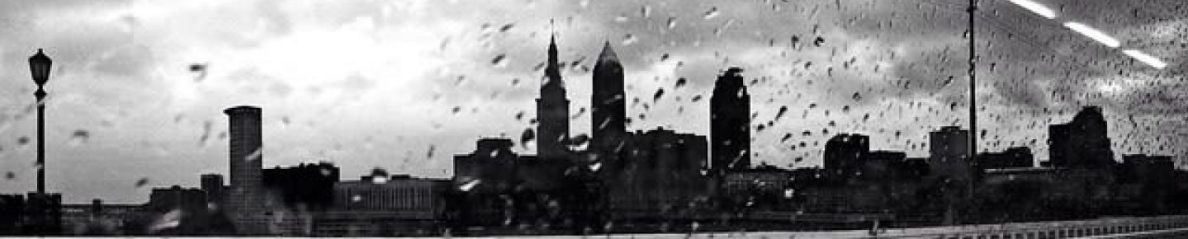
I got up last week and the words wouldn’t come. So I went for a run and wound up walking through the neighborhood, hearing wind chimes, looking at yellow rectangles of distant windows. I watched black water twist under a bridge and felt the first drops of morning rain. No one was awake. No one looked out at the shape of a man standing still on a bridge in the dark, listening.

Eating

Everything eats.  That’s not the problem.  The problem starts with what lies beyond that fact.  And there’s no solution: what we don’t consume has no value.  What has no value does not exist.  Consider the cafeteria.  I’m sitting in it with my friend, Hector, facing the conundrum of life over mashed potatoes and meatloaf for him, a boxed ham sandwich for me.  Who are we to complain?  It’s not horrible food.  It’s edible.  Kind of stiff.  A little stale.  Somewhat undercooked.  But don’t cry for me, Argentina, it’s a campus lunch.  If it goes down and stays put, I’ll bow in gratitude to the bounty of celestial providence.

“That’s a dry sandwich,” says Hector.

Yes.  I know.  I’m eating it.  “Those potatoes look runny.”

He nods slowly, regarding his mashed potatoes the way one views an autopsy subject.  Damn shame, such violence.  But at least it’s not a dry sandwich out of a plastic box.  He got his meatloaf and potatoes from the food line, ladled out of a metal tray like in every prison movie right before the commissary riot.  Greasy steam rises from the food-line entrées and they never smell good.  Runny potatoes.  Feral carrots.  Dubious peas.  Condemned meatloaf.  Overcooked bok choy in a forlorn soy sauce.  Bricks of peaked mac and cheese so dense they have to be chipped off with the tip of the spatula.  I’ll suffer the dry sandwich, thanks.

Hector and I meet in the campus cafeteria about once a month, ostensibly to discuss the renovations being done to the building where I work, but in reality just to insult each other’s food choices and make disparaging comments about the students.

“Look at them snakes,” he says as two undergrads dressed like ice cream cones float by.  Not actual ice cream cones; though, I’ve seen that and many comparable absurdities on this campus, but looking like they just went nuts at a discount white sale in June.  Something out of the director’s cut of Zardoz—new age Egyptizoid background extras in a dystopian shopping mall, while Sean Connery runs around in a red diaper shooting people.  The one wearing a huge amethyst pendant glares at us.

The gun is good, I think to myself, but I don’t say it because Hector won’t get the reference and anyway he’s still going on about them snakes.

“We didn’t see snakes like that when we were in college, am I right?”

Hector’s a large man, completely bald, and, as far as I know, has been faithful to his wife for 25 years.  But he talks like he’s still working on gen ed requirements and an internship.  College females are “snakes.”  College guys are invisible.  The university is “this shit,” as in, “This shit wants me to supervise over Christmas to make sure the HVAC gets in.  Can you believe it?”

I can believe this shit.

“Snakes like that—it’s the social media, okay?  The TikTok.”

“Chinese spyware.”

“China don’t care,” he says.  “Look at them robes.  They look like Stargate.  Leisure studies majors.  You think China cares about leisure studies majors?  That ham’s killing you by inches, brother.”

“China wants me to eat this ham.”

He frowns at my sandwich, cuts into the meatloaf slab with his plastic fork.  “That’s not even ham.”

I came to this job over two years ago because I was starving.  Let’s not say, “starving.”  Let’s say facing the prospect, such that boxed cafeteria lunches came to seem like mana from on high.  My old life got invalidated by a bat virus doing what it was engineered to do—eat.  The freefall unreality of the pandemic, where going to the grocery store felt like dicing with death, ate my finances.  I didn’t like how broke I got, how politicized everything got, didn’t feel like the virus cared much about feelings, opinions, theories, or rent.

All I knew was that, when I got Covid, it was the worst flu of my life.  I hallucinated conversations with dead people, ancestors, goddesses, spent a few weeks in a delirium where I thought I was probably going to die, then managed not to.  After it cleared up, I found a job on campus—not the university teaching job I’d always wanted, but still.  Still.

“That meatloaf looks more loaf than meat.”

“Cute.  This fantastic repast is straight from heaven.”

“Send it back.  Make god eat it.”

“Don’t blaspheme.”

And now, a new life of blasphemy and snakes.  As Dante wrote in La Vita Nuova, “If I bethought myself to seek out some point at the which all these paths might be found to meet, I discerned but one way, and that irked me; to wit, to call upon Pity, and to commend myself unto her.”  Those of us who lived through the pandemic will never know why we did while others didn’t.  All we know is that chance or fate took pity on us so that we could sit on college campuses and watch self-conscious children glare and parade around in costumes.

“If I tabulate all the money I’ve spent on bad campus food, it’s like I’m giving back my paychecks.”

“That’s what you do,” he says.  “They give you money.  You give it back.  They give you things.  You eat them.”

On that note, we do.  Perhaps, as we consume our vital sustenance, we ask ourselves what we’re feeling.  Perhaps, as we are sensitive individuals, in touch with our emotions, we turn inward as we eat, content to probe the range of personal meaning inherent in the act.  Or maybe we just shovel it down as quickly as possible.  I set the last quarter of my ham sandwich aside.  It is truly dry and I didn’t get anything to drink.

“Linda says she thinks she might be a lesbian.”  Hector stares across the cafeteria, through the beige wall, over the landscape, beyond at least one ocean, at an image in a distant land that holds the truth of that statement.  Maybe a better meatloaf.  He puts the last chunk in his mouth and chews.

“You getting a divorce?’

“Maybe.  She said don’t worry, though.  Right now, it’s just a thought she’s having.”

Two boys with skateboards sit at the table in front of us.  They don’t have any food.  And I wonder why they’re here, why, of all places they could go, they’ve chosen a space that smells like rancid creamed corn and burned toast.

“Thoughts are just thoughts.”

“Yeah,” he says.  “Exactly.”

I look at the scar that runs up his right forearm, perfectly dividing the sun tarot card tattoo surrounded by cherry blossoms.  I look at the red-and-white Aloha shirt and the heavy gold chain he wears on the outside of his black undershirt so it will stand out in the “V.”  And I think sometimes I must not be the loneliest person on campus.

Hector and I are both 30 years older than these students.  We’re in the gray area, marked “staff.”  We’re not on the academic food chain.  We don’t consume.  We are not consumed.  We merely facilitate the consumption.  And that which is not consumed cannot exist.  We’re ghosts.

A couple dressed in skin-tight gym wear starts to make out at one of the central tables and everyone in the cafeteria stares, but only for a moment.  It’s a new life, I think, a new world.  It intersects my old, dead middle-aged life that barely sustains, that nobody wants, that tastes like something from a cafeteria food line.  Hector stares a little longer then looks over at the last of my sandwich.

“You gonna eat that?”

I tell him no and he picks it up with two fingers, puts it in his mouth.

“Peace,” he says, still chewing.  “Stay healthy.”

I wave and watch him move toward the door, a foot taller and two wider than everyone present.  No one looks at him.  He’s not an entrée.

I sit there for the remainder of my lunch, empty plates in front of me, watching young love in action.  The outer part of me wants to feel contempt for them doing that in public, but when I ask myself what I’m feeling, I have to remember to be grateful.  I’m alive.  I’m still here, for what it’s worth.  I still get a boxed sandwich, a little more time, and a table off to the side.