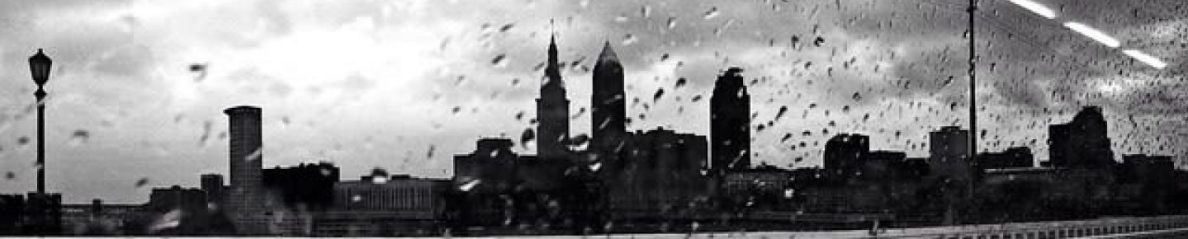
On Loneliness

I finished a short story draft this morning before dawn. I don’t know if I’m going to post it here, but I’m definitely sending it to magazines once I edit it. That’s what it’s like to be a writer. You sit alone at a desk in the early morning or late into the night, making a world from the stuff in your head. You never know if you’re good. You never know if the responses you get (if any) are accurate or truthful. You’re completely alone in every way that matters. And, when you aren’t, you still are. Amateurs say “writing community” and the real artists give a little side-eye. Sure, sure, the writing community. That’s great. Now excuse me, I, uh, gotta be somewhere.

When you’re finished and the draft is as good as it’s going to get, you put it into the Submittable churn or email it to a magazine editor. If you’re a big deal or trying to pretend that you are, you send it to an agent or a manager, the beneficent industry parasites who are supposed to make everything easier but who can’t until you make it easier for yourself and don’t need them. Most of them don’t understand anything about sitting at the table in the dark.

And then your story, which is weirdly no longer connected to you, does its own thing out in the wild, cycling through the picayune innards of small-press publishing—the ugly Rube Goldberg literary digestion machine, glimpsed imperfectly at a distance and kind of stupid, mean, and silly all at at once. But by then you don’t care. You’re already on to another project.

A professor of mine once said, without early childhood loneliness, there’d be no one majoring in English. But I say, without lifelong loneliness, there’d be no one writing short stories or poems at 4:00 AM at the kitchen table. Or maybe I’ve got it backwards. Maybe without the stories, there wouldn’t be a cold, empty house. There wouldn’t be darkness and the need to imagine you are somewhere else. There wouldn’t be regret and the bitter absence of everyday joys that others take for granted. Because this is what you get, what everyone gets. This is the price for being able to make art.

Maybe I’m being melodramatic. Some days, I think so. On the worst days, not. Like when Vincent Hanna asks Neil McCauley in the legendary diner scene in Heat, “So you never wanted a regular type life, huh?”And Neil answers, “What the fuck is that? Barbecues and ball games?” And all Vincent can say, because it’s true, is “Yeah.”

Somebody asks me why I’ve been a wanderer all my life. Someone asks me what it is I actually do. And I have a variety of thought-stopping answers prepared. Because I don’t understand barbecues and ball games. I don’t understand normal life and day jobs, even though I’ve nearly always had one in which I wear a convincing man suit, function more or less effectively, and run a reasonable simulation of humanity.

A big part of the price is alienation, is becoming a weirdo, but that might be a chicken-egg thing. Would you have accepted this lifestyle if you weren’t already weird? When I was a kid, I spent most of my time alone, even when I was at school, especially when I was at school, making up stories. In college, the same. In law school, the same. In graduate school, the same. In fact, stories were what yanked me out of law school and full-on into the world of creative writing. Was I writing the stories or were the stories writing me?

James Baldwin said, “You think your pain and your heartbreak are unprecedented in the history of the world, but then you read.” And that also seems true. But then I think, would I be reading so much if I hadn’t already walked away from the barbecues and ball games? Shit, man, I didn’t even go in the stadium. I didn’t even get through the parking lot. A weird goth bus full of theater kids got me and I wound up smoking weed on a rooftop, asking is this where it’s at? And concluding, no, this isn’t. This is just another ball game. Where it’s at was back home in my room in my imagination. And now it’s at the kitchen table five days a week a few hours before I have to go interact with the general population.

Loneliness does strange and awful things. When we can’t share who we are or what we do in a meaningful way, something starts to rot and twist. And it never untwists. It just keeps twisting and rotting and twisting. You look at yourself one morning, at the shadows in your face, and ask, is this what I am? A creature of the night? You think, I’d rather be a night-blooming flower than a cockroach. But it’s all of a piece.

You’re a member of the class of beings that takes meaning in absence, in solitude, in the unnatural silence of the world asleep. But you’re not asleep. In fact, it’s the only time you’re fully awake. And so one comes to understand, to see oneself, in the figure of the moth, the vampire, the possum, the spider, the blossom at the end of a branch nodding in the wind, all the carnivora that wait for nightfall while the wide world pounds by overhead. The moon is their sun. And yours.

As I sit at my desk, like I did this morning and the morning before that and the morning before that, building artificial realities out of words, I often wonder what it’s like to lead a regular type life. “No such thing,” someone said to me recently, but he doesn’t know. He’s a weirdo, too.

I got up last week and the words wouldn’t come. So I went for a run and wound up walking through the neighborhood, hearing wind chimes, looking at yellow rectangles of distant windows. I watched black water twist under a bridge and felt the first drops of morning rain. No one was awake. No one looked out at the shape of a man standing still on a bridge in the dark, listening.

Words and the Reunification of Words

College. I won an award from the German Department: “Most Improved Student of German,” oder Der Deutschlerner mit den Größten Fortschritten. Or something like that. It was an award for good character and endurance rather than achievement, a participation trophy given to students like me.

Students like me: generally those whose families didn’t have villas in Bavaria. My family had a villa in east San Diego on Cherokee Avenue and we had German Shepherds, but it wasn’t the same. Maybe I couldn’t afford to go on any of the sponsored international trips. Maybe I couldn’t manage to learn the language in any functional sense. But I had a pulse and was willing to sign up, course after course. Hence, “Most Improved Student of German.”

The German Department at UC Irvine needed students to keep taking German. So the Department sought to develop a novel pedagogical strategy: encouragement. Deployed effectively, it was intended to keep those of us at the bottom of every class ranking (the German Department wanted to be encouraging, but it would not give up its internal student ranking system) from becoming too hopeless and depressed.

But I soon understood that if your father was a diplomat and you spent your summers in Berlin, you wouldn’t need such help. Sandra von Hayden’s father, for example, really was a diplomat. She liked to ask me what in the world I thought I was doing in German. She sat next to me, quarter after quarter, from German I up through Post-WWII Literature B, asking versions of that question, until I realized that her constant rudeness was a mode of flirtation. Unfortunately or fortunately, the realization came too late. I mostly pretended she didn’t exist. But later I’d ask myself, “What in the world do you think you’re doing here?”

There was the aristocratic Belgian kid, Benji, who knew Jerry Garcia and a bunch of other celebrities and politicians, sad black-dress-wearing Lena, and cheerful Day-Glo anime lunchbox Cindy Chang, who was quite possibly the only German student worse than me. I recall some Swiss kid, living in Huntington Beach, who was trying to be a surfer dude for a year, and a gorgeous Italian exchange student who seemed to already know ten languages and was now studying Russian and German at the same time. I also have a vague memory of an older Canadian guy, who kept asking people to call him “Grumpy Bear” (Mürrischer Bär); though, the reason for that is lost to time.

The teacher, Herr Steiner, called me “Herr Davis” because of my constant comical seriousness and constant comical mistakes. He called Cindy, “Immer-spät Cindy” because of her constant comical lateness. Together, Cindy Chang and I were the two comical North Americans studying German in North America. I don’t remember the other students. When I think about those years, many things are blurry because I was trying to write a science fiction novel and I believed that required industrial-sized bales of marijuana and a comparable amount of alcohol.

Still, I got As in nearly all of my classes, including the ones in German. I studied hard during the week. On the weekends, I worked on my novel about a scientist who develops a process for communicating with an alien intelligence inherent in metals and then applies it to the iron in human blood. He becomes a kind of prescient vampire, someone who knows things that should not be known. I never finished the first draft, but I worked on it for a long time. On certain blurry evenings, I allowed myself to think it was brilliant.

But back to Bavaria. Rothenburg ob der Tauber. Munich. Shopping in Bonn. Hiking in the Black Forest. Concerts in gowns and tuxedos with Vati und Mutti. Such things were closed to me and, now that I think back on it, I’m pretty sure that was good. I wouldn’t be the questionable character that I am today if I’d been that respectable at age 19.

I should have taken Spanish and eventually I did. But I felt obsessed with German. And I am constitutionally incapable of stopping once I develop an obsession. The world gave me subtle hints—sometimes not-so-subtle hints—that I should quit while I was behind. But I am stubborn and prone to saying, “No, fuck that. I’ll do what I want,” even if I have to say it in a language I don’t fully understand.

Lean days. I didn’t own a computer. The UCI humanities library still had a glass room full of typewriters and one could see students in there, applying correction tape to their term papers every November. I had an IBM Selectric that my pot friend, Kyle, stole for me out of a car, and a Brother word processor with a LED screen half as big as your phone. I couldn’t afford the ink cartridges for the Brother. More often than not, it was the Selectric, which overheated every two hours. So that was my weekend work method: write for two hours, smoke, read, write for two more hours.

But the German Department award came with two interesting prizes. One was Wörter und die Wiedervereinigung der Wörter, a book of poems by Hans-Jost Frey, and $500. I should have bought a better Selectric at a yard sale and saved the rest of the money, but I believe I’ve established the sort of decisions I was making at that point in my life. Instead, I went to Sears because they were having a sale on used Packard Bell computers.

Little did I know that Packard Bells are historically regarded as some of the worst computers ever made. I didn’t know a thing about computers. I just thought, this is what I need to finish the novel. And, of course, once I completed my novel, everything would change. I had big dreams. All it would take was a little more perseverance, a little more fuck that.

I also didn’t know that the cleared-out area next to the garden section where they had the used computers on display was staffed by two guys getting paid on commission. I hadn’t yet explored the world of retail sales and had no idea what brutal exigencies of fate could cause a 30-year-old man named Ted to have to work in Sears, next to a wall of lawnmowers, selling the worst computers ever made.

He had supernaturally bad dandruff. I’ll never forget it. At first, I thought it was a white speckled design on the shoulders of his blazer. This was, after all, 1993, and you could still see styles like that from the the 80s.

Ted said, “Hey dude,” and we shook hands in front of a shelf of assembled Packard Bell systems. They were being offered as packages: computer, printer, monitor, keyboard, mouse, and I think some kind of plastic desktop organizer for pens and paperclips. $400 for each bundle.

We stood in the green garden show area, breathing the fertilizer from one aisle over, and nodded in mutual appreciation. This was it. I was going to be one of those people who owned a computer. I was a serious man now. I felt like I was one step away from having a cream business card with WRITER embossed on it.

Ted rattled off a number of technical details and I nodded like I understood. In fact, I’d expected nothing less. It had a modem inside it, you see, so you didn’t have to buy that idiotic phone receiver cradle that everybody knew about because we’d seen pictures of them in magazines. No, this was a Packard Bell. And that meant you could use this program called “Mosaic” to get on this other thing called the “Internet,” where everything was free. And, Ted grinned, you could see titties. So many titties. “Am I right?”

I felt over-stimulated. I grinned back and said, “Right!” not really understanding what he meant. I knew generally about titties but had no idea about the internet or how the two might work together. I was a babe in the woods, a foal in the meadow, a kitten of the universe taking his very first steps onto the windowsill of consequence. Titties, you say? Internal modem? Why this is precisely the reason I came to patronize your fine establishment, my good sir.

Ted and I had obviously become the best of friends, which is why, in the process of ringing me up, he felt he needed to mention that the system clock didn’t “work perfect” and there was “something up” with the floppy drive. But, really, I’d chosen the best model there. Really. I was gonna love it. He knew I would.

When I got to the parking lot, where Kyle was waiting in my ancient Chevy Blazer, I realized I was an idiot. He stepped out, coughed 100 times, waved smoke out of the car, and squinted. “You just bought that with the money?” he said to the giant cardboard box that had once held an orange ceramic planter. He said it as if “that” were something incomprehensible and yet horribly depressing. And in that moment, I realized he was right. It was both of those things. I turned on my heel and went back to the garden center.

Ted wasn’t as happy to see me when I walked back in. When I told him I wanted to return it, he looked even less happy.

“You can’t do this to me,” he said.

“I want to return it.”

“You can’t return it. It’s used.”

“I’ve got the receipt you just gave me. It says I can return it within 30 days.”

“No, you can’t. That’s not right.”

At that moment, Ted’s colleague, a very thin man with hard eyes, who looked like he should have been manning the desk of a motel with hourly rates, shot Ted a glance and said, “Yes, actually, he can.”

Ted looked at him and seemed like he was about to cry. Then he looked back at me from behind the sales counter and said, “My mother’s in the hospital. I need this.”

And I said something like, “Why don’t you buy her a Packard Bell?” At which point, he gave me a look like he wanted to stab me with one of the garden section’s hedge clippers and processed my return.

I dropped Kyle off and gave him $20 for coming with me to Sears—because unless he was stealing something for you out of the goodness of his heart, Kyle never did anything for free—and went home feeling twitchy and strange. I’d never had that much money at one time in my life and I felt like I’d almost given it away to a pathological liar with dandruff.

On Monday, I was back in Deutschstunde, watching Sandra von Hayden field strip and meticulously clean the inside of her mechanical pencil with a Q-tip. She noticed me watching and mouthed, “What the fuck?” I gave her an empty stare and turned back to the documentary Herr Steiner was showing on the development of the Saxon dialect. Unfortunately, the documentary was in Saxon and even the Italian exchange student was having a rough go of it.

Immer-spät Cindy was, unsurprisingly, spät. When she sat down on the other side of me, she whispered, “What’d I miss, huh?” and Sandra glared at her.

“They’re speaking Saxon,” I said.

“What in the hell is that?”

I’d noticed that Cindy had recently started to wear fewer florescent items and pepper her language with profanity, which vaguely saddened me.

“It’s a dialect.”

“Herr Davis?” said Herr Steiner.

And I whispered, “Sorry.”

That night or maybe the night after, I would attempt to read some poems from Hans-Jost Frey’s book about words and how they get reunified and how this was like the reunification of Germany. I’d succeed enough to understand how far I still had to go. I still had the Selectric. I planned to buy 10 Brother ink cartridges. Maybe that weekend, I’d give Kyle a $20 to keep me company on a trip to a print shop where I could get some business cards made. Cream. Embossed.

Government Cheese: There’s Only One Way to Write a Novel


Writing a novel is a sustained evocation of mental energy, of shifting energetic states, and you have to acknowledge that on some level if you want to do it. This isn’t me pulling out the crystals. I’m saying that the state of mind involved in writing a novel is very different than that of a short story or a screenplay. It’s sometimes compared to an endurance run, but that doesn’t fully encapsulate how it feels when you’re actually writing. Maybe nothing can truly convey the feeling. You have to experience it for yourself.

The act of producing creative writing (maybe of producing any writing) seems subjective in the extreme. But look at the multitude of writing programs out there. There must be something about the practice that’s objective and teachable. I think, maybe: grammar, spelling, punctuation, awareness of voice, economy of language, paragraphing, dramatic tension, plot structure, metaphor, concrete detail, chapter dynamics, dialogue, symbolism, mood, perspective, cliché avoidance, implicit characterization, theme, and narrative summary.

Those are probably the things that can be taught. But they can’t really be taught. They can only be presented and absorbed. You get them or you don’t. You get them by reading, by being quiet and listening, by discarding the methods, formulas, and nostrums that purport to teach you about doing them so that you can experience the actual, unmediated thing. You have to get writing at the soul level, if you’ll excuse me for shouting from all the way back at the crystal counter.

Yes, I’m being romantic. Making art is a romantic thing. It’s not replacing irrigation systems or baking pies or doing basement plumbing; though, I should note that if you treated basement plumbing like an art, like something you have to essentially intuit through doing, through long observation, through cultivating appreciation, even through love, it would be pretty damn romantic, too.  Basement plumbing can be an adventure like novel writing. Ready? Bring me the PVC Charlotte pipe and some Oatey. This draft isn’t going to write itself.

In my first university creative writing workshop, the instructor said to the class, “I know a lot of you want to be writers. If there’s anything else you can do with your lives, do it. Because this is no way to live”—said the associate professor on the tenure track with his third book being turned into a screenplay for Miramax. Oh, I know, I thought, hard times.

What he was really saying was, “I’m special. None of you are special like me. So don’t try to be.” That ditty gets sung in every creative field (maybe in all fields) by those trying to reconcile crushing impostor syndrome and sunk costs with the countervailing sense that they’ve had to make deep violating sacrifices to get where they are and now they’re due for some cheddar. Bring on the cheddar, the sugar, the cash, the dancing girls. You owe me. “You” being the entire world in general and certain key individuals who haven’t yet come across with the goods. I want it and I want it now. See this contract? It’s a two-book deal. Look at it. LOOK AT IT.

Sure. So while he was saying this to us, I was thinking that I didn’t know if I was a writer, but I did know that I never wanted to be the sort of person who tells a room full of young, optimistic people to quit while they’re ahead.  To my credit, as a writing instructor, I have never done that.  Because you never know what somebody can do and talent is mostly hype.

You (yes, you, my little cabbage) can write a short story today.  You can write a good short story maybe next year (if you write most of the days between now and then and read a lot).  If you lay enough pipe, maybe you can write a novel, too. And my message to you is not that you need to be special.  No one is special.  My message is simple: time is short. So get to it.  Don’t quit while you’re ahead.  Don’t quit while you’re behind.  Don’t quit.

But I’m starting to sound like a motivational speaker, which is not my intention. Yesterday, in one of those weird end-of-day office conversations that only make sense after a gallon of coffee and a greasy cafeteria lunch have brought one around again to a deep appreciation of the plumbing arts, someone said that nobody wants a conservative artist the way nobody wants a hippie CEO.

Artists need to be liberal and romantic.  CEOs need to be stapled down and pragmatic. Otherwise, the great chain of being will snap into the abyss.  Apples will fly up.  Sad clowns will laugh again. And all the stained glass in all the cathedrals of the world will shatter at once.  If I’m not up at 3:00 AM with Lord Byron, drinking Albariño Do Ferreiro out of a human skull and speculating about beauty, am I even human?

It’s the mental shifts that get you. Your life is a river of thought, of energy.  You cannot change the course of the river—even if the uncertainty and lack of agency implicit in that realization cause so much anxiety that you run to the methods, formulas, and nostrums for at least some semblance of control. In this work, there is no control other than revision, which comes as an afterthought.

First and foremost, there’s the river, which twists and turns, shifting through the landscape of your weeks and months.  You have to let it carry you.  And the only way to do that is to trust it’s heading somewhere. That sort of trust doesn’t come from the world telling you you’re special. It comes from being afraid and doing it anyhow.

Don’t all rivers flow to the sea? If you don’t believe me, listen to the King:

Like a river flows

Surely to the sea,

Darling, so it goes

Some things are meant to be.

Which is to say, you need to let it happen and get out of the way.  Let it flow, holmes. What will be, will be.  There is nothing more authentically human than experiencing something with that degree of inscrutable inevitability. And being afraid.

My various writing instructors (assiduously not teaching novel writing, ever) over the years must have had the facility with language to express these things.  I suspect they didn’t because novels are what sell.  Novels are, as the abovementioned instructor put it on a different occasion, where it’s at. Novels bring the cheddar, the government cheese (in his case, the state college cheese).

Why teach 15-20 youngsters every semester how to become your competition when you could derail them into decades of story writing and frustration?  Instead, be sure to impart a short-form aesthetic that, while certainly beautiful, will also certainly not help them into an associate professorship and a novel optioned by Miramax.  Teach them scrimshaw instead of casting in bronze. You’re the bronze guy, after all.

We may not be special.  And the world may not need another novel (or another plumber, though, if I had to choose, the latter always seems like the better option), but when we get down to it, the world really doesn’t need anything.  It doesn’t need another accountant, another inflatable beach ball, another green-eyed cat with a striped tail.

Like the cat, you’re here because that river of energy coalesced into the shape of a person. You want to write a novel because that same energy put some mysterious sacred geometry in your head that makes you see in the dark with a writer’s eyes. And that means even if there’s something else you can do with your life, you don’t have to. You can do what you want.

Ang Lee wrote:

At one point, my in-laws gave their daughter (my wife) a sum of money, intended as start-up capital for me to open a Chinese restaurant – hoping that a business would help support my family. But my wife refused the money. When I found out about this exchange, I stayed up several nights and finally decided: This dream of mine is not meant to be. I must face reality.

Afterward (and with a heavy heart), I enrolled in a computer course at a nearby community college. At a time when employment trumped all other considerations, it seemed that only a knowledge of computers could quickly make me employable. For the days that followed, I descended into malaise. My wife, noticing my unusual demeanor, discovered a schedule of classes tucked in my bag. She made no comment that night.

The next morning, right before she got in her car to head off to work, my wife turned back and – standing there on our front steps – said, “Ang, don’t forget your dream.”

And that dream of mine – drowned by demands of reality – came back to life. As my wife drove off, I took the class schedule out of my bag and slowly, deliberately tore it to pieces. And tossed it in the trash.

Sometime after, I obtained funding for my screenplay, and began to shoot my own films. And after that, a few of my films started to win international awards. Recalling earlier times, my wife confessed, “I’ve always believed that you only need one gift. Your gift is making films. There are so many people studying computers already, they don’t need an Ang Lee to do that. If you want that golden statue, you have to commit to the dream.”

But back to drinking wine from human skulls: do it, mon petit chou, and have no regrets. Many people have uttered words over Albariño Do Ferreiro at 3:00 AM with Lord Byron regarding the subject of beauty. Why not you?


AWP in Ten Exotic Fruits

The guy who sold a superhero script to Disney was giving a talk in the Jabuticaba Room. The topic was whether superhero scripts were still commercially viable. The consensus was that they were not. The consensus was also that a superhero script optioned by Disney could pay the rent for up to three years in west Los Angeles if one lived frugally. The crowd appeared very amenable and the speaker was loud and effusive. It seemed like this was the most exciting thing he’d done in a long time. He told jokes and a few people laughed. A knot of MFA professors sat together, sipping the free coffee, looking on with blank expressions. It was the first event of the last day of AWP.

The aged lesbian who’d written a dystopian novel about gang rapes on a subterranean moon base was hosting the Mangosteen Awards Ceremony for the year’s top 30 writers under 30. It was called Mangosteen’s 30 Under 30, which had nothing to do with gang rapes on a moon base unless one wanted to think in very abstract terms. It was being held in the Tamarillo Auditorium and was listed at the top of the programme.

The important thing was HBO had adapted the moon base novel into a three-season series. Everyone wanted to know: how did this happen? How did she get an agent? How did her agent get an agent? How does one sell a novel to HBO? How does one sell a novel? Could I sell a novel to HBO? Could I sell you a novel to sell to HBO? Where is your agent’s assistant? Could she be sitting somewhere in the Tamarillo Auditorium right now? Are we in the Tamarillo Auditorium or are we somewhere else? Who are you?

The third top writer under 30 received her medallion at the podium and began to speak about her literary influences. She wanted to thank her mother and her fiancee, Matt. She wanted to thank Mangosteen Magazine for this award and for saying we see you. She knew she wanted to be a writer at age three, when she wrote her first short story. It was about a young girl with impostor syndrome. Moon Base broke in, said thank you and now we need to move on to the next medallion recipient. The third top writer hesitated, looked at the audience, then sat down in her folding chair.

The fourth top writer was called. His name was Durian Miller. Extremely pale and thin with spiky carrot-orange hair, he leaned into the mic and spoke directly to the first two rows, which appeared to be fellow students from his MFA program. They cheered like a high school pep rally. He wanted to thank his girlfriend and someone named Parcheesi. Or maybe his girlfriend was named Parcheesi. He’d already published a chapbook with Operose Press and wanted to congratulate them for going all-in on his recent short novel, The Whitest Tooth. He wanted to thank his agent for believing in him. His agent was also his mother, but she was his mother before she was his agent. He grinned and the first two rows clapped and hooted and called out, “Durian!”

Then came a pause for refreshments. Smokers over the age of 40, ineligible to receive a medallion from Mangosteen Magazine, shuffled toward the exit. A few others dashed past them. Neil Gaiman had been sighted in the bar across from the convention center, which created some anxiety. How long would Neil be there? Would there be time to approach Moon Base, ask her about HBO, and still catch up with Neil? There were 26 more top writers to go.

There was the panel discussion of nature writers who were now or had once been high school English teachers. It was held in the Tamarind Business Plaza, two blocks south of the convention center. This was an older crowd. The event was not well attended. Multiple glasses of water were drunk. There were many thoughtful, perhaps mordant, pauses in which panel members and the audience seemed to turn inward and ask themselves how it could have come to this.

A gray-haired panelist named Jacob spoke haltingly about his creative process, then stopped in mid-sentence and sighed. Someone at the back of the room began a phone conversation. But, because it was a small room, everyone present came to understand that the dog had gotten loose and the wife had been driving around the neighborhood with the kids calling its name. Its name was Salty.

The large woman to the left of Jacob had her hair in a thick braid that ran over her shoulder and coiled in her lap. She spoke slowly about the ecological conditions in western Paraguay, the Gran Chaco dying because of social media, her brother-in-law’s stomach cancer, and the rise of fascism.

Salty had not been located. Did you look in the park? Not that park, the one by the rec center. I know it’s getting dark, but you’re going to have to walk around. Tell the kids to stay in the car. I know they’re upset. IT’S NOT MY FAULT THAT THIS HAPPENED WHILE I’M GONE, CHERYL.

Someone said Neil Gaiman’s giving a reading in the bar across from the convention center, but the audience didn’t react. The woman with the braid had moved on to systemic racism Canada. Rare earths pillaged from Africa. The organ trade. Tibet. Birds killed by wind farms on the Central Cordillera. No one had the energy or the inclination to interrupt her. She did not speak about writing. People were constantly returning from feeding parking meters along the street.

The closest bar was the one where Neil Gaiman was supposed to be reading. It seemed probable, even necessary, that after this everyone would go there. Not for Neil but for solace. The parking meters would need to be fed along the way.

Back in the convention center, there was a different reading scheduled on the Jackfruit Mezzanine. Poets. Poets but actually MFA students who’d written poems, calling themselves poets. Well, that’s what they were, right? If you write a poem, doesn’t that make you . . .

A young woman had printed business cards. They read, L. B. Hannaker, Writer & Poet. They had a Gmail address and blog URL. Nice paper. Embossed. Would make a good bookmark. Could you let me have a few more? But L. B. was already across the room, still handing them out, smiling directly, if only for a moment, at every recipient. Blond hair. Big blue eyes. You’ll go far, my child, one thinks and then berates oneself for unconscious sexism. Of course she won’t go far. She’s a poet.

She’ll go as far as the podium to read something called, “My Grandmother’s Hands.” After that, she’ll read one entitled, “I Loved You In Sadness.” A knot of MFA professors will look on with blank expressions—except for L. B.’s poetry professor, Kyle, wifeless for the duration of the conference, who’ll give L. B. a loud, standing ovation. The other MFA professors will slowly turn their heads and look at him.

All these things will come to pass like dust in the wind, like blossoms on the cherries, the cherries of fate, the cherries of consequence, perhaps mistaken for salak in denser climes. Called “snake fruit,” salak have a scaly exterior that suggests snakeskin. They grow in Malaysia, Sumatra, Indonesia, Thailand. They’re a fruit-lover’s fruit the same way J. K. Rowling was once called a “writer’s writer.” But who called her this? Maybe a literary journalist, trying to stir something up. Maybe someone on a low-level pop-culture site, prospecting for clicks. J. K. Rowling is the snake fruit of the publishing industry. Once the darling of emotionally stunted grownups who liked to dress like English boarding school children outside Harry Potter movies, she’d become a pariah due to her political statements on social media. She was not invited to AWP. Still, there was a rumor. She’d arrived with her security detail at nearby hotel. There’d been a protest in the lobby. Arrests. A group of anti-trans-exclusionary furries. The donkey punched the puma in the face. A large rabbit was also involved.

Still, still. The important thing was that J. K. Rowling had a new book in spite of the controversy and a Potter TV series. The important thing was: how did this happen? How did she get an agent? How did her agent get an agent? How did she get stinkin’ rich? Can I get stinkin’ rich? Can I at least make enough to live in west Los Angeles for up to three years? J. K. Rowling, the salak of our times, might know.

People snuck out of the convention center and went looking. They slipped away from the “Creative Non-fiction for Social Justice Symposium” and the “Is Moral Fiction a Thing of the Past or the Future” address. They redirected their questions from Moon Base to Rowling because, after all, Rowling was richer and more famous than Moon Base. The world will never know whether Kyle, L. B. Hannaker’s poetry professor, was actually one of the furries arrested in the lobby, perhaps the man-sized pink lemur.

The last thing, the continuous thing, was the book fair itself, a noni of possibilities, lumpy, green, and undeniably pungent. Despite its smell, noni is highly valued for supporting the immune system. And so it was with AWP’s central book fair, more convention than conference, each booth containing a pocket dimension of dismay and prevarication, desperate glad-handing and perspiration. Walk around that noni and grow stronger.

This is where the business cards that say “Writer & Poet” really start to flow, where the indy press people, in their raggedy T-shirts and jeans, affirmatively and regularly remind themselves not to grind their teeth because, after all, they don’t have dental. It’s where you can walk the length of the floor, looking at new books, magazines, and literary journals from all over the world and not feel interested in any of them, everyone smiling but not wanting to smile, everyone passive-aggressively sharing contact information, eyes wide, thinking about the future or lost in the past.

At the end, the rumors about Neil Gaiman were revealed to have been started by the owner of the bar across the street. The reader was Neil Greenman. But by then, nobody gave a shit. Everyone just wanted a drink. The juice of the rambutan with four shots of soju. The devil’s soursop, a margarita of despair. The last night of the last day of AWP is when the healing could begin, but even that had a price. And Salty was still missing.

I’m the Greatest Writer of my Generation

Bukowski wrote a scene in which Henry Chinaski attends a test screening of what would become the film, Barfly. He’s drunk and, fed up, starts shouting that he’s the greatest writer of his generation and don’t they realize this. I read it in my early 20s on a bus from San Diego to Iowa City because I’d gotten into the University of Iowa as an undergraduate and thought I might go to school there. Ultimately, I didn’t. But the week-long bus trip turned out to be an epic voyage unlike anything I’d experienced thus far in my life.

Large parts of it were also boring and gave me time to read Hollywood, Borges’ Labyrinths, a Dean Koontz horror novel, Midnight, and The Sun Also Rises. I didn’t know then that I was a writer; though, I’d already fallen into the habit of writing every day and had begun to form a sense of the literature I liked and that which I wanted to avoid. Years later, as a writing instructor, I’d come to see these two things as common traits in beginning writers—the need to write and strong preferences about reading. Interestingly, these qualities are not always present in students and scholars of literature, which is what I thought I wanted to be at that point.

And before you say, Really? Dean Koontz? with that look on your face, I’ll add that it’s good to explore what everyone has been bullied into agreeing is unworthy. I’ve read far more Stephen King than Dean Koontz. I think the former is a better pulp writer than the latter. But, even back then, I wasn’t going to allow myself to be shamed out of reading anything. Read everything. It’s not healthy to restrict yourself to the current, politically unassailable conversation-piece novels being extruded by the Big Six. That said, yes, Koontz is mostly a shit writer. But sometimes you have to excavate the shit to get to the good stuff beneath it.

I wanted to study English lit in the Midwest because it was far away from southern California, where I grew up and which I regarded as the locus of my teenage suffering. I hadn’t learned that the locus of one’s suffering is more ubiquitous and less tangible than merely the place where you did time in high school. Unfortunately, the early 20s are like that. You think there must be answers and that others must have them. How else could the world function? That’s one reason I still read fiction even though I know better. The search for nonexistent answers is a hard habit to kick.

So there’s Henry Chinaski, doing his enfant terrible routine in the back of a screening room in Hollywood, shouting with as much self-conscious irony as possible, Don’t you know who I am? Maybe Bukowski believed, at the time Barfly was being made, that more people should know about him and acknowledge his talent. But I suspect it was just the opposite: he felt that fewer smarmy media people should be kissing his ass while he nonetheless obsessively courted that attention.

In Starship: The Magazine about Science Fiction, Robert Anton Wilson describes this personality type:

Most of the characteristics which make for success in writing are precisely those which we are all taught to repress. These characteristics are denounced by religious leaders everywhere, by most philosophers, and by many famous psychologists. I refer to such qualities as vanity, pride, even conceit; to raw egotism and grandiosity; to the firm belief that you are an important person, that you are a lot smarter than most people, and that your ideas are so damned important that everybody should listen to you.

Wilson exaggerates to make a point about the necessity of getting past writerly impostor syndrome, which seems more prevalent in young writers now than ever before. Being a good, sanitary, moral citizen may be at odds with producing fiction that isn’t flaccid. Unfortunately, mannered writing is often rewarded by businessmen who think of books in terms of “units” and scholars who’ve exchanged their libidos for analytical abilities and an academic nihil obstat.

Nevertheless, it may be reasonable to say we’d like to write what we’d like to write.  And we’d like to feel less like impostors while we do it.  We might not need to indulge in Wilson’s “raw egotism and grandiosity” or, as Chuck put it in a 1964 letter to Ann Bauman, “New tenant downstairs knocks on her ceiling (my floor) when I type. This, of course, disturbs the thought context all to hell. Doesn’t she know that I am the great Charles Bukowski?” We would like the thought context, at least, to remain stable.

A few years after my fateful interstate bus odyssey to Iowa, I found myself standing in a one-bedroom apartment in Los Angeles with a Turk named Marat, both of us holding electric guitars plugged into enormous Marshall amps, which, if dialed up one or two more notches, would have disintegrated us at an atomic level.

Nobody cared.  People played loud music all the time in that neighborhood, mostly rap, which Marat hated.  Hence, his daily hour of deafening scales and perfect renditions of every song off his favorite practice albums, And Justice for All, Surfing with the Alien, and Seasons in the Abyss.  We could sometimes hear people outside on the street yell, “Turn that shit off!” or just “Fuck you, white boy!”  Those were more innocent times.

Marat was a fellow student at UC Irvine (my B-choice after realizing that Iowa wasn’t what I’d hoped it would be) and he had a record executive uncle back in Istanbul.  He’d supposedly gotten guitar lessons from Kirk Hammett and Eddie Van Halen.  Now, having established my worthiness, he’d decided to pass on the electric guitar darshan to me.  But I was hopeless.

He gave me lessons for about a month on equipment and instruments that probably three-fourths of Los Angeles couldn’t afford.  And I struggled to follow him through songs like “Always with Me, Always with You” and “Dead Skin Mask,” which Marat thought should be relaxing and teachable.  One thing he did tell me, though, which seemed extremely weird at the time but which made sense to me years later in a Bukowskian way, was “You’re holding it like a classical guitar.  That’s bullshit.  You have to hold it like your cock.”

Granted, he was as macho as he was romantic and he thought real artists should be willing to destroy themselves.  So, having listened to Marat’s aesthetic philosophies for almost a year, him saying I should hold the guitar like my cock wasn’t that outrageous. He could have just as easily said, “First, you have to dive off the roof and land on your face. Only then will you be ready for the arpeggios in ‘Eye of the Beholder.’”  Maybe so.  Maybe so.

I often think about this advice, something that could not be uttered publicly—if only due to its forbidden machismo, much less the fact that it wasn’t said by Lizzo, any post-1980s rapper, or a tranced-out John Fetterman. As such, it qualifies as an esoteric teaching on par with Wilson’s claim, in that same article, that society probably hates writers and wants them to fail if they dare believe in themselves:

The only thing most people hate more than success is self-confidence—a warning signal that you might be a success soon. This is not what they teach you in Sunday School, but it happens to be true: at any evidence that you might be a success, the envious will do everything in their power to destroy you.

Therefore, there is no chance at all that a high self-esteem will go unchallenged; it will be challenged on all sides, daily. On the other hand, if you have a low opinion of yourself, nobody will ever correct it. You will have it for life unless you correct it yourself.

Hold the guitar like it’s your cock.  Wave it over the crowd like a benediction. People will hate you.  Live, laugh, love. So goes the creative process, the harmonium of the spheres. You have the further option of staying up all night, drinking cheap wine, and listening to classical music on the radio, but that may be too much Henry Chinaski for comfort.

I don’t know what happened to Marat after he went back to Istanbul.  I like to imagine he became a rich music executive like his uncle before the record industry disappeared.  I still can’t play “Blackened” and I haven’t felt the urge to stand up and scream at groups of people that they should know who I am.  The sheer audacity of sitting down to write anything is enough for me.  It’s probably enough for people to hate me, as I discovered last year when a literary magazine nervously un-accepted a story of mine because I was openly critical of certain political figures on social media.

You are, however, encouraged to secretly regard me as the greatest writer of my generation.  I’ll do my best to hold the guitar properly and send you forth with writerly blessings.  Or perhaps with this thought from the opening of Bukowski’s “My Stay in the Poet’s Cottage”:

for those of you interested in madness, yours or mine, I can tell you a little about mine. I stayed at the poet’s cottage at the University of Arizona, not because I am established but because nobody but a damn fool or a poor man ever visits or stays in Tucson in the summer months. it averaged around 106 degrees during my whole stay. nothing to do but drink beer. I am a poet who has made it known that I do not give readings. I am also a person who becomes quite a jackass when drunk. and when sober I don’t have anything to say, so there weren’t many knocks at the poet’s cottage.

There’s never anything to say when you’re staying in the poet’s cottage.  Nothing.  No one knows you’re the greatest writer of your generation.  You don’t even know. It’s unclear how you got there and, goddamit, someone keeps tapping on the ceiling when you’re trying to work.  There are no answers and you feel confused about the questions.  Turn up the amp.  Land on your face. If you live, Rimbaud. If not, well, the thought context probably wasn’t right.  Too bad for you.  You’re in the poet’s cottage now, bucko.