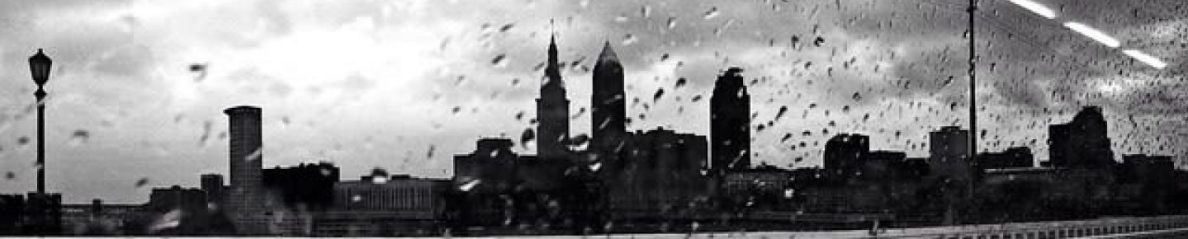
There was something evil in the glow of the room’s blue lights. I felt the weight of the man on top of me. He could no longer move. His eyes were closed. I stared long into his face. I realized that I wanted him. I wanted the passion he had until a moment ago. I wanted his shoulders, which were quite muscular for his age, and his naturally tan face. I got out from under his body, sat in a chair, and lit a cigarette. I had to wait like this until he fell into a deep sleep.
It was raining outside.
— The Kingdom, Fuminori Nakamura (trans. Kalau Almony)
Category: Creative Writing
2010

First, a Sincere Declaration of Thanks
I’ve spent most of my life running in circles looking for something authentic, then waiting for permission to explore it, and harshly criticizing myself when I didn’t get that permission. Maybe other people have different experiences, but this has been mine, my personal through-line from childhood to the present. So I try to be as sincere as possible when I write about my frustrations and failures. Because what else can I do? While it’s true that sincerity doesn’t make you friends, at least it makes you the right sort of enemies. I imagine this blog post will do more of that.
Still, I try to avoid self-pity and, because of this, I usually take a long time to form opinions about what I’ve done or failed to do and how others have reacted. I ruminate. I turn things over, trying to see past faulty assumptions, convenient rationalizations, and other self-serving anodynes. Most people probably do this to some extent, but I think I do it more. Sometimes, it works. Other times, what I took for a true perception, for reality, eventually dissolves into just another subjective field, just another corridor of the maze that I have come to think of as my life. In a maze, you never know what the next twist will bring. Usually, it brings another twist.
With this in mind, I should begin by saying that in 2010 I came very close to ending my life. This essay is about that time, but it’s not just about depression and not really about suicide. It’s not a success narrative where I write about how I overcame great difficulties and am now nearing perfectibility. It’s not about taking revenge on others through a misguided petty hit piece. And it’s certainly not about castigating myself for the many imaginary errors I’ve regretted and then dismissed over the last eight years in order to keep getting up in the morning. It’s a slice of life—a big, fat, ugly slice that tries to embrace the broadest range of experience in order to get closer to the truth. In this, it’s a lot like an advanced non-fiction exercise.
“Advanced” because it is not easy and not something you would assign to a 17-year-old English major in an introductory writing workshop. “Non-fiction” because it’s a mode of creative expression that pretends a certain degree of inviolable objectivity, even though we know that’s impossible. Every memoir, no matter how fabulous, must begin implicitly or explicitly with an assertion of truth or at least with a sincere declaration of authorial good faith: “I did this. I saw this. This happened. At least, I think it happened.” Rousseau’s Confessions does it with style:
Whenever the last trumpet shall sound, I will present myself before the sovereign judge with this book in my hand, and loudly proclaim, thus have I acted; these were my thoughts; such was I. With equal freedom and veracity have I related what was laudable or wicked, I have concealed no crimes, added no virtues; and if I have sometimes introduced superfluous ornament, it was merely to occupy a void occasioned by defect of memory: I may have supposed that certain, which I only knew to be probable, but have never asserted as truth, a conscious falsehood.
This is my favorite passage from the first part of the book because literary historians have proven that the Confessions contains many misstatements if not deliberate falsehoods. Such graceful bald-faced prevarication is a rare and beautiful thing. But I am not so talented. And I have no plans to weigh my heart against a feather on the last day.
Instead, I will put it this way: I suspect I am not a horrible person. I have faith that I’m not even tactless. I believe my greatest defect is that I lack the imagination necessary to see several moves ahead. I lack interpersonal foresight, which has made me a poor manager of nervous egomaniacs and a terrible chess player. But I love chess. And that is a serious problem, even if I hate the high-strung pampered egomania of academic writing programs, because everything toward the end of my PhD program was just a version of that game.
Robert Greene, in the acknowledgements of The 48 Laws of Power—a book loved equally by goateed 25-year-olds with a Libertarian Bitcoin fetish and the morose IT professionals you see combing the self-help section for books on how to become an alpha male—has a similar protestation of sincerity:
I must also thank my dear friend Michiel Schwarz who was responsible for involving me in the art school Fabrika in Italy and introducing me there to Joost Elffers, my partner and producer of The 48 Laws of Power. It was in the scheming world of Fabrika that Joost and I saw the timelessness of Machiavelli and from our discussions in Venice, Italy, this book was born. . . . Finally, to those people in my life who have so skillfully used the game of power to manipulate, torture, and cause me pain over the years, I bear you no grudges and I thank you for supplying me with inspiration for The 48 Laws of Power.
If we read this carefully, we have to smile. Greene is doing what we might call an “inverted Rousseau,” making the same assertion in a backwards way: this is a book about real things; therefore, I thank all those who have manipulated and tortured me for providing good material and, in the process, I declare my sincerity.
Greene puts us on notice that his book is based on subjective material that emanates from his and Elffers’ lived experience, creating a Rousseau-esque escape hatch. As The 48 Laws of Power is all highly subjective (essentially a kind of implicit portrait of Greene stitched together in historical anecdotes), the value of whatever he writes defaults to his apparent sincerity (“I may have supposed that certain, which I only knew to be probable, but have never asserted as truth, a conscious falsehood”). It’s not about an objective truth process. It’s about rhetorical ethos.
That is wonderful because ethos might be the only sincere rhetorical mode. After logos topples from an unstable foundation of assumption, appeal to authority, and generalization; after pathos is unmasked as merely a screen of emotion recollected in tranquility; the persuasive credibility of the speaker is all that remains. In a world where absolute truth does not exist, everything is ethos. And so I construct my own ethical escape hatch.
2010 was the worst year of my life, the year after my mother died of lung cancer; the year after my first book was published; the year I got my PhD in English; the year I attended my last AWP Conference; the year I traveled to the deep South for an excruciating week-long job interview and realized the English department clichés also obtain south of the Mason-Dixon Line; the year I got very ill; the year I was admonished by my mentor for questioning the value of my degree and told to be grateful for indefinite unemployment; the year my father began another surly adolescence; the year I began to think that there was no place for me in this world. There are many years I’d relive if I could. 2010 is not one of them. But I have been told to be thankful for these experiences because they have supplied me with a lot of inspiration. As such, this writing is my sincere declaration of thanks.
Prelude
You never know what the next twist in the maze will bring but, in 2009, I think I was doing as well as could be expected when I stood in front of the department graduate adviser’s desk and said I needed a leave of absence to visit my mother in hospice. For some reason, that moment stands out as a prelude for the upcoming year.
The adviser, the department’s resident medievalist, seemed to exist in an acid vapor of contempt for all creative writing students and their keepers. She disliked me in particular because I’d dropped her Old English seminar the previous semester and she’d taken it personally. Since I was doing a PhD with a creative dissertation (the final product would become Gravity, my first story collection), I didn’t need to be in her class. But she needed me there. Or, at least, she needed to feel loved by as many students as possible.
This was the woman who would thereafter try to prevent me from graduating so that my funding would run out. This was the woman—whether due to old workplace feuds or out of resentment that there were more creative writing events on campus than dramatizations of Piers Plowman and undergraduate maypole dances—perpetually tried to block funding to the creative writing program and force out the graduate students depending on tuition waivers. Her style of chess was to kill the pawns first. Attack the supply lines, starve the more dangerous units in their fortifications, and wait for winter. Classic medieval siege tactics.
However, standing before her desk, I was barely aware of the billowing acid cloud. I was half-blind with grief. All I thought about was my mom and how I had to get back to California to see her. Looking back, I’m surprised I even had the wherewithal to stand up straight, much less ask for a leave of absence. But I was very responsible. I took everything seriously. I thought a lot about my future in academia, especially in creative writing instruction. And I felt my future depended on me contentiously following up on every detail. I was, essentially, as sincere as I have ever been in my life. I shouldn’t have been that sincere.
Given my emotional state, what the adviser said to me didn’t register until I’d left the building. The conversation went something like this:
“I need a leave of absence to go to California because my mother is dying of cancer.”
She rolled her eyes, looked out the window as if she were considering it, sighed, then shook her head. “No can do. You only have so much funding. Your funding will not cover you for another semester.”
“My mother is dying. She doesn’t have long. I’ve completed my course work. My dissertation only needs to be approved. I don’t even need any more credits.”
Another sigh. More contemplating the clouds. “Well, that’s really too bad. You have to be in residence or your funding will run out while you’re gone. Good luck.”
I stood there, trying unsuccessfully to process this. Then she rolled her eyes and asked me if there was anything else.
The grief robot turned and left her office, got on the elevator, rode it down to the bottom floor, walked out to the fountain in the center of the courtyard, and stared at the water for a long time. Only then, did he think of the graduate adviser rolling her eyes. Over the ensuing 9 years, the moment of her eye roll would be impressed in his memory as a perfect metaphor, a perfect image foreshadowing all the inspiration and gratitude to come.
The Tragedy of Not Dying
A hospice is a horrible place. It’s like being given a lollipop for a bullet wound. You’re bleeding out and everyone tells you to enjoy your lolly. It’s cherry. It’s got a smiley face. Why aren’t you happy? Visiting my mother with my father there added another layer to the experience. In spite of the pain and horror of the place, in spite of watching my mother waste away in her bed, hallucinating and suffering and being afraid, I came to understand that my father’s grief was different from mine. I was feeling bad for my mother. He was feeling bad for himself.
This was still 2009. My only course, aside from empty dissertation credits, was a German reading and literature seminar. The professor, a kind old man about to retire in his late 60s, loved his students the way he loved his trees—which is to say, far more than he loved the university. I asked him for advice because he was the only person I could ask. And he made it possible for me to exist in two places at once. I gave my own writing students two weeks of work and held online course meetings via Skype and I emailed my German professor my work, which made it seem like I was present. This is what allowed me to fly to California and see my mom for the last time.
In those first awful trips to the hospice, I’d naïvely hoped that my father and I could come together in our grief and support each other. Of course, this was pure fantasy since he’d always enjoyed being a father but had rarely done any fatherly things. I could count the number of times we’d gone to movies, the one thing we could do together because it involved no conversation. And there were a few other misadventures over the years where my mother badgered him into going to some school play (he stood by the door to be the first person out) or taking me fishing (we did a U-turn at the access road to the lake and went home) or camping (it rained and so we packed up in the middle of the night and left). He never beat me and he brought home a paycheck. To the best of my knowledge, he never stepped out on my mother. But he was never involved more than that; though, he lived with us in the same house—somewhat more than a housemate, somewhat less than a relative.
So my hope that he would be able, somehow, if in a manly way, to share this painful experience with me, was not based on reality. After a certain amount of talk about how sad he was, it became noticeable that he never talked about my mom. He sat by her bed, lost in his own self-pity, as the cancer ate its way through her brain and wasted her body. As she died by inches, he proceeded as usual, focusing on his own needs above all else.
I witnessed this. My wife witnessed this. But I was so aggrieved I could barely speak. Sometimes, my wife had to help me walk from the car to my mother’s room. Have you ever been so upset that you can barely walk? Until you have, you won’t know the feeling. When you have, you’ll never forget it. It transcends description.
I focused completely on my mom. I waited for her moments of clarity. I told her I loved her. I told her the good things about my PhD program. I made jokes and she tried to laugh. One day, my great aunt—a stately old Italian woman who sounded like my late grandmother and seemed covered in the old-world charm that vanished with her generation—showed up with a peach and a kitchen knife. She cut slices and fed them to my mom with a smile on her face. Even now, as I write this, I cry a little because it was the most beautiful thing I’ve ever seen. That kind of goodness doesn’t exist much in this world.
It was a very difficult time. Two weeks later, I returned to finish my program. In one of her last moments of clarity, my mom had ordered me to go back. She didn’t want me to see her die and me being in the PhD program meant a lot to her. I think she felt ashamed that she wasn’t going to be around to take care of my father and me the way she always had. And knowing that I was going to get a doctorate was a relief, as if it would be the next best thing. She also had a lot of pride in her appearance and the cancer had been unkind. So when I offered to stay, she insisted that I not. About two weeks after that, my father called and said to say good-bye to her. I told her I loved her. And I think she died shortly thereafter.
I miss her every day. But this isn’t about that, either. It’s about the aftermath, how everything changed as a result of her death. Some people are the linchpins of their families. When they go, everything goes. That was what happened. I flew back again for her funeral. She was buried holding a photo of my father and me. It was a closed casket and I don’t remember much else, just bits and pieces. I was out of my mind.
As we moved toward the Fall semester of 2010, I felt melted down and recast as a different person. I’d lost my happy thoughts. I didn’t go out or talk to many people other than my wife and my program mentor. I stopped writing fiction. Most of what I did was perfunctory. But I knew I had to get my degree. Even if I collapsed afterward, I would complete the PhD.
The Reading Series
The year before, I’d allowed myself to be persuaded that working as the assistant coordinator for the university literary reading series would “look good on my resume.” And I did my best as the monthly, sometimes bi-monthly, flier maker, venue securer, introducer-to-the-introducer, complaint taker, fielder-of-calls from mentally unstable bookstore proprietors, irradiated scapegoat, and general handler of said low-rung celebrity infants terribles.
Sometime before I left town for good, one of the faculty members admitted to me that the assistant coordinator position was really only supposed to entail flier making and that the professor who was getting paid to be to be doing the other things had dumped the rest on me. But by then I was so depressed that I couldn’t summon the necessary outrage.
One writer wanted a per diem that wasn’t in his agreement. Another wanted intel on, in his exact words, “the most fuckable students who might be around.” The butch lesbian poet would only communicate with me through an intermediary because I was straight and male. The playwright was supernaturally high throughout his entire visit and had to be physically guided to the stage. The “local writer,” penciled in because there was a vacancy in the schedule that month, struggled to contain her spiritual darkness through the entire event such that when I handed her the honorarium (significantly less than what the other, slightly more famous writers had received), she snatched it out of my hand, hissed a “Go fuck yourself,” and then smiled broadly at an approaching faculty member. These were some of the more endearing ones.
Needless to say, it was not the greatest collection of individuals. They generally came across as worn out, mediocre, vain, full of fear, full of resentment, and perpetually on the hustle for any crumb of recognition. Calling them fools wouldn’t be accurate because they were all reasonably intelligent. They simply knew the score too well, knew they should have received more for their dedication and efforts. You could see that loathsome awareness stamped on their faces. Now they were privileged to read their work to the smirking tenured faculty who hadn’t hired them, a menagerie of twitchy English students, and whichever townies may have wandered in looking for free wine. It wouldn’t get much better than that.
I disliked the visiting readers even though I saw myself and my fellow grad students reflected in them. Most of the people featured in the series that year hadn’t been picked for life’s cheer squad. They were the leftovers, the understudies, the adjuncts with slim books from presses you’ve never heard of. Many, it seemed, faced depression so considerable that they were pharmaceutically enhanced 100% of the time. I wondered more than once how they could continue to produce writing. The greatest irony was that most of them had already gone further in their careers than anyone currently in my PhD program stood to go.
There were a few exceptions, a few graceful and brilliant souls who’d agreed to come as personal favors to various faculty members. I’d be remiss if I didn’t mention them as well as the moments of hilarity you find in every English department. 2010 wasn’t all doom and gloom, just most of it.
The second time I was told to go fuck myself was around 3 AM on a Sunday morning toward the end of Fall semester. My insomnia had become pretty dependable at that point and I was already awake when the phone rang. I got out of bed, told my wife I had no idea who it was, and shuffled into our tiny living room, where I sat on the couch and listened to the breather on the line. He was panting hard. I thought it was quaint that in this day and age people still gave breather-masturbator calls. The caller ID came up with nothing.
When he realized I’d said hello and was listening, he rumbled out a “Go fuck yourself” and hung up. I sat in the dark for a while, thinking about the human condition. Then he called back. It was F, one of the few grad students who’d been asked to read in the series. He mumbled some things and then shouted that he thought I had a problem and should get help. He was drunk off his ass.
I asked him why he felt that way and he broke it down for me. F had read with his wife, you see, and I’d made the mistake of introducing him before her. Neither of them were ever going to get over it. Plus, she was a Navajo princess and I’d introduced them as husband and wife. You don’t do that to a Navajo princess. Didn’t I fucking know that? What was wrong with my head?
“Princess? Really? I thought you guys were from Pittsburgh.”
He hung up again and didn’t speak to me until I ran into him at the AWP Conference a few months later—where he was keyed up and sweaty, slapping me on the back, telling me how he’d been featured in a very cool spontaneous reading held on one of the convention center’s escalators that drew an enormous crowd. Now he had a pocket of phone numbers to network. Amazing. He didn’t remember a thing about calling me in the dark and telling me what I could go do with myself.
Or maybe he’d repressed that memory along with his courtship of the Navajo princess, that hard winter living as tribe’s writer, the majestic swish of his khakis as he hunted buffalo, armed only with an unpublished manuscript. I haven’t seen him or heard a thing about him since the conference, but I suspect he’s either got tenure by now or he’s back in Pennsylvania selling pre-loved automobiles like it’s a poetry slam.
The End, My Friend
Depression is a very idiosyncratic and personalized illness. But those who have it tend to have a few things in common, one of which is that depression can be cumulative in its gravity and magnitude. Today, you’re not feeling good. Tomorrow, you can’t get out of bed. The day after that, you’re standing on a chair with a vacuum cleaner cord around your neck and you think you’re the only one in the history of the world who’s endured such a linear degeneration. Feeling alone is a big part of it.
I felt alone until I discovered Darkness Visible by William Styron and recognized a lot of what I’d been going through. I don’t know how I found the book, whether it was in the fiction section of the library where I sometimes studied or whether I encountered it in a used bookstore or somewhere else. While it wouldn’t be true to claim that the book “saved” me, I can say it helped enough to get me down off the chair, multiple chairs, actually.
Reading it was an emergency measure, but it was something I could depend on. I didn’t talk about my feelings. I’ve never been very good at that, not even with my loved ones. But I could read someone else talking about his. And since I loved Styron’s fiction, I felt like I could trust him. If he said it, I could accept it enough to be able to think about it. And that was usually all it took for me to keep going.
By Spring break, I was prepared to submit my dissertation. I missed my mom horribly and my wife and I returned to California to take care of the empty house where all my mother’s things sat gathering dust. My father wouldn’t go near the place. When he wasn’t drunk, he was hard at work rediscovering his hormones in erratic, awkward, and desperate ways. Our relationship, never substantial to begin with, began to splinter irreparably when, out of guilt, he started to regularly criticize my mom.
He was a self-righteous Catholic for most of my life, who often amused himself by telling me to get my ass to church and that since I’d been baptized I could never not be a Catholic. But after a year of drinking, trash talking, and a pissed-drunk rape attempt on my cousin in front of me, he was ready to start up a relationship with an equally neurotic married woman who’d run after him at an event.
He confessed this to me one afternoon because I guess he couldn’t confess it to his priest. Then he added that it was like a DH Lawrence love story. Then he said she was going to get a divorce from her despicable husband and they’d marry each other. Lovely. I didn’t want to hear about it. I especially didn’t want to hear him ask me to be his best man. I could hardly speak. It shows how detached and self-involved he was that he thought it was something he could ask me.
“What about all that Catholicism?” I remember asking. I don’t remember if he answered.
Around that time, because he wouldn’t help me clean out my mother’s things, I’d been over at the house, crying, putting her clothes in Goodwill boxes, packing up old photo albums, doing all the things we could have done as a family. Instead, my wife helped and we did the best we could in a few days. Much was overlooked, things from my childhood, things in the garage that I really do wish I could have kept. But we only had so much time. Now I imagine my father and his new wife paid at some point to have it all carted to the dump. But I have no way of knowing, since I haven’t been back in years.
I do recall taking to the gardener, who revealed that he’d had my mother making food for him right up to the point where she went into the hospital for the last time. She couldn’t lie down straight in bed. So she was sleeping sitting up in a chair in order to breathe, then walking around on crutches, cooking and cleaning. According to the gardener, he screamed at her frequently. She was fucking dying and this is how he treated her. That’s abuse. It’s horrible fucking abuse. And my mother, who was just about a saint in every way, did her best.
My mother was a talented painter and sculptor, but he’d left her art in a shed that had a broken roof. It rained a lot that year and most of her work was ruined. I’d been standing in the backyard, looking at the shed, unable to get in because he neglected to give me the key to the deadbolt (probably because he didn’t want me to see what had happened) when he called with a task for me. It was something small, something to do with getting a TV boxed up for him and cancelling the TV service that my mom had in her hospice room. I’d already taken care of it, but he spoke to me with contempt, as if I were very lazy. He said, “After all I’ve done for you, couldn’t you take care of this one thing?”
I thought of my mother on crutches, making him breakfast. I thought of her art destroyed through neglect. I thought of my father drinking a case of my cousin’s high-end champagne and then trying to fuck her in front of me. I thought of all the nasty things he said about my mother when she was gone, after he’d cried his eyes out for himself, after he blamed me for not being there when she died, after the sizeable amount of heirloom gold from old Italy that my mom wanted to come to me but that disappeared right around the time my father and his new cadaverous lady friend got a second condo in San Antonio. I thought about all these things and saw that no matter what his paycheck had been worth, no matter how much I may have cost as a child, no matter what my mom and he may have given me as a teen or a confused 20-year-old, I owed him nothing.
I felt something snap and a certain coldness overtook me. My depression had come to be replaced with something more useful: calm, thoughtful anger. We had it out. He told my wife and I we had to be out of the house. Within 48 hours, we were. I’ve never looked back.
Gone for Good
I got my PhD without fanfare. My wife and I went out to dinner and it was nice, just the two of us. I knew I’d miss my mentor in the program and her brilliant husband. I’d miss certain things about the university town and my own writing students, several of whom had become more like friends. But I was glad to be done—done with the degree, done with my father, done with trying to hump the dream of being an academic creative writer.
In the eight years since the day we drove south, blasting M. Ward’s “Helicopter” with the windows rolled down, I’ve thought about 2010 quite a lot. I still get depressed. But I can cope. I’ve learned that it is possible and, for me, even preferable to have a life outside academia. And I’ve come to accept that family isn’t really who raises you when you don’t have a say in the matter. It’s who you choose when you do.
I miss my mom every day and I write fiction every day. As of this writing, I’m working on my third collection of stories with a novel draft mostly written. I’ve published over 30 items in magazines, worked as a freelance writer and journalist, and lived in 9 countries. I’m healthy. I really don’t have anything to complain about right now. And sometimes I even give myself permission to think I’m happy. Somewhere, there’s a Navajo princess riding through the clouds over Pittsburgh, but I doubt our paths will cross again.

FYI: New Story Forthcoming in Visitant Magazine
A recent short short of mine, “You Are Somewhere Else,” is forthcoming in Visitant and should be available online. As usual, I will post the links when the story comes out. – M
STEM, Scientism, and the Decline of the Humanities – my latest on Splice Today

Thoughts on Sally Yates

Woke up this morning thinking about Sally Yates—how standing up to President Trump seems to have dramatically influenced the course of her life, how I’ve watched part of her emotional transformation through social media, specifically Twitter, and how her public narrative seems to reveal and confirm things I’ve suspected about the nature of personal meaning and career.
She seems to be undergoing a kind of emotional rebirth. As someone who works primarily in the emotional mind—emotional intelligence being the primary resource for teaching and doing creative writing—I have learned to recognize when someone is emerging into a deeper, more meaningful emotional life. She certainly is, even if only by a slight degree.
Frankl’s Man’s Search for Meaning consistently seems to prove out: it doesn’t matter what we do or where we are as long as we can find or create meaning for ourselves. And so I return to the question of my own career, my own meaning. When I think back to the teaching I have done, I’m faced with the choice of believing that most of my professional life has been meaningful vs. meaningless. Obviously, I prefer to think my work has made some kind of difference.
It’s hard to believe in things I cannot see, but I have to nurture a certain degree of faith in the teaching and writing I’ve done. Sally Yates, someone who has lived primarily in the analytical mind, is now at the beginning of something new—one hopes, something emotionally significant and transformative. To see someone publicly come into being like this is to bear witness to a largely unnoticed dimension of human experience. It’s something that sincere teachers get to see more often than any other profession.
But my personal question remains: how am I coming into being? Just as someone with Yates’ background and skill set might step into a more intuitive life (by running for public office instead of remaining in the legal-bureaucratic infrastructure), I bear the responsibility for my own development. Where am I going now? What’s next? The future is never fixed, never certain.
The Voice in the Fire
As I have said many times and in many different ways, graduate study in literature and creative writing is not easy for anyone, even in the most favorable circumstances. There is an inner, emotional, psychological, processual effort that no one talks about and an outer, technical, rhetorical, production effort that everyone takes for granted. Both of these “efforts” are difficult. They must run concurrently and consistently for satisfactory completion of your program. And no one—not advisors or fellow

students—will have the wherewithal to set aside their own problems in order to help you with yours. You are alone. You are responsible for expressing a universe of ideas in your own voice. You will accept this or fail.
If you pay attention, you will soon come to realize that your path is more or less unique—that you’re following a largely self-determined trajectory through the work. It may be partly modeled on someone else’s (such as that of a mentor with a strong personality telling you what you should be reading, writing, and thinking), but ultimately you’re making your own intellectual path by walking it. This is one of the signature characteristics of higher study in the humanities. It may be a strength.
A large part of this blog is dedicated to exploring these things, to making the implicit explicit for the good of those who feel drawn to the discipline of English studies and / or creative writing. It’s clear that I’m critical here of what I often see as hypocrisy and self-serving prevarication in greater academia. But I also disagree with the Libertarian voices currently developing the Don’t Go to Graduate School in the Humanities genre of business-oriented success advice. I think, in spite of very practical arguments to the contrary, if you feel called to study, write, and teach, by all means do it. Just don’t do it ignorantly and learn how to survive afterward so that you can keep doing it. How this unfolds in your life will be a mystery specific to your becoming.
With this in mind, I expose my own values here, my own work, which continues the inner-outer efforts I mention above. The Writing Expedition represents part of my disciplinary “production effort,” dedicated to expressing insights on what I have experienced in this field. Moreover, I think “expressing” is the right word because it implies a dichotomy. In order to ex-press something (or “squeeze out” if we want to look at the origin of the word), there must be an interior area where it already exists. An inner world. Often, a hidden world that can make the dominant scientistic discourse of reductive materialism very nervous. Like it or not, the Academy is subject to the dominant political, economic, and aesthetic tropes and discourses of the day; though, academics often find this distasteful and prefer to ignore it.
The ivory tower covered in camouflage.
It is safe to say that the Academy is an ancient type of institution that has survived to the present by appearing to be what society needs it to be in any era. Study the history of higher education in the West and it is easy to notice that the great universities have not existed in spite of what they imagine to be the barbarism and ignorance of the profane, but as a mode of cultural expression,  a conglomeration of beliefs and rituals, a matrix of ideas given a particular form in the material world. In other words, the Academy is an extension of culture. It offers a product that society wants and survives by making that product seem relevant. It has always been that way; though the outer wrapper of the product is redesigned again and again to reinforce existing narratives of power and faith. In the rare times it fails to do this: Kent State, May 4, 1970.
As Martin Petersen writes of CIA tradecraft standards (intelligence agencies being very similar to universities), “We have to establish our credibility and usefulness individual by individual, administration by administration. There is no down time when it comes to quality” (“What I Learned in 40 Years of Doing Intelligence Analysis for US Foreign Policymakers,” Studies in Intelligence, Vol. 55, No. 1). Without being too cynical, we could easily convince ourselves that establishing credibility and usefulness is one of the ongoing directives of the Academy: we want to matter.
Enter: John, who also wanted to matter.
When I was in graduate school, studying creative writing and rhetoric, John, a friend of mine there who happened to be a gifted poet, went through a kind of nervous breakdown. Since no one knows what a “nervous breakdown” actually is, we can call it that or we can say he went through a season of harsh depression, anxiety, purposelessness, and emotional pain. His wife described it as a “slow-motion train wreck” and they both tried to laugh about it. But it was real and the pain he went through changed his life.
Before you even think it, I should note that this person is not me. Things may have changed for John since then, but what hasn’t changed is the high-schoolish competitiveness in our colleagues that has lingered for a long time. Since many of them read this blog, I will only tell the part of his story that everyone already knows. And I will do it for a particular reason. Nevertheless, I hope he forgives me for this and understands what I am trying to say. Knowing him, I think he will.
It started with the birth of his daughter in our second year. John had come to the PhD from a high-paying career in industry, such that he didn’t have to take out student loans and could rent a fairly large house (as opposed to the holes most of us were living in). His wife didn’t work and they were living off their considerable savings. Still, the pressure was on, partly because John now had a child to think about, but also because had an immense work ethic and he was no fool. He knew, as did we all, that there were very few full-time teaching positions available and that trying to get one (even getting an interview at AWP or MLA) was like playing the Irish sweepstakes.
Nevertheless, John applied himself, wrote good poems, said smart things, and generally did well. He was older, married, and didn’t waste his time like the rest of us at the sad graduate school parties or looking for love in all the wrong places. He had a particular energy around him that said, I know the truth and, if I don’t know, I’m sure we can discover it together. In short, he seemed like the type who should win the career sweepstakes and become an assistant professor. There should be more people like John in teaching positions. When I think of what it takes to be a great graduate student, I think of him.
But he reached a breaking point, something in his “inner process” that no longer worked the way he thought it should. The reality of being a father had become far more real and compelling than the realities he was creating as a student of English and a poet. His hair turned stark white over the course of a month and he went through a kind of existential fugue, which according to him involved a lot of crying, regret, and hopelessness. Eventually, he dropped out of the program. He moved with his wife and daughter to Arizona to live with his in-laws. And two or three years later re-entered a PhD program at a different university, this time to study British modernism. As far as I know, he’s now a professor somewhere in the Midwest and I am sure he is great.
I tell his story here because although it had an ostensibly happy ending, his dark night of the soul is one that most of us experienced on some level at some time in our work. The difference may have been that he suffered from pressures we didn’t have, destroying the credibility and usefulness of the Academy for him. I believe this as much as I believe that he also lacked certain essential qualities necessary for running those inner and outer efforts concurrently and consistently, at least the first time around.
The voice in the fire: one hears it or one does not.
A teacher of mine once made an interesting observation about “mystery.” The more one seeks out the lacunae in one’s life—the numinous moments, the noetic leaps of high strangeness that result in extraordinary creations, realizations, and states of consciousness—the more mystery seems to increase, not decrease. Seek the mysteries and you will find there are more mysterious things in this world than you ever imagined. Or maybe you will find yourself imagining more such things as you  learn to accept new ways of knowing.
Conversely, if you let existing modes of expression, accepted narratives, the exoteric rituals of consensus culture (especially those of the Academy) crowd your senses, ways of knowing will become narrower; meaning will become increasingly delimited and rigid; and the dominant cultural discourses (for us, scientism and reductive materialism) will come to seem all-encompassing. This is what I believe happened to John in his first PhD program. His outer effort was strong, but his inner work was obstructed by the anxiety of feeling responsible for his family. I do not fault him for this. However, I think his experience offers us an interesting lesson.
Recall that the “inner effort” is an emotional, psychological process. It therefore partakes of mystery because interiority cannot be completely mapped. This is where the muse, the creative genius, lives. This is where we dream, where we hear that voice speaking to us about who we truly are and how we must express ourselves. It is the place artists go when they produce authentic and original work.
Funny thing about the muse. She gives and she takes. Dedicate your life to a particular mode of expression and you must always try to hear her. Your sense of the numinous will increase exponentially, but you will also have to make sacrifices. As your outer effort must concern itself with “credibility and usefulness,” your inner effort must be like a love affair with the mystery inside you, which is what we’re talking about when we refer to the inner life of an artist.
Hakim Bey discusses this in The Temporary Autonomous Zone and calls it “sorcery”:
The dullard finds even wine tasteless but the sorcerer can be intoxicated by the mere sight of water. Quality of perception defines the world of intoxication–but to sustain it & expand it to include others demands activity of a certain kind—sorcery. Sorcery breaks no law of nature because there is no Natural Law, only the spontaneity of natura naturans, the tao. Sorcery violates laws which seek to chain this flow—priests, kings, hierophants, mystics, scientists & shopkeepers all brand the sorcerer enemy for threatening the power of their charade, the tensile strength of their illusory web.
A poem can act as a spell & vice versa—but sorcery refuses to be a metaphor for mere literature–it insists that symbols must cause events as well as private epiphanies. It is not a critique but a re-making. It rejects all eschatology & metaphysics of removal, all bleary nostalgia & strident futurismo, in favor of a paroxysm or seizure of presence.
Incense & crystal, dagger & sword, wand, robes, rum, cigars, candles, herbs like dried dreams–the virgin boy staring into a bowl of ink—wine & ganja, meat, yantras & gestures—rituals of pleasure, the garden of houris & sakis—the sorcerer climbs these snakes & ladders to a moment which is fully saturated with its own color, where mountains are mountains & trees are trees, where the body becomes all time, the beloved all space.
We can just as easily speak of it in terms of embracing a wider spectrum of expression. Viktor Frankl puts it this way: “Ultimately, man should not ask what the meaning of his life is, but rather he must recognize that it is he who is asked. In a word, each man is questioned by life; and he can only answer to life by answering for his own life; to life he can only respond by being responsible” (Man’s Search for Meaning).

What, then, is the voice in the fire? It’s not a degree from Yale, tenure, and a tactless sense of entitlement. It’s that unmappable, ineffable interior effort, that numinous guidance system which instructs and inspires us to continue our work. It sustains us through years of advanced study, reveals the mystery inherent in the world (even in something as outwardly mundane as the sight of water), and helps us answer for our lives. If we are responsible practitioners of our art, we will listen to this voice just as carefully as we may express our work-products. If we stop listening and forget the internal process, focusing only on the external product, we will enter the dark night of the soul, which entails a lot of suffering.
This is the meaning of that famous line from the Gnostic Gospel of Thomas: “If you bring forth what is within you, what you bring forth will save you. If you do not bring forth what is within you, what you do not bring forth will destroy you.” If this is the life you choose (realizing that you have been chosen to answer for your life this way), I continue to wish the best for you.
Listen. And seek the mysteries.
Moving Forward, Cutting Loose
So the holidays are over. I spent mine reading obscure horror stories from the 19th century and the nonfiction writing of various friends, drinking too much Tetley’s tea, and enjoying myself at home. I mostly stayed in Oxford this year; though, I did have fun going to London on Christmas Eve. It is, without a doubt, one of the greatest places on earth to spend any amount of time. Since I am so close, I go there often. The City of London had a fairly spectacular fireworks display yesterday that can be seen here if you missed it.
Like most relatively sane people, I try to avoid making resolutions at the beginning of a year. Nevertheless, I did make one for 2016. This year I intend to follow through on some of my very long projects to an appreciable degree, putting forth my best effort possible to get some things completed and in the mail before 2017. I should note that I am getting close to completing my third book. However, I’ve been working on it for 6 years (including many painful revisions and reversals), which is how long it took me to write the first one.
Something tells me that I should be writing faster, but I’m convinced that whatever that something is, it isn’t the voice of a writer (or at least of a very good one). So I have decided to keep ignoring it. The good news is that several long projects of mine are probably going to reach completion this year, which will nevertheless be an enormous relief.
What I’m Not Doing Anymore
One thing I’m definitely not doing any more is giving free fiction writing advice to people who send questions via my old WordPress email address. I have not publicly listed that email for some time and now it is completely shut down with no forwarding. Unfortunately, it was still accessible until very recently.
There are a few good reasons for me shutting down the Q/A portion of my website. I realize that operating a public site, even a WordPress blog like this, exposes a person to all kinds of craziness in addition to pleasant interactions with like-minded readers. You need to have a tough attitude to do anything public. And you need to be willing to block the assholes immediately. I do all those things. On the other hand, I can get so wrapped up in talking about writing that sometimes it uses the energy I need in order to do my own work. That’s where the situation gets hard.
There is no shortage of good writing instruction and advice out there. I remain a huge fan of the Gotham Writers Workshop, where I taught for seven years. I can’t say enough good things about the workshops there. But now I’m writing more than I ever have and I need to sustain this intensity for as long as I can.
Moreover, I should pose the obvious question: who the hell am I? Just another guy with a few degrees in English who learned early in his career how to publish short fiction in magazines. That’s about it. And that, plus composition and research, is what I’ve taught for most of my career. Sure, I can teach you how to write a story and maybe give you some tips about how to get it into a magazine or lit. journal. But a lot of people can do that. Just because I’ve done it for a long time and maintain a blog about writing doesn’t make me super special.
More than a few talented writing instructors are teaching at Gotham, Lit Reactor, and in various MFA programs right now. If that’s what you’re wondering about, honestly what are you waiting for? There’s never / always time to start thinking seriously about fiction writing, right? Get a portfolio together and start researching a program or dig through the Gotham / LR websites and learn what you have to do to get into the next shop. Do it and resolve that you will make the best of the experience and get everything you can out of it.
Still, I’ve enjoyed teaching writing, especially being able to meet so many interesting students along the way. But no one can write like me (for that matter, no one can write like you—which has always been the basis of my writing pedagogy: develop your own voice because, more than anything else in your creative life, it will belong to you). So I’ve realized that, at age 42 with perhaps 28 years left on this planet as a cohesive entity, I need to move more fully and deeply into my unique creative vision.
This means that unless you intend to offer me a serious job or decent freelance work (feel free to message me on Twitter about this and only this)—both of which go to supporting my writing—please save us both the trouble. The fact that I will continue to post thoughts on this website is not an offer of free advice, free content writing “for exposure,” or feedback / editing of your own work (which is something I do for pay).
The Next Thing
I travel a lot. It’s part of how I make a living as a freelancer. It’s fun in many ways, especially when I get to spend time with friends as part of my travel plans. It can also be an enormous headache. So now more than ever, I try to operate in places not just because I have to but because I’ve fallen in love with them. My short list includes Paris, Tallinn, London, Boston, San Francisco, Washington D.C., New Orleans, Portland, Prague and Copenhagen. These are the places which I find myself thinking about (and often returning to) again and again. Within a year to 18 months, depending on certain conditions and things that will fall shortly into place, I will be living in one of them, maybe for good.
I mention this because it goes along with the theme of positive change. Living light and never staying in one place for long has its appeal. Since 2010, I’ve lead that life in earnest, seeking experiences instead of things. But I’ve also realized a fundamental truth: there are many great experiences to be had when you get to know your neighborhood, when you become reasonably fluent in the local dialect, when you have a library card—the simple pleasures of being able to live somewhere for more than 6 months and actually make some non-online friends.
This is a change I will be making. And I’m looking forward to it immensely.
Trouble
You don’t live this kind of life without burning bridges. Graduate school, for example, is a lot like high school. No matter how much you achieve, people always remember you the way you were and deeply resent having to revise their opinions if you’ve actually done well for yourself. It’s part of what makes class reunions so painfully entertaining. But MFA and PhD programs don’t usually have reunions (except for the two official orgies of desperation and loathing we call AWP / MLA). Instead, they have enduring envy and the urge to send occasional passive-aggressive messages.
In 2016, I will also be saying goodbye to various acid-tongued lurkers from my past who can’t seem to accept the fact that—in spite of how much I bitch about the writing world—it is my home and I am fundamentally happy here. Yes, I criticize a lot of what I see as hypocritical or false in writing programs or publishing. But please note that I spend time on these things because I care about them very much. Isn’t it obvious?
So if you are one of these people, go ahead and live a little. Work on your own stuff / self and let me work on mine. We’ll all be happier that way. Remember to be kind to yourself. And good luck to you.
Upcoming Projects
Of course, I’ll continue to write about writing and publishing here. I also intend to start a creative writing video project on YouTube soon with the same sort of focus. I’ll cross-post it with this. So if you are one of the 2654 people already actively RSSing this blog to date, you don’t need to add the YT subscription. It will all show up here, too.
I’m also going to start reviewing more books and magazines (sorry Aaron, it’s coming very soon, really), writing about critical theory (especially postcolonial theory, which is an interest) and about the writers I love. Right now, it’s Bret Easton Ellis, J.G. Ballard, Thomas Ligotti, Fuminori Nakamura, Isaac Babel, Shirley Jackson, Catherynne Valente, James Cain, Jim Thompson, Asa Nonami, Yoko Ogawa, and Henri Barbusse. But there will be others, many and various.
I will be representing the Thrown Free writer’s group more often and I hope to feature the visual art of some of my multi-talented writer-artist friends as well.
All these things make me happy, which is why I do them or intend to. If you’re one of my print readers and / or a reader here, I appreciate your time and hope that 2016 allows me to bring further interesting material to your attention.
Happy New Year.
Michael
Weirdo: Visions of Future Past
Cunning is what counts in this life, and even that you’ve got to use in the slyest way you can; I’m telling you straight: they’re cunning, and I’m cunning. If only “them” and “us” had the same ideas we’d get on like a house on fire, but they don’t see eye to eye with us, and we don’t see eye to eye with them, so that’s how it stands and how it will always stand. The one fact is that all of us are cunning, and because of this there’s no love lost between us. – Alan Sillitoe, “The Loneliness of the Long-Distance Runner”
Long ago, in another, more colorful life, I knew an aging exotic dancer named Juliette. She was 22 years older than me and beautiful in ways exotic dancers half her age weren’t or weren’t anymore. Usually when someone starts off by saying, “I knew an exotic dancer named Juliette,” the preterit know must be read in the most expansive and liberal sense. However, Juliette and I had a far more intimate connection—the greatest intimacy with many in her profession being not so much sexual or romantic as sincere. We were friends. We got along.
Specifically, I would sit in the club with a bottomless coffee (yes, even the coffee) and write fiction. On her breaks, she’d sit with me and eat—a bowl of potato soup or chili con carne, pot pies, various pulverized Stouffer TV dinners heated up at the liquor store a block away. Dancers need to eat just like the rest of us. And her breaks were the times she didn’t have to try to be sexy or smile at people, even though she still did when we’d sit in the back and talk about the weather. There is nothing sexy about a pot pie.
I was a 29-year-old graduate student. And Juliette—especially given the local culture of Missoula, Montana—was certainly old enough to be my mother. At 50, she occasionally looked her age. But she most often looked about 25. She was one of those gifted people who always look young and who always look happy even when they’re sad. Born in Manchester, England, she’d made her way across the Atlantic and across Montana first by marriage then by inertia. And she once told me she didn’t see how Missoula was any better or worse than where she grew up in “Gunchester.” It’s an old story. Goes like this: you get married; you get citizenship; you get away from Anaconda, MT the way you got away from the UK; you take off your clothes for men every night in a bar; you get money for regular frozen beef stroganoff and peas; you befriend the dopey-looking guy scribbling on a steno pad in the corner. You are amused. He publishes a story about you. It’s a living.
Things Get Weird in the Chong Market
So yesterday I came down with a bad case of synchronicity. I hadn’t thought of Juliette and our conversations for a long time. She was entirely unique, one of nature’s prototypes, completely unashamed of her body, and someone who shouldn’t be forgotten. Unlike most in her profession, she didn’t secretly hate men for being the hog-faced repellent bastards that we generally are. And that alone should have commended her to my active memory. Still, a lot had happened since then. I’d lived in five countries and spent a significant amount of time in several more, lost myself, found myself, learned to speak poorly in various foreign languages, deliberately forgot certain things and inadvertently remembered others at the least advantageous times. I’d done my own long slow dance with the devil in the pale moonlight.
I did not dwell on the painful exigencies of the past because I typically do not like feeling depressed. And my MFA years were full of neuroses, desperation, and dread—in my fellow grad students and in myself—which is what I mostly think of when I remember living in Missoula. People in the English department there hardly ever seemed stable and never seemed happy. All in, it was a stereotypically morose humanities graduate program experience best forgotten, which might go toward explaining why I wrote half my first book in a strip club. But that is a subject for a different (and no doubt equally painful) excavation of the past.
But synchronicity: standing in the narrow crowded Chong Market (the only place I can find Mama-brand noodles in Oxford that taste like the ones I had on a daily basis in Bangkok—I am that guy), I had what can only be described as a supernatural-level return of the repressed. While looking at a stack of tiny red plastic offering bowls, I heard someone pronounce “Chinese bowls” like “Chinese bowels.” I wasn’t sure who said it (the place was packed), but I remembered Juliette and her innumerable bowls of chili, which she called as “bowels of chili soup.” I never mentioned how funny that sounded to me because I was afraid she’d take it the wrong way. Over time, her accent had evolved from heavy Mancunian English to some utterly unique amalgam of Manchester dialect plus upper United States and lower Canadian. It was an amazing moment. And, for the rest of the day, I felt surrounded by the kind of trippy new age glitterdust that only comes with spooky action, tinfoil-hat Sedona harmonic convergences, and Tinker Bell. How could I have forgotten Juliette?
A Moment of Spontaneous Hoodoo
One of the greatest features of the Chong Market—other than their extensive assortment of ramen and fish sauces—is the enormous red and gold Hotei shrine dead center in the store. Having had such an intense resurgence of memory, I decided something momentous had just happened. When the hand of the past reaches out and tweaks one’s nose, one should pay attention.
I thought of making an offering to Hotei Buddha for the health and excellence of my longish writing projects, even though that had nothing directly to do with my memory of Juliette. Of course, I’m not in Asia but in Oxford and so, after standing there for a while, drawing weird looks from people going down the narrow aisle, I started to think Hotei might not be the way to go. If I was feeling like working some kind of old-timey Seven Lucky Gods Hotei hoodoo, would it not have been even better to go the Saint Friedeswide route and light a candle in the abby down the street? The trouble was, the culture of Oxford doesn’t particularly like its medieval saints and I’m still waiting for Frida to return my previous call (it’s not me, it’s her—she’s been busy—don’t I think it might be good to start seeing other towns?—am I seriously jealous of the time she’s been spending with Binsey?—let’s act like adults for once—she needs some space). So I decided to settle for just my little Hotei figurine at home, some incense, a stack of hell money, and a shot of something strong to salute the mystery of it all.
Because moments like that are all about mystery. Synchronicity is memory plus pattern recognition. And memory is narrative, wherein lies what the ancient Greeks referred to as the mysterion—more than just your garden-variety Professor Plum with a revolver in the conservatory. It’s the thing that only reveals itself in your life by degrees, unfolding like a Rose of Jericho. It’s the palimpsest you solve over time. It demands interpretation. I bought my noodles, put two pence on Hotei’s shrine, and drifted along Hythe Street Bridge, feeling Tinker Belled, like I was missing something. What message was I sending myself?
If You Were Any Good . . .
By the time I reached the other side of the bridge, I felt I had the answer: it’s important to remember as much as you can, no matter how painful, because this is what creates you. By extension, it is how you create.
Earlier in the day, I’d had a conversation about a family member who’d written me off a long time ago to the tune of if you were any good, you’d ________. Every writer hears that at some point; though, I count myself as one of the unfortunates who’ve had to hear it more than once from resentful friends as well as distant and immediate relations. Okay, friends? Maybe “people I used to know and no longer like all that much.” But you can’t beat hearing “if you were any good” from family. That’s a special kind of wonderful. When you hear this, remember it because the past is a mysterion you need to constantly interpret and whoever said that, no matter how much they grin and prevaricate, will have your worst interests at heart going forward. As the person writing the developing narrative of your life, you are the one responsible for writing the plot.
There is absolutely no way a writer can avoid dealing with the past. The entire problem of leading a creative life is bound up with personal history and the old sad “if you were any good” attack. It’s the meritocratic lie that creeps up from the subconscious in the long dark of your novel-length writing project. It’s a nutty relative coming out of nowhere to say she knows that what you wrote is all about her and that’s why she’s so upset. It’s your uncle asking you if you have an agent yet. It’s feeling like you have to do NaNoWriMo to prove something on Facebook. It’s the thing you should never forgive or forget if you respect yourself as an artist. Let them insult you all they want and critique your work on its merits, but never put up with them insulting you through your work.
All of this, as Ecclesiastes might say, is vanity. It gets in the way of mental health, but more so if you allow yourself to forget it. NaNoWriMo, for example, is an interesting exercise the way having a colonoscopy can be interesting. It’s a unique experience. You have troubling thoughts about the people providing that experience. You walk out stiffly and tell yourself you’re glad you did it; though, you’re not altogether sure it was necessary, and you quietly resolve to never do it again. If you were any good, you’re sure you’d have loved it. Keep that in mind for next year.
For that matter, if you were any good, you’d be living in New York City. If you were any good, you’d have a novel being optioned, you’d be on the NY Times bestseller list, have a Stegner Fellowship, and no doubt have rancid AWP Conference hookup fellatio scheduled right after the panel discussion in which Charles Baxter says things about moral fiction that everyone will try to forget. If you were any good, you’d be something in residence somewhere. You’d be making a fuckload of money for yourself and around 200 better dressed people who majored in English at Brown and Vassar. More importantly, you’d be making your friends and relatives finally shut up about your life choices because you’d be on that Limitless drug that shot Bradley Cooper through a cannon and transformed him from a writer into a low-fi Jeb Bush. All these things you have to have and make and do in order to be real. If I’d said as much to Juliette, she would have laughed me out of the strip club.
Oh Yes Money is Part of It: The James Patterson Experiment as a Case Study in Thuggery, Bullshit, and Woe
I took my Chong Market mysterion as an opportunity provided by my subconscious to remember and therefore create. In other words, don’t have selective memory. Hold onto the good things, the good conversations, the good people, but keep the painful things pressed hard against your heart. For creative writers, this is essential. Allow yourself to forget a good person and you profane what the world has given you. Allow yourself to forget a painful experience and you lose a hard-won part of your soul.
Walking back home across a city in which people put razor-sharp spikes on four-foot backyard fences because they feel they should, I thought about my old friend, Juliette, and wondered where she was, if she still was. Was she back in Gunchester? Did she get married and become a happy homemaker? Did she wail off half-naked to the horizon on the back of some werewolf’s Harley? Juliette could have done anything because she knew how to survive anywhere. One thing she understood better than I ever have: money will win in the end but that doesn’t excuse us from anything. We still look to the past in order to create the future.
Consider the “James Patterson Experiment,” which sounds like a funk band started in 1975 at Chico State but which, in reality, was a cynical (but rather funny) project by an unpublished ebook writer named Paul Coleman. Coleman boiled James Patterson’s bestseller formula down to a relatively depressing yet realistic set of principles: “Paul is using Patterson’s fast-paced style (short paragraphs, short chapters), plenty of action (‘when in doubt, blow something up or shoot someone’), and plain language (no purple prose here), among other tactics.” Why? Because Paul wants to get published and pay rent and James Patterson is one of the wealthiest writers alive ($94 million).
Now also consider that there are other “real” writers out there: E.L. James ($80 million), Danielle Steele ($23 million), Stephanie Meyer ($14 million). Searching for literary authors with money gets us the likes of Richard Ford, Haruki Murakami, and Donna Tartt (who, according to Vanity Fair two years ago, was the “It Girl” who’d become the “It Author,” having written The Goldfinch, described as the “It Novel”— read some Vanity Fair and then say it with me: fuck It). These people have all the talent. And if you don’t agree, we’ll replace you online with a 404 Error page and send some Viking-Penguin leg breakers to beat your mother into submission. If you were any good, you wouldn’t be googling the net worth of the person who wrote 50 Shades of Grey.
You don’t mess with enfants terribles littéraires who suddenly get money. And you definitely don’t mess with the hideous lampreys who make a living off of them. There is no one more gangsta than an author (plus lamprey cloud) who can now tell the world to kiss his ass. To be fair, most authors feel they’re due for a little ass worship, given the abuse that comes standard with the writing life. But feelings aren’t the point. In the immortal words of Boss Hogg, “Blood may be thicker than water, but money’s thicker than blood.”
When you’re talking about creative works that produce millions, it’s no longer about art or even about taste; it’s about intellectual property. So Paul Coleman’s website is now a 404 Error result. Why is that, do you think? Where is Paul Coleman now? Google “James Patterson Experiment” and see what comes up for the first 10 pages of results. No, this is not paranoia. This is the notion of “loss prevention” filtered through high-end corporate logic.
To wit: if you pose the classic Foucaldian question: “What is an author?” you may receive a list of brand names that represent intellectual property interests distantly related to human beings alive or dead. If you disagree with this list, we throw our heads back and laugh because you’re broke, chump! Get some talent and you’ll get paid. Then you’ll be real. Only then. If we don’t disappear you in the meantime for asking too many questions since, if you were any good, you’d be something you’re not right now. But I think about Juliette, who was wholly herself. And yesterday, I may have asked the Foucaldian What, exactly, am I? more than once on my way to my little house on the meadow.
One Last Tiresome Synthetic Connection Evoking the Restless Spirit of Bob Nucklet c. 1989
Bob Nucklet (Where are you now, Bob Nucklet?) played the trombone. He was tall, still wore his band letterman jacket two years after graduation, and had his drunk of a father to thank for the fact that he couldn’t walk straight. Bob was an amazing trombone player, but his day job was waiting tables at Horton Plaza in downtown San Diego. We’d stayed friends after I’d transferred and he graduated due to our mutual love of comics and music. Picture me, 17 years old, tooling around San Diego with Bob in a broken-in-every-way-possible 280ZX to buy comic books. We’d discuss Seven Samuroid and Axl Pressbutton over 7-11 coffee with the intensity of post-Soviet avaunt-garde film critics.
When I woke up this morning, thinking about the past, about all these things and more, I had another resurgence of memory: me haltingly trying to explain to Bob that I was picking up classical guitar as well as piano, worried that he would respond like all my other musician friends with piano players think they can play anything. Instead he simply nodded and said, “Just keep playing, Michael. Just keep playing.” And I think I should keep that memory close as well because I have kept playing in my own way—with words and doing my best to avoid the if-you-were-any-goods coming at me from time to time. Hotei knows, it hasn’t been easy.
I wonder what Juliette would think if she met Bob. I’m sure they’d fall in love.
Far Tortuga
In the morning, I watch the sun come up from the bottom of the empty swimming pool, lying on my back in dead palm fronds. In the afternoon, Faye calls to tell me she’s going to kill herself. In the evening, I buy a bottle of port wine at a grocery store in town and drive back out to the motel. I sit in the threadbare chaise lounge by the pool, drink from the bottle, and listen to the wind push dead fronds over the concrete.
While I’m sitting there, Faye calls again.
“It’s all ready,” she says. “Just give me a day before you tell anybody.”
“Faye. Stop.”
She’s crying. She’s been crying for about ten days.
“Look, I’m at a motel about five miles north of Plaster City. There’s nothing out here. You can come if you want.”
I’ve been living in the motel, drinking one thing or another for the past two weeks. This is the first time I’ve told Faye where I am. All day, I’ve had this new internal organ pain that I’ve never felt before. And I think, okay fine. Would it be so bad if I died in this motel? I’m $130,000.00 in debt, and my legal career just ended before it could begin. No, it wouldn’t be that bad. The world would go the way it’s going. A couple people would feel sad.
“I’m not coming anywhere. I mailed a letter to your apartment.”
“I don’t live there anymore, hun. I won’t get it. You can come down. It’s nice here.”
“You can fuck yourself.” She hangs up. Faye has called me twice a day to talk about suicide since I’ve been here.
Palm trees shed their fronds all year. Someone thought to plant a ring of them around the motel. I haven’t counted how many there are. Palms can grow anywhere. In a couple decades, there might be twice as many of them here. Eventually, the motel could be in a palm grove. As far as I’ve seen, there aren’t any other palm trees near Plaster City.
The place is about 17 miles west of El Centro, just north of the Mexican border, smack in the middle of 41,000 acres of open desert. There are a few sad motels along the highway, held over from the days when gas tanks were smaller and cars went slower. But mostly there’s just Interstate 8 in an immense beautiful emptiness. You might see a hawk or heat wobbles in the distance. In summer, you might see an overheated car or a dead armadillo.
Faye calls back, and I look at the phone light up in my lap. There’s a dead silence out behind the motel at night, and the sound of my phone vibrating seems violent and stupid like a crime. There should be misdemeanors issued for the use of certain phones or ringtones. I look at the phone until it stops vibrating. I finish the port before listening to her message.
“Okay,” she says. “The thing that’s killing me. You know, I was attracted to him. And if he called me right now and said let’s have a do-over, let’s give you another chance, I’d go in a second. I wouldn’t think about it. So now you know.”
But I already knew. I already knew it. And what I implied to her more than once was that I wasn’t judging. What happened didn’t bother me. And it wouldn’t have bothered me if she’d decided to make a move like that. You’ve got to use what you can to get ahead. Faye not using her looks just didn’t make sense. Of course, the fact that I didn’t cut her loose when I should have didn’t make sense, either. But she didn’t. And I didn’t. And so it went.
Two agonizing years of law school down the toilet. My whole future. Just for being visibly involved with her, for thinking that I was some kind of savior, that I could do anything. It’s an old story: the good professor propositioned her. She turned him down. And then he told her she was through. You don’t fail a class in law school and continue. And law professors don’t need reasons. I objected and so I went, too.
I call Faye back but now she’s decided not to answer. “You should come out here,” I say. I’m starting to slur my words and I can’t think too straight. That’s good. “Come out here and die in the sun instead of up there. He’ll hear about it up there. It’ll be an event. They’ll say you were crazy.” It occurs to me in some non-drunk part of my brain that maybe that’s exactly what Faye wants—for Professor Steptoe to hear about it and maybe feel bad for ten minutes.
“But don’t do it, okay? You’re not going to do it. You’re not going to do it because that will really fuck me up and we both know I’m already really fucked up. You can call me back, but I’m getting ready for bed.” Sometimes I pass out in the chaise lounge by the pool and wake up at dawn. This will be one of those times.
Tempora mutantur nos et mutamur in illis. Times change, and we change with them. John Owen wrote that. He died in 1622. He was a Welshman and he liked to compose Latin epigrams. You get a lot of Latin epigrams in law school. Going through the 17 spiral notebooks from the trunk of my Corolla, I find tempura mutantur nos et mutamur in illis written at the top of a civil procedure practice exam: tempura changes and we change with it. That was good. I ate tempura that day in a little bistro off El Camino Real in San Jose. Lunch break on my internship at the Santa Clara County Adult Drug Court.
However, I find the motto of Korvinus Junior College in Sackstona, North Carolina, to be more compelling: Tempora mutantur. Times are changed. Times have changed. I don’t know why this is the motto of the school. I do know that a triple murder happened there on their upper field. It went to the NC Supreme Court due to a disproportionate representation of African-Americans on the jury. It was a hate crime in which an unemployed former auto worker axed an African-American family to death in the middle of a softball game in front of about 70 witnesses. After a mistrial and a completely biased appellate decision, it went up to the supreme court. Professor Steptoe taught the case in Con Law II, which I failed. Now the Axeman is sweating it out in ADX Florence up in Colorado where they shipped him when he bit someone’s ear off in Craven Correctional. I know this because I’m supposed to know this. I know this and thousands of other things like it because I’ve been trained to know. Faye knows this, too. We were in the same class. The five practice exams I took before the final scored between 93% and 98%.
Today is a Korbel day. And on a Korbel day, you sit in a hot tub with beautiful women and appreciate philosophy and culture and the invention of champagne. Okay, it’s Korbel, so maybe they’re not so beautiful. Maybe they’re missing some teeth or they’re afraid to get their extensions wet or they’ve got pendants made out of rhinestones that say their names. Kaneesha. Jobie. Dolores. Those three were sweethearts.
My usual rule is that I don’t start drinking until the sun has been up for at least two hours, which puts it at about 9:00 AM. But I don’t know because the hotel room doesn’t have a clock. I’ve got my course notebooks spread out all over the floor and it almost seems wrong to be drinking Korbel without my girls from the drug court. But I need something between me and the memories locked in my handwriting. Faye hasn’t called yet. And I’m trying not to think about it.
Delores’ pimp paid a lot of money to have her sterilized so he could fuck her without a condom and stop paying for abortions. She was his property and he kept her on a dog chain in his apartment until she lit him on fire while he was sleeping. She did not get arrested for this. Rather, it came up as evidence for her post-traumatic stress disorder when she was caught driving a van full of meth months later. Delores was a nice girl. She just got some bad breaks. Same with Jobie, whose mom had been a hooker and pretty much brought her into the business as soon as it was biologically feasible. Kaneesha was just a junkie.
I’d walk down the hallway to the courtrooms and they’d all be standing there, a hundred people or so in handcuffs and ankle chains, males on the left, females on the right. I’d see them standing there every day, waiting to be arraigned because there is only one drug court in Santa Clara County and a lot of goddamn drugs. I got to know people. The Accused. Getting caught with a heroin kit or robbing a store because you’re getting sick doesn’t make you a monster. I’d stand there and drink the machine coffee from the lobby and talk to them. About the 49ers. About the fact that R. Kelly got screwed. About O.J. Everybody wanted to know what a white male law student thought about O.J. I’d wink and say, “Shit, man, you really think he did it?” This never failed to incite gales of laughter. Sometimes they’d call out “O.J. innocent!” when I’d see them getting loaded back onto the bus at the end of the day.
Kaneesha and Jobie didn’t get convicted for their offences. Delores did two months on a parole violation because the meth was hidden in the fenders of the van and they couldn’t establish clear possession much less intent to traffic. After she got out, she looked me up at school to thank me for calling her mom about the trial. Faye and I had a party with Delores, Kaneesha, and Jobie to celebrate. Faye brought everyone together. We all got incredibly drunk on cheap champagne. It was the happiest moment I’d had in years.
But that handwriting. That handwriting tells it true: there were days when I was so nervous, I could barely hold a pen. I had this shaking thing crop up from time to time. Others developed facial tics. A couple people in my classes were working hard on a cocaine habit. Everybody drank when they could. Pot was irrelevant; though hash had a brief renaissance at the end of my first year.
The traditional bullying of individual students in classes of 100 people was one thing. But law school is like a game of belligerent poker in which the institution keeps raising the stakes. You fold and fuck you: you weren’t cut out to be a lawyer anyway. You raise and you better know what you’re talking about because even if you’re right, the professor has an ego. And power doesn’t like a challenge. Mostly, you try to stay in the game. You pray that the competitive bullshit and the sadistic scrutiny of the professors leaves you alone while you go further into debt and develop health problems from worrying all the time, not sleeping, and destroying your liver. But John Owen knew what he was talking about. Times do change. And nobody can live like that for long.
I step out of my room because I have to piss. I take off my left shoe and put it down so the door won’t shut all the way. I don’t know where my key is, and the toilet in the room hasn’t been flushing for two days. There’s a communal pissoir at the end of the hall, which lends a certain bouquet to the entire floor. The communal pissoir is not often flushed, either. But at least it’s away from my room. It’s dark when I go in because the lights are on a timer—like an oven timer that ticks down. If you want to do your business in the light, you’d better be able to complete the operation within two minutes. I wind the light switch up to the maximum two and go over to a urinal.
In one of the stalls, Nelson is trying to take a shit. Nelson owns the motel and, as far as I know, he’s the only person who works there. He’s leathery, about 700 years old, and wears a lot of turquoise jewelry. I like Nelson, but I don’t like talking to him while he’s shitting.
“How’s it goin’?” he asks. He’s wearing Converse tennis shoes that a teenager might wear. His stall is closed, and all I can see are the shoes and his sky-blue polyester pants crumpled down on top of them.
“Oh, fine.”
“Good to hear. Me? Oh, it’s been a horrible day. Just horrible. I’ve got problems a young man like you can’t even imagine. With the plumbing.”
“You mean shitting?”
“Some days it just won’t happen. I’ll sit here for hours. Nothing. My legs fall asleep.”
I flush the urinal but it doesn’t flush.
“Well, you take care,” I say. “Maybe I’ll see you out by the pool.”
“Unlikely. I may have to sleep here. I might have to ask you to carry me to my room.”
“Keep trying. I won’t be around.”
After I wash my hands, I realize that I’d made a mental note last time to remember there are no paper towels. I wipe my hands on my T-shirt and look at myself in the spotted mirror. I look awful. At 29, I’m almost completely gray. I’ve got bags under my eyes and I haven’t cut my hair in two months. I’m growing a lopsided beard that’s going gray or blond in patches. I can’t tell. It should be black, but it looks like I’m hiding a skin condition.
“Yeah, that’s your generation, isn’t it,” Nelson says. “Twist up the light, will you?”
I do. And it begins to tick down again from two minutes. I step in some water with my shoeless foot on the way out.
There’s only so much Korbel a body can handle. And I am nowhere near that limit, but I am near the bottom of my fourth and last bottle. What to do: there’s half a bottle of $8 sherry that I don’t like and a case of warm Pabst in the back seat of my car. You can drink and drive out in the desert. The chances of you wrecking are the chances of you winning the California lottery. But I don’t like to drive into Plaster City unless I’m relatively sober. Too bad I’m going to make an exception because I don’t want warm beer and that sherry is being saved for desperate times.
I’m halfway there, trying to keep my eyes open, when Faye calls. I drop the phone twice before clicking on.
“I’m driving,” she says. “I need directions.”
Faye says she left the night before, hasn’t slept, and she’ll be here in a couple hours. She thought about what I said and she wants to see me.
I say okay and give her directions before I hang up. I’ve got about a hundred different emotions and none of them are good. So I keep on toward the little market on the edge of Plaster. There’s no way I can be sober when Faye arrives. I’m potentially an alcoholic. But no one can tell me what an alcoholic is. So I don’t really know. It’s easy to feel like you’re potentially anything. I was potentially a lawyer 49 days ago. Then I got my grades and I knew Steptoe had made good on his threat. Now I’m potentially ruined.
At the market, I get three bottles of ruby port, four bottles of Korbel, a fifth of Jack Daniels, a twelve-pack of Coke, and three bags of ice. Then I think, what the hell, Faye’s coming. So I also pick up a bottle of Southern Comfort, sour mix, and a quart of Early Times on sale for $28.50. I spend money like this. I’ve calculated out a few hundred just for alcohol from my remaining student loan money. The rest comes to about two grand and change, enough to get me somewhere else, wherever that might be. Enough to buy me some time. I haven’t talked to my family in years. I have a BA in history an no marketable skills. All my personal effects are in a storage unit in San Bruno—where I might be living soon.
My good friend, Sanjit, rings me up at the counter. “You’re drunk already,” he says. He has an incredible white turban, an equally incredible white beard, and wears a lot of army surplus.
“You don’t want my business, say so.”
“Don’t worry, my friend.” He takes my money and shakes open a brown grocery bag. “I’ll take all your money before you die.”
“Good man,” I say and walk the first two bags out to the car.
I start thinking about Steptoe again on the drive back and realize I’ve become dangerously sober. So I pull over and open one of the bottles of port. It’s only after I’ve drunk about half an inch past the top of the label that I can think about him without despair overwhelming me.
Me. Fucking me. In my good suit with gel in my hair, standing in front of Steptoe’ desk, shouting. I did the research feverishly, indignantly. The case law in California alone could have its own library. Teachers sexually harassing students. Students, teachers. Teachers, other teachers. Janitorial staff, teachers and students. Teachers, athletes. Athletes, campus clergy. Campus clergy, department secretaries. The combinations are endless. I found enough to argue multiple torts. There was also a criminal angle. But I didn’t want Steptoe’ resignation or damages or conviction. I wanted him to apologize to Faye and, ultimately, to me. Faye was my girl. And my ego was involved.
I pull up in front of the motel and Nelson comes out of the office, waves.
“Lemme help you with those,” he says. I hand him a grocery bag. But it’s too heavy so he sets it down on the super-heated parking lot asphalt.
“Having us a little party?” he asks when I run back to get the bag before the ice inside completely melts.
“Something like that. My friend’s driving down from San Francisco. You’re invited.”
“That’s wonderful. You’re the only motel guest I’ve had in six months. I hope you never leave.”
“You’re cheerful,” I say. “Did you shit?”
“As a matter of fact, I did, yes. No thanks to you.” Nelson draws himself up and gives me a stern look. Tangled white hair. Watery blue eyes to go with his turquoise rings and plaid button-down. “You realize how long it took me to get back to my room with this metal hip?”
“You could see a proctologist.”
“I am a proctologist.”
I heft the last two bags and kick the car door shut. “That explains your knowledge of crap.”
“That, my boy, explains my sadness.”
By the time Faye arrives, Nelson and I are already deep in the Early Times. I’ve fallen into the drained pool and cut both knees. Nelson has urinated on himself and sweat through his clothes while sitting in the ripped beach chair by the edge of the pool, eyes shut, head tilted back.
She walks around the corner of the building at dusk and the setting sun outlines her like she’s some kind of Celtic goddess. Or that’s how she seems in my misted vision. We’ve already been having a conversation when I realize that it’s Faye and she’s here. But only she will remember what we talked about.
***
“I don’t know how you can live like this,” Faye says. This from the woman obsessed with suicide. It’s early. We’re sitting in a Dennys somewhere near Plaster City. Faye drove. And in the pale light, she looks tired. Washed out. Like she’s been crying consistently for days, which is probably the case. I wonder if this is her look now. I’ve seen that look on guys I went to high school with who went into insurance sales, real estate, got jobs at car dealerships and started making money—for a while. A worried, tired, regretful look with a touch of resentment creeping out around the corners of the eyes: how Faye can’t look straight at me when she talks and I can’t look straight at her when she doesn’t. There’s an embarassment in that look, too, a sense that all these emotions wouldn’t be necessary if some key decision hadn’t been made incorrectly. The mistake you remember for the rest of your life. The deal that ruined you.
“I’m alright for now.” I take a sip of the rotten Dennys coffee that I can’t even taste. I’m congested. My head is killing me. And some internal organ (Kidneys? Liver? Who really wants to know?) feels inflated and tender. But this is still the good kind of hangover. The kind where I don’t have to think and I can just focus on my body. It might be the Zen state to which all heavy drinkers aspire—not the process of drinking or the drunkenness, but the painful dead-calm of the morning, the no-mind that comes from obliterating yourself completely the night before.
Faye’s got a thick wrap of gauze around her left forearm. When I ask her about it, she says she couldn’t go through with it. “But it looks like you’re succeeding,” she says. “You won’t last long drinking like this.”
“You remember Delores from the drug court? We should go back up there. Look her up. You know? That was fun that one time.”
She looks out the window at the parking lot. She’s got bags under her eyes and the cruel mouth wrinkles that women in law all seem to get. Law is a harsh mistress, especially to women.
“Yeah,” she says. “I remember Delores. She’s in Chowchilla now, doing eight-to-ten.”
The place is starting to fill up with the morning crowd. A table of Mexican laborers. A few worn out old men who look like farmers but who can’t be farmers because this is the desert. Our breakfast arrives.
Faye looks at her French toast like it just died on her plate. “This isn’t what I thought it would be. I’m going to drive back tomorrow.”
“Could you stay a couple days?”
“This isn’t going anywhere. You’re not going anywhere,” Faye says. “You need to dry out.”
“There’s time. You have time for a couple days.”
She pushes her plate towards the center of the table with her thumb and then rubs her thumb hard with a napkin. “There’s no time for us,” she says. “There never will be.”
Of course, the very nature of a criminal court internship means the intern is going to witness tears. The system is built on sorrow. And in the fall of my second year, I began to notice a certain attrition. Arraignments came and went. People got tried in groups and convicted as individuals. They were put on the “Rocket Docket” and got fast-tracked out to Fulsome, Chowchilla, Lovelock, CYA. They had one or two strikes, previous convictions. Their hearts gave out in their cells. They got sent to work homes, group homes, rehab centers. They killed themselves in the night with pieces of broken glass or plastic forks. The great world went on. A few people were sad. But not that many.
I’d see them in the hall on Friday (“Yo! OJ innocent, man! Ha ha ha!”) and by Monday they’d be on a bus. That year, I drank more than I ever had before. I worked for lawyers and judges. I filed papers. Took notes for the public defenders. Had lunch with law students, secretaries, paralegals, all the lesser carnivera of the judicial food chain. And I saw the wind and light change into winter. And I saw families weeping on the courthouse lawn. And always new faces lined up down the hall. And I didn’t want to make friends anymore. I walked past them quickly.
Late December, I got a postcard from Jobie in my law school mailbox: They got me in Seattle. Guess I fucked up. Don’t have nobody to write to except you. Good memories. Say hi to Faye. She is such a dear. – Jobie. I pushed the postcard across the table to Faye one afternoon when we were having lunch at a little Japanese bistro a block from campus.
She read it and smiled, shook her head. “I’m not surprised. I thought she had a little crush on you.”
“You don’t feel bad? Like maybe it’s a tragedy she’s back in?”
Faye pushed the postcard back and slouched in her chair. Then she looked at me. “The world’s full of tragedy,” she said. “You better toughen up.”
Faye takes sleeping pills and passes out in my rumpled bed before Nelson brings out his Glock 17.
“Where’s that little blonde gal of yours? I don’t trot out my gun for just anybody.”
“She’s asleep,” I say. “So that’s your piece, huh? What about the other one?”
“The elephant gun?” Nelson takes three magazines out of his pockets and starts loading them with bullets from a plastic utility box, copper 9mm rounds all tumbled into a single container like metal cigarette butts in a giant ashtray. “I don’t know where that monster is. Maybe somebody stole it. Wouldn’t be the first time.”
Tonight, I’m drinking the Southern Comfort I bought for Faye with the sour mix and a Pabst on the side. Nelson’s back into the Early Times, but he’s taking it slow because he wants to shoot his gun.
“I only shoot one tree,” he says. “That one.” He points to the very center palm tree in the dirt on the other side of the pool. At one point, there was a fence where the concrete stopped. Now there’s just a row of palm trees like the condemned before a firing squad. Beyond that, acres of parched flat earth run out toward purple mountains, which you can barely see after a rain.
“I hate that one. I like the others. But I hate that one. Reminds me of my wife.” He grips the Glock in his bony liver-spotted hands and fires nine times. It sounds like a Chinese firecracker. Pop. Pop. Pop. Nelson takes a sip of Early Times and ejects the clip. “Goddamn tree,” he says.
He tells me that the tree he hates is the original palm tree, the primogenitor of all the others. Nelson also explains how much he hates large palms in general. They make dust that gets into his lungs. He doesn’t like the way the big fronds look. And he drained the pool because fronds and pollen made it impossible to keep the water clean. “Like Natasha. Filthy woman.”
He slides a new clip into the gun and hands it to me. “Go ahead. You kill the tree.”
I aim, trying to hold it the way he did, but something isn’t right, because I squeeze off all nine shots and not one connects. The gun smells like smoke and machinery, which, I realize, is mostly what it is. When I turn, Nelson is sitting in the chaise lounge, eyes shut again, short glass of Early Times balanced on his knee.
“You know,” he murmurs, “later on, I’m gonna go take a shit.”
I load up a third clip, fire one mis-aimed round, and stop. What did that tree do to me? I put the gun in my belt. I’m staggering and wary of falling in the empty pool again. So I give the edge a wide berth. I go up to the condemned tree and notice that it doesn’t have a single bullet hole on it. Nobody’s watching. I put my arms around it and say, “I hope you have a long and happy life. I’m sorry.” And if I start to cry for a tree, it’s only because I’m a drunk and the world is full of tragedy and I haven’t toughened up even though Faye tells me I need to and I know she’s right.
I wake in my bed with Faye standing over me. She’s showered. She looks determined.
“I’m going.”
It takes me a moment to process this. “Where?”
“Back. Rudy called.” Rudy is another law student. He’s been after Faye since he met her and has despised me just as long. “He says Steptoe’s having a party in two days.”
“And you’re going to it.”
“Steptoe can reverse my grade. I have to try. But I better cute myself up. Think I’ve got it in me?”
“We were shooting trees last night. You should have seen it.”
Faye gives me a level stare. “Take care of yourself,” she says.
Out by the pool, I push Nelson’s broken whiskey glass into a pile of shards under the chaise lounge and resume drinking from the bottle of Southern Comfort. The Glock and the open box of bullets gleams in the afternoon sun. I wonder how hot it would have to get in the desert for those bullets to explode in one giant supernova of death.
Nelson is nowhere around and I resolve to check the bathroom later in case he fell in. I know he’s probably sitting there in the dark, meditating on old age and constipation or snoring and dreaming about better days—before he married filthy Natasha and made that one fateful decision that ruined him forever.
That day in Steptoe’s office, I ranted and raved at the top of my voice about ethics, best practices, betrayal of trust. About the irony that he was famous for his civil rights cases. That he’d argued the Constitution before the US Supreme Court. I even cited the Constitution.
He’s a dignified man, a fatherly man, someone you want to trust with his close-clipped gray beard, wry sense of humor, and the way he squints into a smile. He was smiling like that when he said, “Are you finished?”
I was out of breath. I stood there on the Persian rug in his office, stunned by my own tirade.
Still smiling, Steptoe folded his hands on the desk. “You’re making a career decision.”
“I think you made a career decision when you sexually harassed Faye McDaniels, Professor Steptoe.”
He sighed and nodded. “You’ve said that.”
We looked at each other. And then I noticed Steptoe’s vision shift. He stared right through me at something else.
“Good luck to you,” he said to that other thing.
“This isn’t over.” I didn’t know what else to say. I turned on my heel and stalked out of his office, slamming the door behind me, and walked off campus. After five or six blocks I went into a liquor store and bought a fifth, which I drank greedily with trembling hands in the aluminum bleachers of a high school football field. Some kids were playing catch there. One of them stopped and looked over at me. I can only imagine what he saw.
A day goes by and I’m out of alcohol again, except for the Early Times and the disgusting sherry—which is just as well because my kidneys (I think) have swollen up enough that it’s hard for me to sit straight. By late afternoon, the pain is manageable and I feel good enough to make the drive to the market. I call Faye from the road but she doesn’t answer.
“Look,” I say in the message, “I’m not judging you. But I want you to ask me sometime why I failed Con Law. It’s not because I didn’t study.” I never found out if anyone else knew what transpired that day in Professor Steptoe’s office. I wrote a letter to the dean of the law school shortly thereafter. The letter disappeared. I think I expected outrage. I expected people to rally to my cause. For a few days, I told myself I was a hero, that I was doing what lawyers did—standing up to power, giving a voice to those who, whether through fear or incapacity, were voiceless. I took my finals. Con Law was open and shut with no surprises. I wrote 15 pages longhand and finished in good time.
“Ah, it looks like you’re finally dying,” Sanjit says.
“Don’t be envious. At least I don’t work at a liquor store in the desert.”
“Where I come from, there are far worse things. But you are an idiot. Why do I speak to an idiot?” Sanjit is drinking a strawberry smoothie from a white foam cup and the bottom of his white moustache is stained pink.
“Yes.” He grins and makes crazy eyes. “Can you believe it? It is a smoothie. Fruit. It’s healthy. But you would not know about that.”
So I let him have it. I tell him everything in one big paragraph: I got kicked out of law school over a girl. I’m thousands of dollars in debt. No future. Little money. And no one to take me in. “And, yes,” I say, “I am an idiot.”
“Come with me.” Sanjit puts his smoothie down and locks the front. He’s wearing his usual perfectly white turban and a red long-sleeved shirt unbuttoned down the front over a Bull Taco Motorcycle T-shirt. His pants are gray-blue arctic camo and he has a pair of black combat boots coming apart at the seams. I follow him out the back of the market to an asphalt lot with weeds growing up through the cracks. The lot is full of wrought iron in the shape of a deer, an enormous Japanese robot, a kid doing a handstand, a horse, a cowboy driving a stagecoach—all of it rusted, baking in the heat.
“Just look at it,” he says. “My son did this.”
“Your son’s a welder?”
“My son’s an artist.”
I walk around the sculptures while Sanjit watches me from the shade of the doorway.
“They’re beautiful,” I say.
He nods. “The smoothie place is two blocks away. I won’t be offended if you spend some money there.”
My insides are killing me, but suddenly I want to break down and weep or hug him. But the sharpness in his eyes makes me think that if I tried either of those things, he’d punch me in the face. Instead, I extend my hand.
“Don’t do me any favors,” he says and turns back into the store.
I look at the sculptures a little more: wrought iron life, motionless in the heat. I wonder if his son really did make them or if Sanjit’s in there having a good laugh at my expense. But then I realize it doesn’t make a difference. Somebody made them. And it doesn’t matter if someone sees the sculptures or wants them. They’re out there anyway, soaking up the desert heat, playing out their silent drama for the weeds.
Sanjit rings me up in silence. In the interests of good taste, I only buy another case of Pabst and a second bottle of Early Times, both of which I put in the trunk before walking down to Smoothie King for a strawberry-bannanna zinger. I vomit it up along with a gallon of bile beside the door of my car. My best friend doesn’t come out, even though he must have heard me retching into the asphalt. Driving away, I feel incredibly light-headed; though, there’s only one thought in my mind: I’ll have to find a new market.
Nelson has a rechargeable hair clipper. Later that day, with the sun melting into the smog over the mountains like a bloodshot eye, I sit crosslegged in dead palm fronds at the bottom of the pool. I drink Jack Daniels and shave my face and my head down to the scalp. There are small brown scorpions and centipedes under the fronds. A scorpion crawls past my bottle of Jack. A centipede investigates a gray clump of my hair with its feelers. This is more fascinating than it should be. I call Faye to tell her about it but her line just rings and rings.
When I wake up, I’m on my back in a puddle of whiskey, the phone held tightly to my chest with both hands. They used to bury knights that way with their hands gripping the hilts of their swords. But with me, a phone’s more appropriate: live by the phone, die by the phone.
Nelson has turned on all the exterior motel lights. The place is lit up like an orange landing strip. I get up on one knee and steady myself. A whiskey-soaked patch of cut hair falls off my neck. I stare at it for a moment, trying to understand what it is, what it signifies. In the orange light, it looks like a little fiberous alien, it’s long shadow jagged over the palm fronds. The bottle is on its side and there’s hardly any whiskey in it. I stand up and throw it against the wall of the pool. It explodes in a flower of amber glass that glitters on the fronds like tiny stars.
Swaying, I almost fall face-first into it. The pain in my side has gotten worse, progressing from a dull ache to a sharp stabbing agony that comes on every few heartbeats, making me feel like I should be vomitting or shitting but I also feel that I won’t be doing those things anytime soon. Instead, I stand with my arms straight out to either side like Jesus over Rio and look at my shadow while Nelson fires his elephant gun at the tree.
BOOM.
The shot sounds hollow and thick the way a ship’s cannonade must have sounded off the coast of far Tortuga.
BOOM.
And a mass of blue-white smoke moves over the pool. I shake whiskey out of the hair clipper, put the phone in my pocket, and contemplate walking up to the shallow end beneath where Nelson’s standing, cursing and reloading his gun.
“Bitch! Whore! Howdjalike that, hah? 40 calibers, bitch!”
I cup my hands around my mouth and call out: “Hey there, Nelson! I’m in the pool, okay? Hey! Cease fire!”
There’s a moment of silence before he lets off another round. BOOM. And my right ear starts fluttering like a strained muscle.
BOOM.
“Take it all, you filthy whore!”
I hear him grunt and crack the stock of the gun to reload. In spite of all the drinking and self-destruction, the living animal part of me still gets hungry and wants sex and knows when I should sleep and wants to live. My palms are sweating. I wipe them on my jeans and laugh at myself. That elephant gun would take me apart like a watermellon on a hot sidewalk. Would that be so bad? Wasn’t I the one with nothing left? But that deep part of me is locked on the amber floodlight, the glitter of the broken glass, the carpet of dead palm fronds, my long dark shadow on the bottom of the pool.
“Hey! Fuck you, Nelson. Unless you want to kill somebody, hold up so I can get out of the goddamn pool. Alright?”
Another moment of silence. Then his ragged screaming, more scared than angry: “Shut up! Get out of my fucking head! You’re not in the fucking pool!”
My inner safety animal tells me that if I want to live, I need to scramble out of the pool before Nelson finishes reloading because he’s about to walk up to the edge and let one go. I run to the shallow end and half-leap up the little blue staircase in the corner: whiskey-stained, shaven superhero with magical hair clipper.
Nelson looks up with terror in his face just as he’s closing the stock on two more enormous rounds. When he sees me, he lets out a little cry. I notice that he’s wearing a woman’s maroon tassled bathrobe with paisley designs that make it looke like a Turkish carpet. It’s open down the front, showing his sagging hairless chest and belly poking out over a dingy pair of boxers.
“Who the fuck are you?” He pushes his round wire-rimmed glasses up on his nose and squints. “You’re not Natasha.”
“No. Obviously not.”
Nelson points at the hated palm tree that reminds him of his wife. One of the shots must have grazed it because the top fronds are burning like the bush of prophecy.
“I taught her,” he says. “I taught her a lesson she’s never gonna forget, the bitch.”
And I nod. The palm tree will never forget. Ash and burning embers fall in a tiny rain of fire to the foot of the tree. He hands me the rifle and says, “You be the guard.” Then he shuffles through the glass door that connects the pool area with the motel’s single internal hallway.
All the lights go off. I sit in the chaise lounge next to the empty bottle of Early Times and a cardboard box full of enormous .40-caliber shells. The gun is impossibly heavy with over-and-under barrels and a round metal sight. I unload it, put the two rounds back in the box with the others, and settle back to watch the tree burn.
Nelson isn’t up the next morning, but I am. Being neither intoxicated nor hung over at 8 AM seems unnatural and awkward. I do not feel better about life, but the image of the burning tree and Nelson, drunk and hallucinatory, in what could only have been his late wife’s bathrobe haunts me. I decide not to drink for the rest of the day.
Tempora mutantur. Times have changed. And we may or may not have changed with them. But some things are always the same, like the feeling I got when I first read Jobie’s postcard. They got me in Seattle. Guess I fucked up. Death energy there, laced into the words. Guess I fucked up like I’m going to die now. This is it. Arivaderche Roma. Give my regards to Broadway. See you in the next life, on the flip-side—out in the far country, far Tortuga—where you’ll be headed, too, before long.
There’s always a degree of absurdity in that feeling, like it’s a horrible farce, a killing joke. Like the Axeman chasing a whole family down one-by-one between third base and the west side bleachers of the upper field—running back and forth with a bloody Woodsman Mark VIII, while 70 people screamed and made for the chainlink.
It’s the same feeling I get when I walk out back and look at the half-burned palm tree. A V-mark of soot runs down the center of its trunk. It’s fronds have been burned to spindly tendrils reaching up toward the sky. If the tree could scream, it would sound the way those tendrils look, sharp and twisted and wrong against the rising heat of the day.
Out here, in this emptiness, an old man can get drunk in his dead wife’s bathrobe and fire a .40-caliber gun at a tree in the normal course of human events. A former potential lawyer can try to drink himself to death and realize what a fool he’s been. And who knows how many ex-wives are buried without their bathrobes between Plaster City and El Centro.
My best friend is not surprised to see me. He stands beneath the cigarette overhang with one hand on the register and another on a glass case full of cheap cigars—an inscrutible wirey Sikh in a white turban and an USMC jacket with the patches ripped out.
“You look now like you’ve escaped a concentration camp.”
“Well, maybe I have.”
“I sincerely doubt it. But it shall now be impossible for me to sell you more alcohol.” His eyes regard me from a great distance beneath his bushy white eyebrows.
“That’s fine. I’m here for something else.”
“You wish to rob me?”
“I wish to work for you. Tell me you don’t need the help.”
Sanjit looks down and sighs. He shakes his head. “The help. I don’t need it. But ask at the Smoothie King. I will provide a recommendation and lie that you are not suicidal or impossibly stupid.” It takes him a moment to grin at his own wit.
“That smoothie made me puke.”
“Yes.” He nods slowly. “In my parking lot. They are often disgusting. The milk is often sour.”
“That’s why you need to hire me. It’s too unhealthy over there.”
Still grinning, he says, “That is the first thing you’ve said that has not been stupid. Come back tomorrow and you can try out for the position.”
On the drive back to the motel, I pull over and study my face in the mirror. I don’t recognize myself—gaunt cheeks, shadows below my eyes, shaved head. I really do look like I’ve survived something big and terrifying. The destruction of my home planet. An endless galactic war. Some chapter of Revelation that permanently changed the times and changed me with them.
While I’m stopped, Faye calls.
“I just thought I’d tell you,” she says. “We’ve worked it out.”
“Yeah?”
“Well, we’re going to, I think. He forgave me. He’s leaving his wife.”
“Oh?”
“He’s going to make a call. I’ll be back in on a probationary basis.”
“And that’s good?”
“I don’t think we should talk anymore,” she says. “It’s too risky. I can’t fuck up again.”
We sit on the open line without speaking. Then she says, “So . . . good-bye.”
“Good-bye, Faye.” I listen to the beep.
When I start the car moving again, I think about looking for an apartment nearby, maybe a small sandblown house. Times are changed. Times have changed. And I’ve arrived in my own far country. The road from Plaster City shimmers before the car—a painted background damaged by heat that can no longer trick the eye into believing it’s real.
Note: this story was originally published in Isthmus magazine.
October Plums
When I rolled into Missoula, Jim Donlon was waiting for me in dark glasses and a black cardigan with a white T-shirt underneath. He looked drunk.
“Davis,” he said, as if my return was the last in a long line of depressing accidents, “what the hell is this?” His way of saying welcome back. I took the cigarette he offered, and we walked out of the bus station through the snow. He was parked five blocks north. We stopped in at the Old Sod along the way.
I was exhausted from my three-day bus ride from San Diego. And neither of us felt like talking right off—which was fine by me considering that these were the first drinks I’d had in almost a year. Jim was closed-mouthed when he drank, the sort who made it seem alright for you to quietly let alcohol simmer in your veins. We must have looked ridiculous that afternoon, sitting in the empty bar without talking: me with suitcase and laptop satchel and Jim still wearing his sunglasses. We used to come to the Old Sod a lot. And here we were as if I’d never left. In the months I’d been gone, nothing had changed. Nothing good would ever happen in this lousy bar. The fat bartender would be eternally reading the paper.
“I thought you quit drinking.” Jim blew long shoots of smoke out his nostrils.
“How’re things?” I asked. “What’s new?”
Jim sighed. “Look at this.” He took out the smallest pistol I’d ever seen and put it on the table between us. The barrel was two inches long, lighter than my drink.
“Careful,” he said. “It’s got a bullet in there.”
“What do you need this for?”
Jim finished his drink, lit another cigarette. “You’re back in Montana, Davis. Didn’t you notice?”
“These things kill people.”
“So do these things.” Jim held up his cigarette. “And this thing.” He stood and grabbed his balls.
There weren’t many people in there. Two mustachioed old men in the corner staring into their beers. The jukebox had Broken on it. There was one woman in the place—redhead, mid-forties, plastered. Jim hid the gun in his waistband under his cardigan and walked over to her table. They talked. He held up his hands and asked, “Why not?” loud enough that I could hear it. Then he came back and sat down.
We looked at each other.
“Jim?”
“You don’t know a thing,” he said.
We drank until we both ran out of cash, switching to pitchers of Pabst at the end, when we got to our last. Then we staggered out into the snow. It had begun to glow with the gray-white luminescence that only the streets of Missoula have in the late afternoon, like cold ashes.
He destroyed one of his own plastic garbage cans, when we got to his apartment, sending two weeks of trash into the air, over his car, and out into the cul-de-sac. Two wheels of his Acura were up on the curb. I laughed and slipped on the ice. Everything was funny.
“What about all this trash?” I asked as Jim walked to his front door.
“Forget about it, “ he said and I found this funny, too. I’d ripped a hole in the right knee of the only pair of trousers I owned.
_____
In October of 1999, I was determined to rethink my life.
A letter came from Yugawara, chair of the English Department, asking if I would be available to work as a private tutor for a high school kid. The pay, he wrote, would justify my return to Montana. I believed him.
I packed a small suitcase and called a cab.
I’d been taking a year off in order to write; though, the real reason I’d left Missoula had been to dry out. A graduate student at the University of Montana and twenty-three years old, I already had arrests in two different states for driving under the influence. I was not proud of this. Perhaps because I am an only child or because my parents both came from broken homes, I have always been indulged. But, whatever the case, my mother and father did everything they could to help me with my drinking problem when I should have been disowned.
In order to help myself financially and morally and I think to, as my mother put it, take some time to develop a spine so you won’t always let everyone walk all over you, I moved back to San Diego on leave of absence, promising teachers and friends that, when I returned, I’d have my novel finished and be ready to take my degree. I fully intended to do this, but I didn’t work on the novel at all in San Diego. I produced one frivolous, eight-page story that I threw out.
So when Yugawara’s letter came, I jotted a short note that said I was going and left it on my bed. I took the cab downtown, to the Greyhound Bus Station, bought a fifty-dollar ticket one-way to Missoula, and sat down to wait. My parents wouldn’t ask questions. Still, I felt like I was abusing their hospitality by leaving so abruptly in the middle of the day with a stack of library books on my bureau that needed to be returned and no explanation whatsoever.
I told myself that, even though I was worthless, I was doing what had to be done. I needed to go, and I was never any good at good-byes, usually getting soppy and melodramatic enough that I made a fool of myself and embarrassed whoever I was with. My family hated public spectacle, so at least in that sense, I told myself, I was doing them a favor by disappearing. I would write to them from Missoula. Though, deep in my weak, self-centered heart, I knew I was a rotten son.
It was October. At least that much was certain, an unavoidable fact. Winter in San Diego meant that days stayed in the upper seventies instead of the lower nineties, and palm trees swished slightly more in the wind. But that didn’t mean winter couldn’t be just as hard there as anywhere else. I always felt that it wasn’t the climate that killed so many homeless over the holidays but the hardness of everyday people around the world, taking out their petty frustrations on the less fortunate. I knew that was a sentimental way of looking at things, but sitting in the Greyhound terminal can bring out the sentiment in anyone. It seemed like all the homeless people in the city were sleeping in there that day. And it made me sad to look at them curled up around me in the black molded chairs, stinking, talking out loud in their dreams. When I got up to board the bus, I left a ten-dollar bill on my seat.
_____
Money never meant much to me. I had a tendency to give it away if people asked for it—which someone usually did. Or I’d fall into one of my sentimental fugues, insisting that they take it for their own good. And I never saw the point of fashion. It took too much of my energy, too much money, too much space in my life.
But Jim was different: two years older, tall and thin, like me, but with better clothes and style. He seemed to move through other people’s lives, through entanglements that would side-track any normal person, with a certain effortlessness. Years ago, he’d inherited a lot of money, had an apartment in Montana, one in a Vegas suburb—where he’d go sometimes on weekends. In Missoula, Jim was a graduate student in my writing program. He took the bare minimum of units and taught classes like everyone else. And he made having money and everything that came with it seem a given, seem easy, even the day after a drunk.
As soon as we got into his apartment, we polished off the better part of a bottle of Absolut; though, I don’t remember doing it. I passed out in a small wicker chair in his living room, my suitcase and satchel placed neatly by my feet. In the morning, I woke up, still in the chair, with my legs straight out, crossed at the ankles. My body was stiff. I felt like I’d been dead for a thousand years.
I opened my eyes to a full-length cherrywood bar, an entertainment center, a few miniature indoor palms, an Italian leather couch, and a blonde on the end closest to me with a lit cigarette and one breast hanging out of Jim’s bathrobe. Jim was sitting on the other end, in black pajamas, also smoking a cigarette and there was hockey on TV.
I felt the vast, horrible waves of nausea that come from mixing types of liquor. So I didn’t say anything. I sat there quietly and looked at them. Jim was staring at the widescreen. The blonde was staring at me.
“It’s a breast,” she said. “Want to see the other one?”
“Show him the other one,” said Jim without glancing away from the game.
“Fuck off,” sighed the girl. She yawned, looked me over, took a slow drag. “You look like a sick rat.”
“Darcy, this is my friend, Davis, from San Diego.” The only way to tell Jim was hung over was that he’d let his cigarette burn down to a crooked finger of ash.
There was a silver dish of cigarettes on the coffee table. Darcy picked one out and lit it on her old ember. The ash tray sat on the middle cushion between them on the couch.
“He’s breaking up with me, you know. He broke up with me yesterday. I’m moving out.” She raised her eyebrows at me and took a drag.
Jim changed the channel. “I’m sorry I was so erratic last night, Davis. I could have gotten us both killed. It’s stupid to drink and drive.”
“He doesn’t care about anyone or anything. He’s not your friend.”
“I think I might vomit,” I said.
“Darcy, be a doll and go get him the wastebasket from the kitchen, would you?”
“I fucking hate you.” She tied the bathrobe more tightly around herself and went into the kitchen.
Jim looked at me for the first time that morning and smiled: “What can you do?”
I shook my head. I didn’t know what you could do. First I was a drunk. Then I was sober. Now I was a drunk again. The guilt hadn’t even started, but it was stalking me. I could feel it. It was being sportsmanlike, waiting for me to vomit a few times before it sprang on me in all its demonic fury.
I did vomit several times—but not in the wastebasket. I weaved along the hallway and into the downstairs bathroom. The act was painful when I got to it: a thin gray fluid hanging like a cloud in the center of the bowl and then the dry heaves. For all the drinking I’d done in my short life, the day after never got any better, only worse. Half an hour later, I made my way back down the hallway, feeling like I was swimming through an underground cave to the light.
I stopped before entering the living room. Darcy had shed her bathrobe and was straddling Jim, who hadn’t moved from his sitting position at the end of the couch. Her cheeks were full of tears. She whispered things and ran her fingers through his hair while she rode him. He still had the top of his black pajamas on and his right arm stuck straight out to the side over the armrest. One of them had put the ashtray on the floor beside the couch so Jim could ash in it while they did their thing. I walked back to the bathroom, sat on the closed toilet, and put my face in my hands.
This was two and a half months before the millennium.
Jim went to school to teach a class. With nothing to do that day but wait until my appointment with Yugawara, I sat around in the coal-gray suit Jim had lent me, smoking and imagining how the world might end on New Years Eve. I didn’t see any reason to go to the university early and have to explain my life to my former colleagues. So I stayed on the leather couch and stared back at Darcy, who was wearing a pair of Jim’s shorts and one of his T-shirts. All of her possessions were now packed in her car, but she wouldn’t go. She sat in the wicker chair looking at me blankly. Maybe she was looking through me. There was an open Ziploc full of large pink horse-pills on the table between us.
“Christ,” she said. “I’m getting so thin. It’s like my bones are growing out of my skin.” Darcy had a fake tan, but it looked good on her. Her body wasn’t too thin; it was just right. Her eyes were a pretty blue-gray, even though there was too much white around them at the moment and she was sweating.
“You look fine.”
“Look at my hands. I’m a skeleton. You can see the bones coming through.”
“What are you worried about? You’re beautiful. You got everything going for you.” I handed her a cigarette, but she couldn’t keep the lighter’s flame on. I lit it for her and sat back down.
“What am I worried about?” Darcy puffed quickly, not inhaling, sending fat milky clouds into the air between us. “Wow. Yeah. Wonderful. That’s wonderful.”
We sat in silence, listening to her breathing. I thought about taking one or two of those pills, just so we could be on the same planet, but I had no idea what would happen. I wanted to stay straight for Yugawara and the high school kid’s parents who’d be there to interview me. So I went behind the bar and made myself a whiskey sour. Just one. Just for steadiness. Darcy watched me with a sick, detached expression—like those pills had made everything horrible, everything disgusting.
“Look,” I said, “you’re making me nervous. Why don’t you have a drink.”
She half-nodded, so I brought her mine and made another. But she let it sit on the coffee table in front of her, condensation puddling on one side of the glass. I sat back on the couch and loosened Jim’s black silk tie.
“I’m gonna kill myself,” she said to the drink. “You might want to leave.”
“How many of those pills did you eat?”
“Who the fuck are you?”
I brought her over to the couch and put my arm around her. She was shaking.
“Shit,” she said, hugging me and resting her head on my chest. I held her tight and sipped my drink.
After enough whiskey, you forget you ever had problems. You forget what a failure you are and how you’ve let everybody down. I sat there holding Darcy, waiting for Jim to get back from teaching his class, and the only thing I could do was drink. The first whiskey sour was my first mistake and, having made one mistake, it was all too easy to make another and another.
I laid Darcy down and got a blanket off Jim’s bed to cover her with. Then I began to pace. I paced around the living room for so long that soon pacing was all I could concentrate on. After a while, I didn’t concentrate on anything. I looked at my track in the carpet, walked around the room, looked out the windows, and sipped whiskey.
“You look like hell,” said Jim when he came in the front door. “Even in an expensive suit, you look like a drunk.”
He was right. I’d wrinkled his suit at some point and combed my hair over with some water, but it hadn’t done any good.
“Your girl. I think she od’d.”
He went over and looked down at her. “She’ll live. She say she was going to kill herself?”
I nodded and the room tilted. I steadied myself against the bar.
“Happens all the time.” Jim put his arms around her chest and dragged her off the couch. We put her in the backseat of his Acura, then got two unopened bottles of Irish whiskey from behind the bar and took off down the street.
I was drunk but I was wide awake—enough to know there was no way I could do an interview and not seem like an idiot.
“Yugawara. I can’t see him. I’m not up to it.”
“You’re a mess,” said Jim. “Open this, would you?” He handed me one of the bottles. Speeding up the I-50 felt like we were on a rollercoaster. Misty, snow-covered mountains were all around, but the highway could have been going up, over the top of the world. Jim kept one of the bottles between his legs and only slowed down when he wanted a drink.
“I heard about this kid up at the Black Creek Lodge. People stick things in his body for money.”
“That’s where we’re going?”
“Shit,” he said, “what are you, a genius?”
“What about her?” Darcy was in the middle of the back seat, head back, mouth open.
“Forget her. She’s stoned.”
The road was covered in ice. It made a ssssssshhhh sound like air escaping from a giant puncture.
By the time we got there, Jim had gotten drunk enough and I had gotten sober enough that we were both tired and quiet. Before we left Darcy in the car, I took off my coal-gray suit jacket and covered her with it. I couldn’t see why we’d brought her. But I was sure that if we didn’t cover her, she’d freeze.
“Davis, you’re a saint,” Jim said.
At the Black Creek Lodge, there was an annual bull testicle eating festival of international repute, which made it a meeting place for freaks of all kinds year round. But, on that day, the parking lot only had a few cars in it, and we both slipped twice. I was shivering violently from the cold and almost dropped the unopened bottle of whiskey. Jim held the opened one to his chest.
We walked through several large empty rooms, one that had been the inside of a barn. Then we came to a lounge that had a full bar in it and large bay windows looking out on a pasture. The pasture was covered in snow. A cow stood in the middle of it, staring at the windows. An old woman was waitressing and serving drinks behind the bar. The low wooden tables looked just like her—brown, cracked, not long before they’d collapse. In the corner sat the kid who got things stuck in him for money—bird-thin with a light blue sheet around him like a Roman senator. His hair was shaved down an inch from his head and his face showed no emotion. He sat completely straight in his chair.
A few locals were sitting in a semi-circle in front of him, laughing and drinking. A man in a bowl-cut and two flannel shirts, missing his left index finger. A blonde with a nasty puncture scar on the side of her neck. And another woman with no teeth at all; though, she couldn’t have been more than 35. A few others. Everyone but the kid looked at us when we walked up and sat.
“Look at this. Whiskey for everybody,” said a fat, bearded man in a thermal undershirt and jeans. Jim smiled and toasted them with his bottle. The men sitting there looked like loggers and so did their women. I wondered if they’d come for this or if they just happened to be drinking here.
The old woman from behind the bar walked up. “I’d ask you two what you want but it looks like you got that covered.”
I opened the full whiskey bottle and took a sip. Jim asked the woman for cups and, when she brought a stack of plastic tumblers, he poured out whiskey for everybody, brightening spirits all around. Jim even poured out one for the kid, but the fat bearded man held up a hand and said, “No, thanks. He don’t drink.” The kid didn’t do anything but blink. He was completely still.
After everyone had some whiskey, the bearded man stood. “This is Colter and he only does this once a day.”
Too much whiskey: I felt stupid, my thoughts dissolving in to Montana nothing, as if I were no different from that cow in the snow-gray pasture.
“Is he gonna scream?” asked one of the women.
The bearded man slapped Colter hard across the face and said, “See? He don’t feel nothing.” He took the sheet down and pooled it around Colter’s waist, leaving the boy’s upper body exposed. The skin was pale and curiously unscarred. Did it matter that he was sixteen or fifteen or fourteen? He had nothing in his eyes, dead stare, vacant. Then the bearded man brought out a black dish containing hatpins, a long thin paring knife, an assortment of thumbtacks and small pins.
In San Diego, my parents’ yard would be covered with plum blossoms. I thought of them and wished I was there. California was a bright complex of light and heat that was beyond us here, in this place, after we’d given the bearded man ten dollars each—where we took turns silently pushing hatpins into the boy’s arms and chest—where even the snow looked like ashes.
When we finished, thin strings of blood ran down Colter’s torso where silver thumbtacks had been stuck between his ribs in graceful arcs. The pearled plastic drops at the ends of the hatpins looked vaguely like peacock jewelry, an ancient beautification method, difficult and prized.
“Shit,” said one of the women, “I want a picture.”
“Five dollars,” said the bearded man, getting a Polaroid from behind the bar.
Like the lady bartender, this woman had nut-brown leathery skin, and it was hard to tell how old she was. She leaned over Colter and did a 1950s-style cheesecake pose as if she were on a float—Miss October. When she grinned, she was missing two of her teeth.
Jim had been drinking steadily from the bottle and staring at the boy, who was still expressionless with arms and chest full of pins.
The bearded man stood. “Okay, that’s good. We’re all done now.”
“Wait a second,” said Jim. “What about that knife?”
“Oh,” said the bearded man, “the knife. If you want to do that, it’s fifty dollars.” He smiled and looked at Jim as if he were seeing him for the first time.
Jim inserted the paring knife sideways, right under Colter’s left nipple. The kid hardly bled at all. Everyone cheered—whether for Jim or for Colter was unclear—maybe just for the spectacle of the thing: the kid, a human pincushion, so much metal sticking out of him, and some drunk bastard adding that long thin knife, as if it needed to be done to make the effort complete. But I remember Colter’s exhalation, the sound of it—long and gradual as if from a great distance.
Darcy woke up, when we were half-way home, screaming as if someone had just jumpstarted her heart.
“Where the fuck am I?” she said.
“Don’t worry,” said Jim, squinting intensely through the snow coming down in thick, moth-gray sheets. He gripped the wheel with both hands. The engine made a steady whine and the wipers could barely keep up. We were doing seventy, seventy-five, outrunning the distance as the car fishtailed and hissed. He raised his eyebrows and flashed me a look as if he expected me to object. But I looked out through the snow, thinking of Colter’s expression as the knife went under his nipple, when he slowly began to smile.
Later, we’d drink until we both wept. Jim would cut himself on a broken whiskey bottle, bleeding all over the top of his cherrywood bar. He’d shoot his pistol off twice into the floor and scare us both. The next day, he’d lend me another suit. I’d make apologies to Yugawara and get the job tutoring a slow, yet very wealthy, fourteen-year-old girl with a weight problem. And all that winter, I’d dream of plum blossoms that settle in the heat like parade confetti, making my parents’ back yard look covered in snow. I’d step through the ice to the laundry at the corner, where I’d buy my parents postcards of blue mountains in summer and scrawl I love you on the back.
“What’s going on? Where we going?” hissed Darcy, holding onto the back of my seat for dear life.
“Don’t you worry,” said Jim. “We’ve got you. Nothing’s gonna happen.”